
From Little Things
Author: Mardi Lee
The Japanese ‘tiny forest’ or ‘micro forest’ is gaining momentum. Small in scale, their impacts are big, rejuvenating ecosystems and connecting people to nature in ways enjoyed by young and old alike.
Towards the rear of a large, gently sloping suburban block in Newcastle is a little patch of wonder called Urban Hum. It’s a tiny forest packed with over 740 native trees planted in just 24 square metres: that’s roughly three plants per square metre!
Before the varroa mite eradication in 2022, this suburban site buzzed with honey bee hives. Today, it’s home to the Urban Hum Tiny Forest – a project inspired by the Groundswell Collective’s very first forest, which motivated the landowners to create their own. Planted where honey bee hives once stood, the Urban Hum Tiny Forest pays respect to the site’s beekeeping history and is a living homage to pollinators and the ecosystems that sustain them.

A citizen scientist collecting data at Lake Macquarie Tiny Forest, Teralba, NSW. Image: courtesy The Groundswell Collective
The Groundswell Collective is a non-profit organisation that literally helps plant the seeds for creating tiny forests across NSW. Based in Lake Macquarie, in the Newcastle Hunter Region, its Partnerships and Programs Manager, Anna Noon, planted her first tiny forest on public land in Teralba in May 2023. Living in one of the fastest-growing regional areas in NSW, Anna became concerned about the broad-scale land clearing for housing, with little acknowledgement or action from local or state government to balance urbanisation with established bushland.
Knowing she wasn’t alone in her concerns about the planet, she began looking for an evidence-based solution that could also involve the community. Her search led her to the Japanese tiny forest concept. It was the local, tangible model she was seeking that would enable people to take action on climate change, increase rapid biodiversity and involve the community for the long term.

Cedar Brush Creek Tiny Forest (before). Image: Andrew Sheldon
TINY-FOREST PHILOSOPHY.
A tiny forest is like an intensified version of a natural landscape, but densely planted to regenerate an often degraded or surplus piece of land. Anna Noon describes a tiny forest as a place that’s “taking under-utilised spaces and transforming them into small ecosystems so we can rapidly restore patches of habitat for wildlife for the benefits of human and nature”.
These dense, quick-growing forests are based on the Miyawaki Method, a planting style developed in the 1970s by world-renowned botanist Dr Akira Miyawaki. Sometimes referred to as ‘Miyawaki forests’ or micro forests, they imitate the complexity of bushland by letting nature lead, with humans working with nature rather than against it. Success depends on careful site planning and preparation, healthy soil, a diverse mix of local native species, and trees planted densely and randomly. These are the key ingredients that allow a tiny forest to quickly grow into a thriving ecosystem.
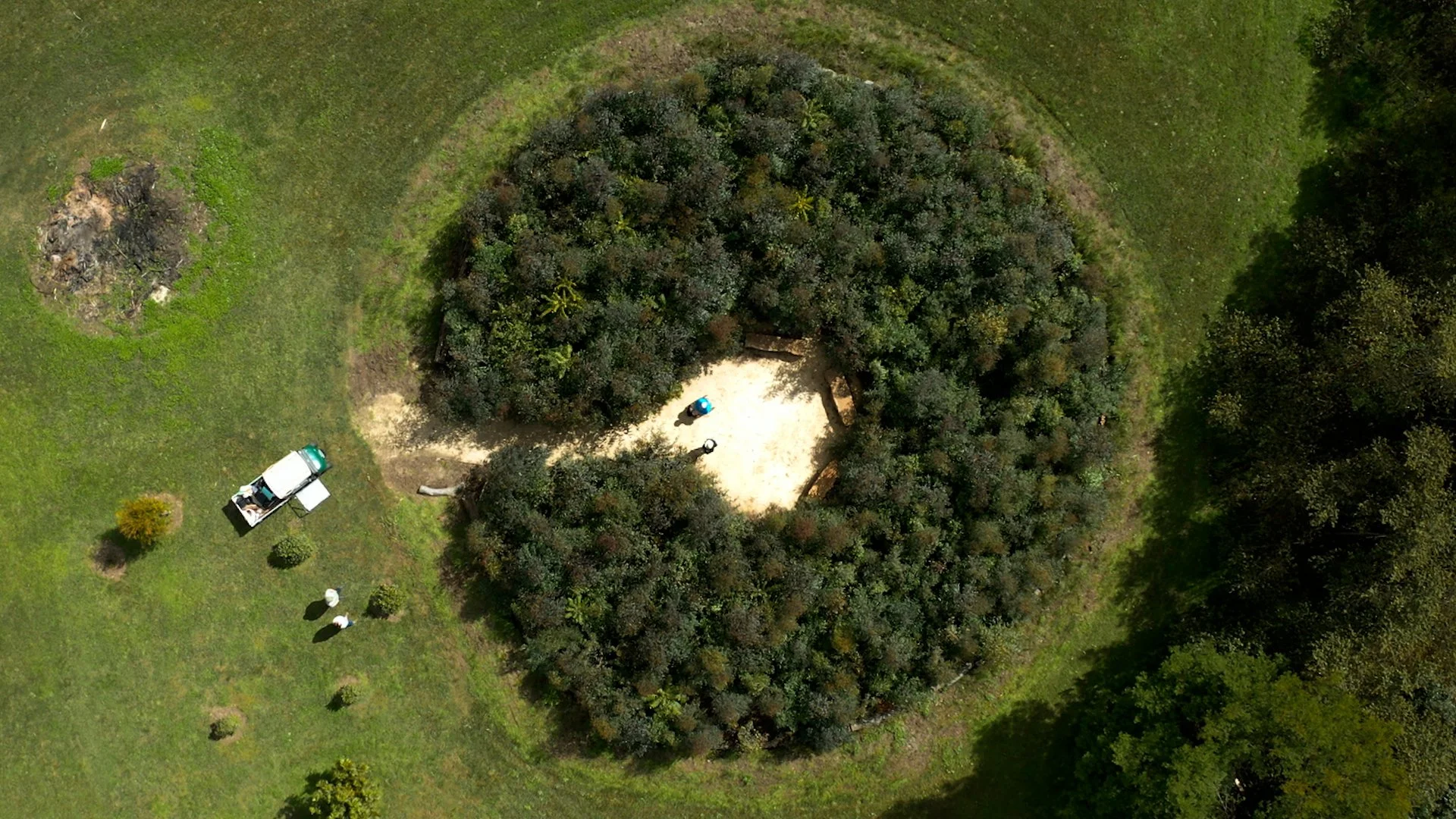
Cedar Brush Creek Tiny Forest (after). Image: Andrew Sheldon
NEVER TOO SMALL.
With the right planning, tiny forests can be grown almost anywhere. The Groundswell Collective has planted 18 tiny forests on public land, school grounds, private spaces and rural properties on the NSW Central Coast, Central West and Hunter regions.
It’s the harmony between green space, blue space (waterways) and built space that makes the tiny forest magic happen. Each site has unique needs, and designs are influenced by how the space will be used once the forest is established. Meandering paths and inviting spots to sit are favoured for school - and community-focused tiny forests. Other projects may simply use a dense concentration of trees.
The ideal spot is away from buildings and existing trees that may throw canopy shade over the site. Regardless of design, there are some common elements to consider, including: no underground services or overhead power lines, allowing access for earthwork machinery, and a location that receives at least eight hours of sunlight a day.
In rural areas, designs often include fencing to keep out kangaroos and feral animals such as pigs that see new plants as a delicious snack. In one control planting experiment, kangaroos showed a curious preference for traditionally spaced trees planted three metres apart, even with guards around them. By contrast, they largely ignored the densely planted tiny forest. This is similar in the urban tiny forests, where the forest’s density helps keep out cats, giving wildlife a safe space and trees a good chance to grow from the start.
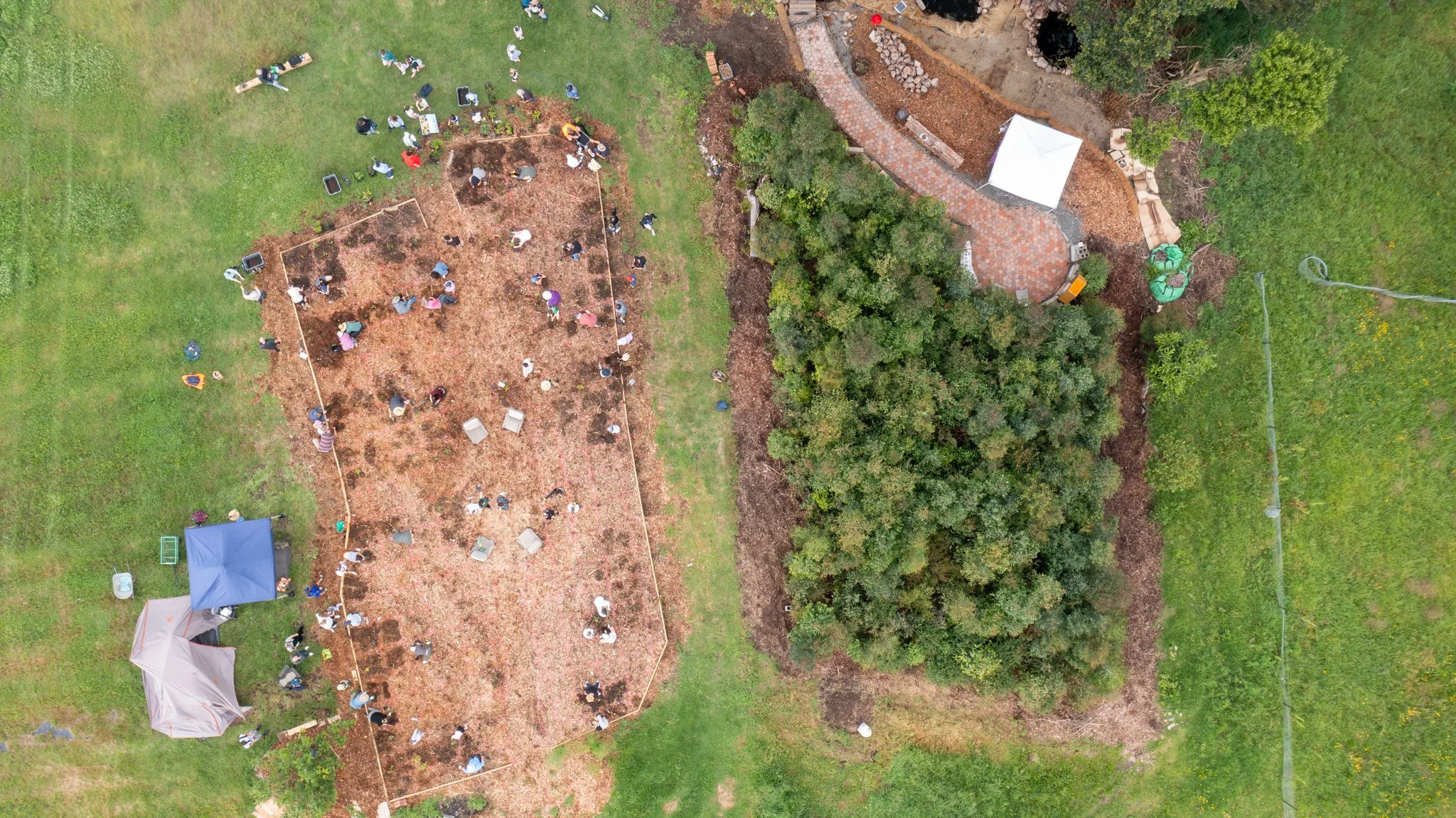
Cardiff Heights Tiny Forest. courtesy The Groundswell Collective
WHY TINY FORESTS MATTER.
These forests may be tiny compared to the bush, but their benefits for people and the planet are mighty. With the help of citizen science projects, university students and their own data collection and experience, the Groundswell Collective’s projects have been shown to deliver measurable environmental benefits of biodiversity, land regeneration and flood mitigation.
We need to look at how we include green space in our built environments. That’s where tiny forests are really important, because they don’t need a huge footprint, but you get all the benefits of being close to trees.
Dense, spontaneous planting with endemic species (often grown from seed) creates the layers needed for biodiversity to thrive. As humans continue destroying natural habitats and logging forests, there’s a growing housing crisis for trees and the birds, insects and invertebrates that depend on them, and tiny forests are one way to help mitigate the problem.
Collaborations with regional groups like Landcare ensure local knowledge and seed-grown trees are part of the process. At the Urban Hum Tiny Forest in Newcastle, tree saplings grown from mass removal for a bypass in the neighbouring suburb have been rehomed, reconnecting the bushland heritage. The results
are encouraging – birds, invertebrates, bees and small wildlife are returning to the tiny forest, which provides them with a home, a food source and safe stopover point.
Two of the biggest concerns for rural properties with cleared agricultural land are soil erosion and flooding. Even with their small footprint, tiny forests can help manage flood risk and soak up water without taking away valuable arable land. It’s a strategy that can be applied to urban areas as well.
Citizen science studies at two of the tiny forests (St Paul’s Primary School Tiny Forest and Urban Hum Tiny Forest) showed how much of a difference dense planting makes. After a 10-minute water infiltration test, water outside the forest remained on the compacted ground, while inside the tiny forests, water was absorbed into the soil in 26 seconds and 43 seconds, respectively!
This shows how these patches of green can help slow water’s march, especially in places where drainage infrastructure is overwhelmed by hard surfaces. It’s a natural way to give water somewhere to go.
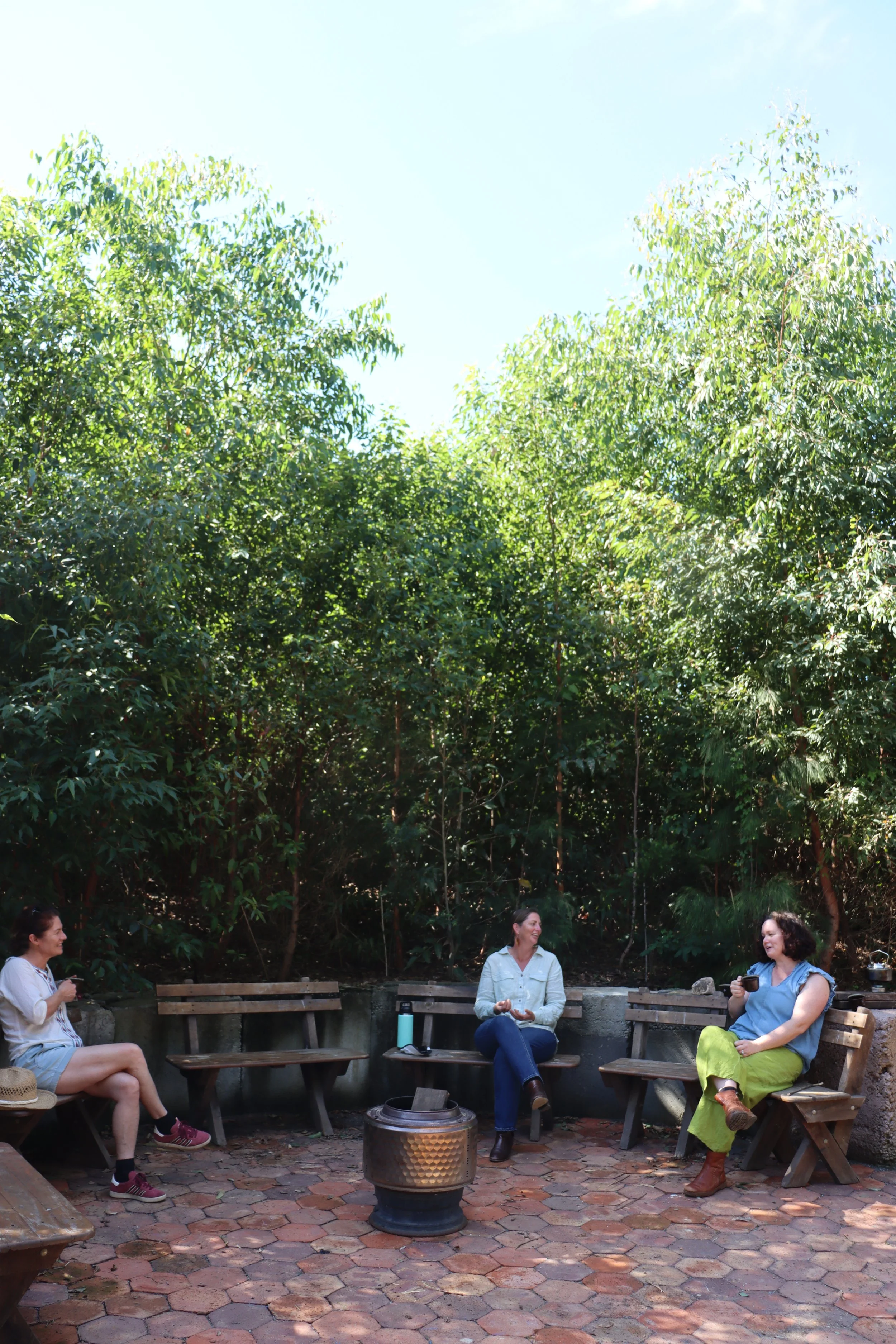
Anna Noon of Groundswell Collective at Cardiff Heights. Image: Courtesy Benjamin Short Grove
COMMUNITY AND PERSONAL BENEFITS.
One of the first things you notice in the Urban Hum Tiny Forest, is the sound of cockatoos, lorikeets and kookaburras mixed with the buzz from honey bees. In Anna Noon’s first tiny forest at Teralba, your ears are tuned to the scuttle of small invertebrates and the dampened traffic noise, while your body feels the cooler temperatures under dappled shade.
The Groundswell Collective’s latest project is an aged-care facility in Orange, NSW. Here, the tiny forest gives residents access to a space beyond the confines of a clinical care building. It encourages them to walk out into the day, and tune in to the sights and sounds of nature — a connection that’s vital at any age. Anna says the aged care tiny forest is about “providing meaningful activities to older people and helping with their health and wellbeing. Connecting people to nature and each other, which we know makes people do better and feel better.”
There’s also another kind of connection that happens. Tiny forest planting days attract a diverse crowd of enthusiastic volunteer planters. Like Anna, they are passionate about being part of their local community, taking action that brings both immediate and long-term benefits.
And there’s a multiplier effect; one tiny forest inevitably leads to another. At Wyong Creek, people are doing the groundwork for planting the latest tiny forest, followed by a picnic lunch at the nearby Cedar Brush Creek Tiny Forest, which celebrated its first birthday in 2025. These community connections continue to expand as their forests thrive and the movement gathers momentum. Since 2023, the Groundswell Collective has planted over 10,000 trees in 16 tiny forests and brought more than 2,400 people together to plant.
Small scale and low tech they may be, but these green infrastructure interventions generate big social returns, making the built environment more usable, appealing and connected to community life. And increasingly, people are seeing them as something of intrinsic value and longevity. At the other end of Lake Macquarie, a landowner in Eraring was so inspired by a tiny forest she visited that she started one on her own rural property, with the simple objective to leave a living legacy for her children and grandchildren.
Mardi Lee is founder of ReNewy Living – an environmental platform and podcast for local sustainability stories.