
Field Event | Sydney
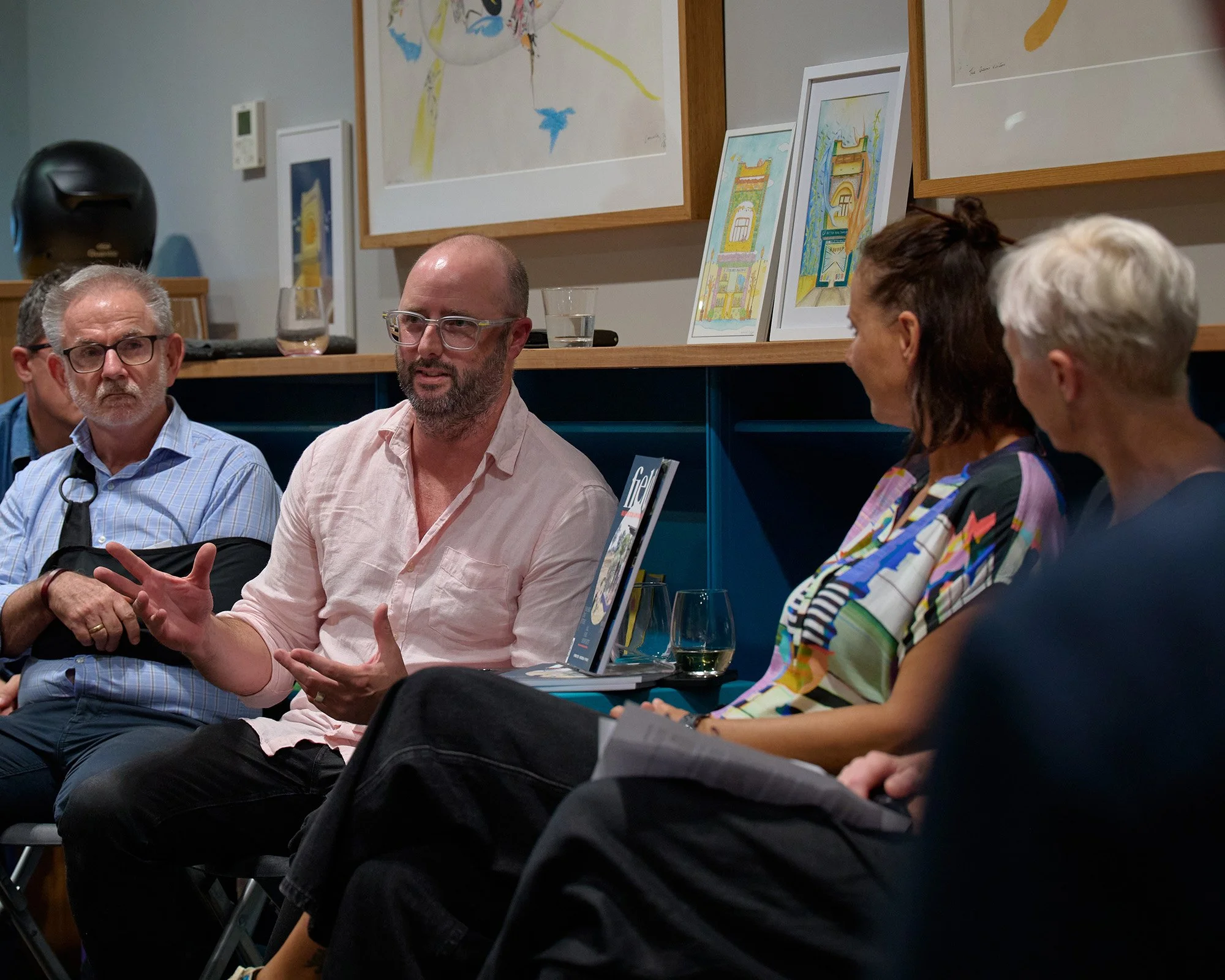
Left to right: RAA committee members and panellists for the night, Andrew Armstrong, Cameron Anderson, Katharina Hendel and Sarah Aldridge, photo by Elizabeth Macovaz
Innovation in regional Australia is at the heart of Field: Architecture Gone Regional and it was the theme of the panel discussion as a crowd gathered in Sydney recently to celebrate Issue #1 of RAA’s annual journal publication.
Sarah Aldridge, RAA Secretary and panel moderator, reflected on the piece by Anthony Burke, Professor of Architecture at UNSW and host of Grand Designs Australia. While reviewing projects featured on the program Burke observed that 70 per cent were located in regional areas. Given that the show selects projects with innovation at their core, this finding suggests that much of Australia’s architectural innovation is emerging from the regions.
The innovations discussed in Field range from the adoption of new technologies — supported by clients ambitious enough to embrace them — such as the transformation of agricultural waste into clean energy, and the upcycling of waste materials to produce affordable 3D-printed housing. By identifying where challenges arise in these projects, we gain insight into the roadblocks to innovation and where stronger collaboration with adjacent disciplines and technical experts can help unlock solutions.
The panel brought together Katharina Hendel (Takt Studio), Cameron Anderson (CA Architects) and Andrew Armstrong (Armstrong & Co.), each offering a regional perspective on innovation in practice.
Katharina Hendel experienced the devastating 2019 bushfires on the NSW South Coast, and was involved in immediate recovery efforts at Conjola. This led to work on a community hall & disaster refuge in Cobargo and subsequent projects to rebuild the main street of Cobargo, which was famously razed by the fires, and a gallery project in Narooma. She spoke about the innovative technologies, community-led initiatives and design strategies that have informed these projects and contributed to rebuilding resilient, connected communities.
Cameron Anderson has been developing a new building typology in response to succession planning and the long-term viability of rural properties in the Mudgee region of NSW. The first project emerged from a desire to diversify a family farm’s income, reducing reliance on agriculture increasingly affected by climate change. By introducing small, skillfully designed off-grid tourist accommodation on low-yield land, farmers have been able to generate supplementary income while contributing to the broader regional economy.
Andrew Armstrong designs and delivers community, health and education buildings across rural and remote Queensland. Instead of being an excuse for standardisation, limited resources, skill shortages and regional remote logistical challenges encourage collaboration and innovation. In many cases, communities have fought hard to secure funding, resulting in high levels of engagement with the design process. This leads to a detailed, nuanced briefing process and design solutions that are tailored to their communities and specific needs.
Overall, the event was a wonderful opportunity to expand on the important conversations that Field has begun.
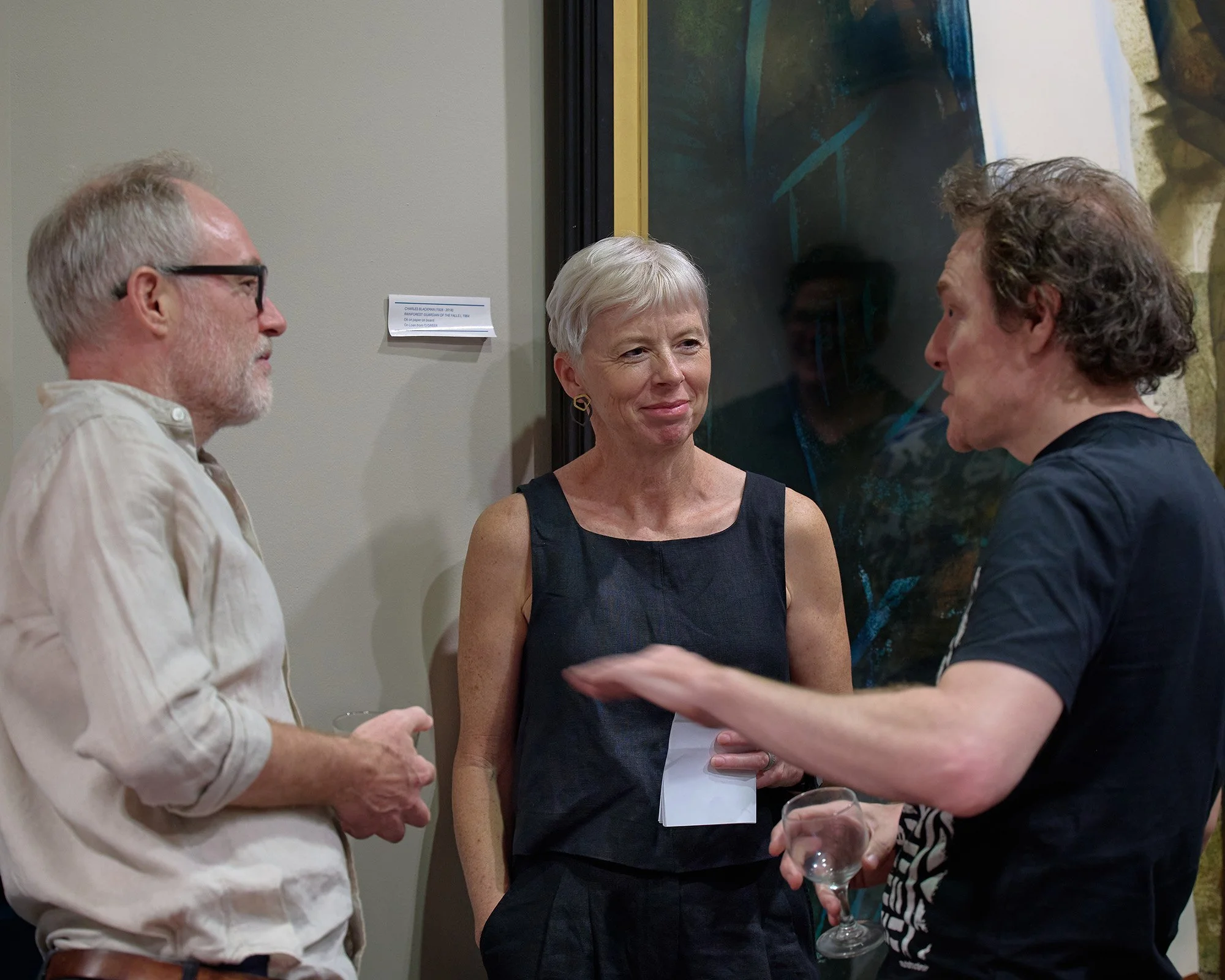
RAA secretary & panel moderator Sarah Aldridge at centre, photo by Elizabeth Macovaz
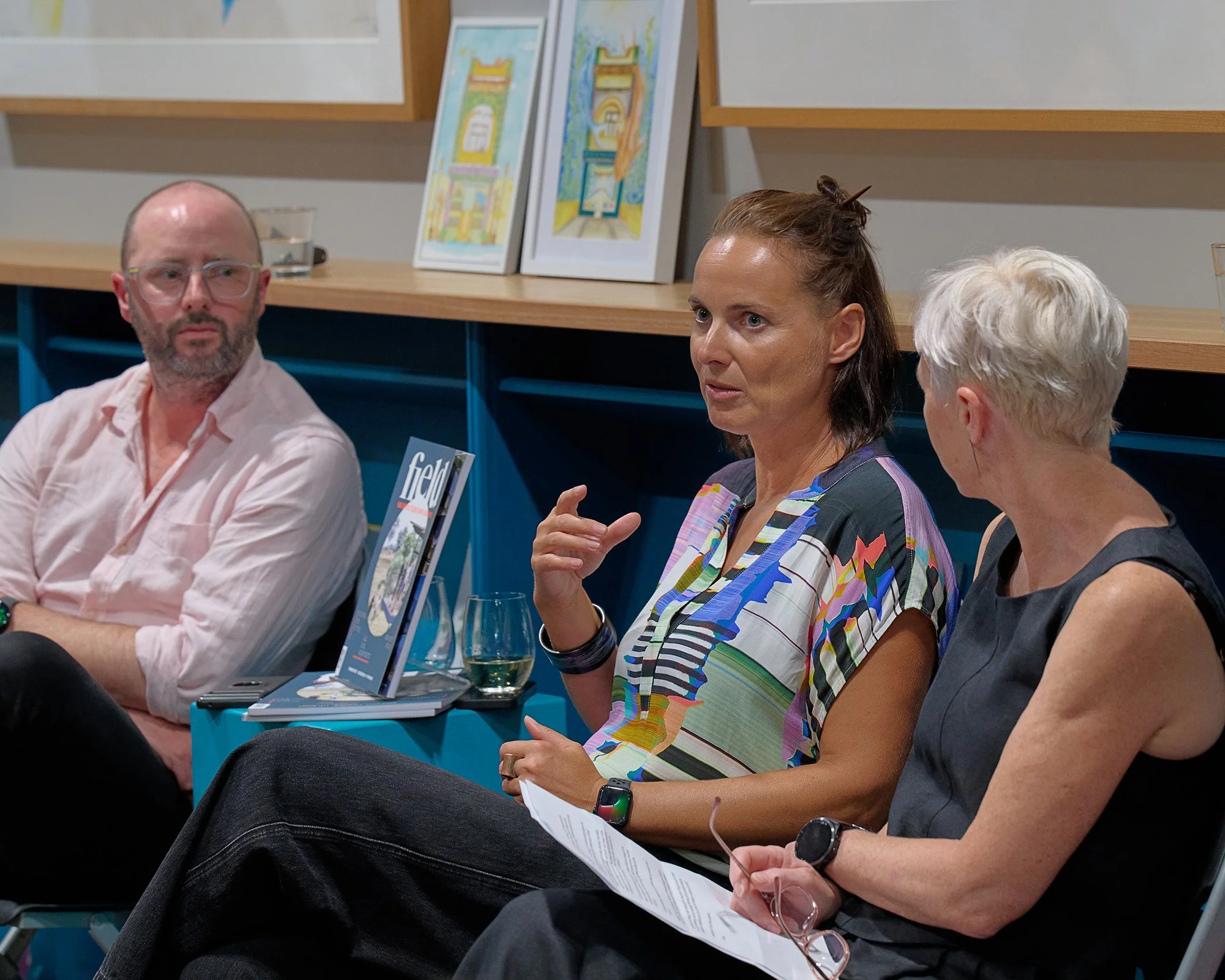
RAA vice president Katharina Hendel at centre, photo by Elizabeth Macovaz
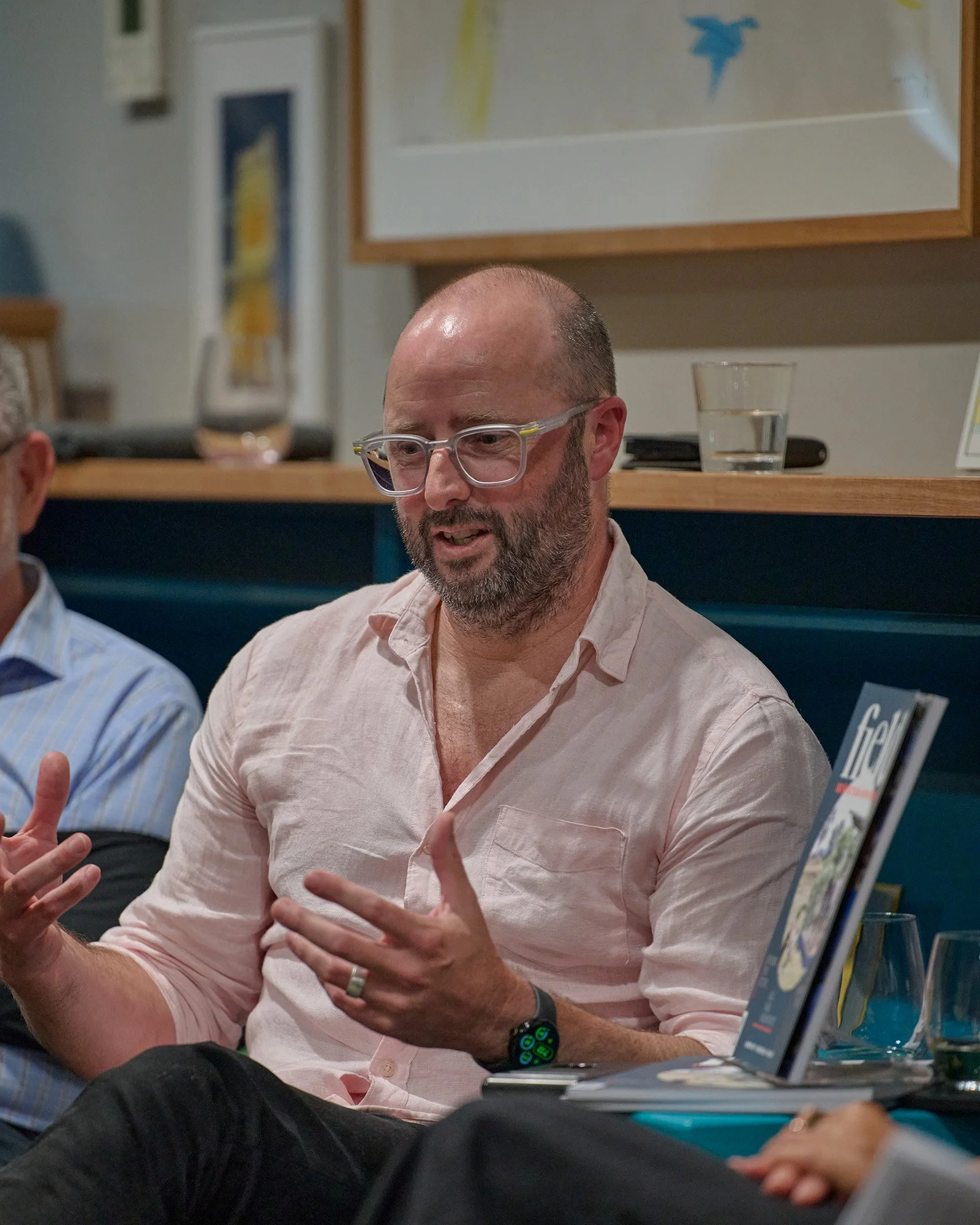
RAA founding president and current committee member, Cameron Anderson
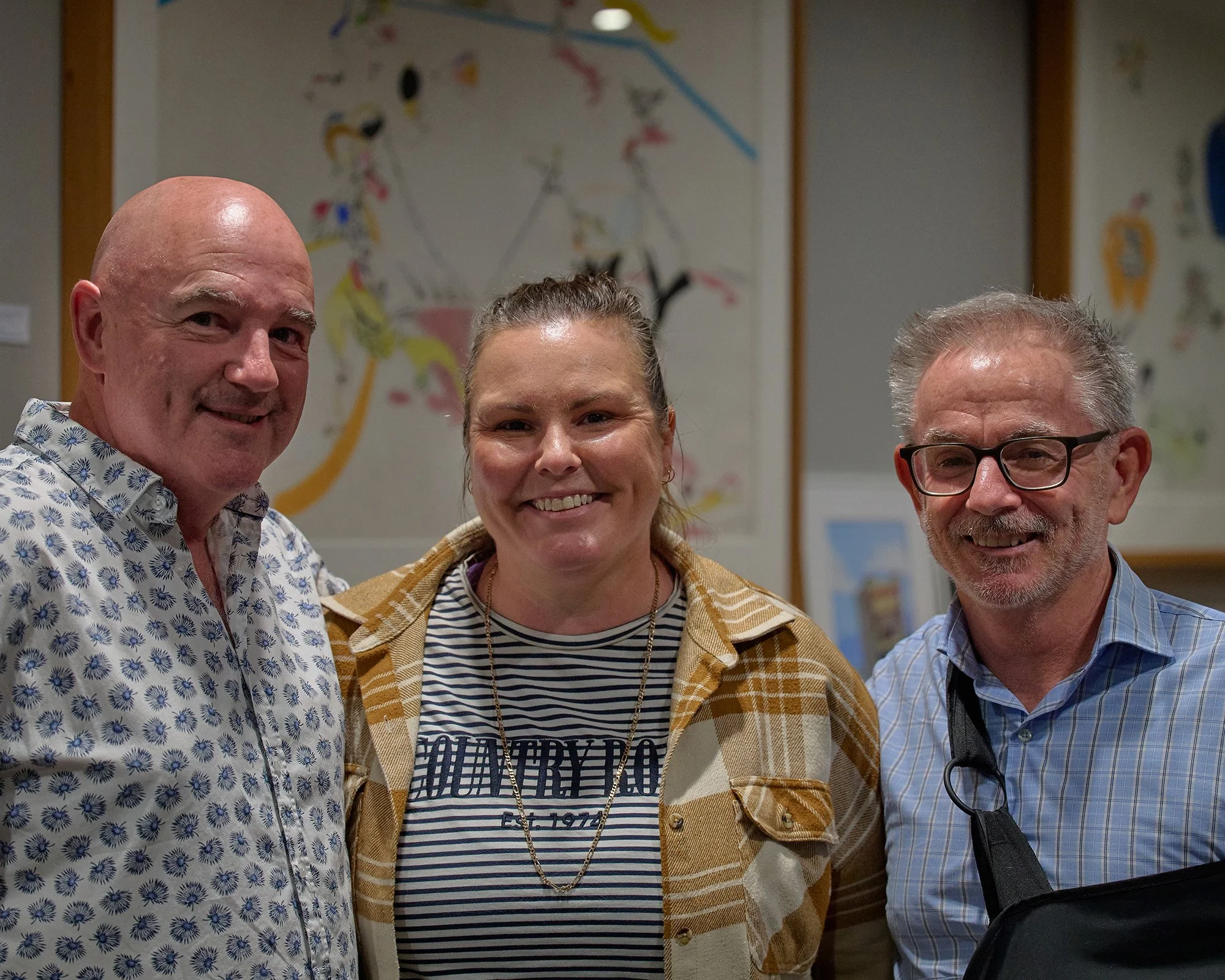
RAA committee members Mark Sanders (left), Andrew Armstrong (right) and treasurer Renee McGuinn (centre), photo by Elizabeth Macovaz
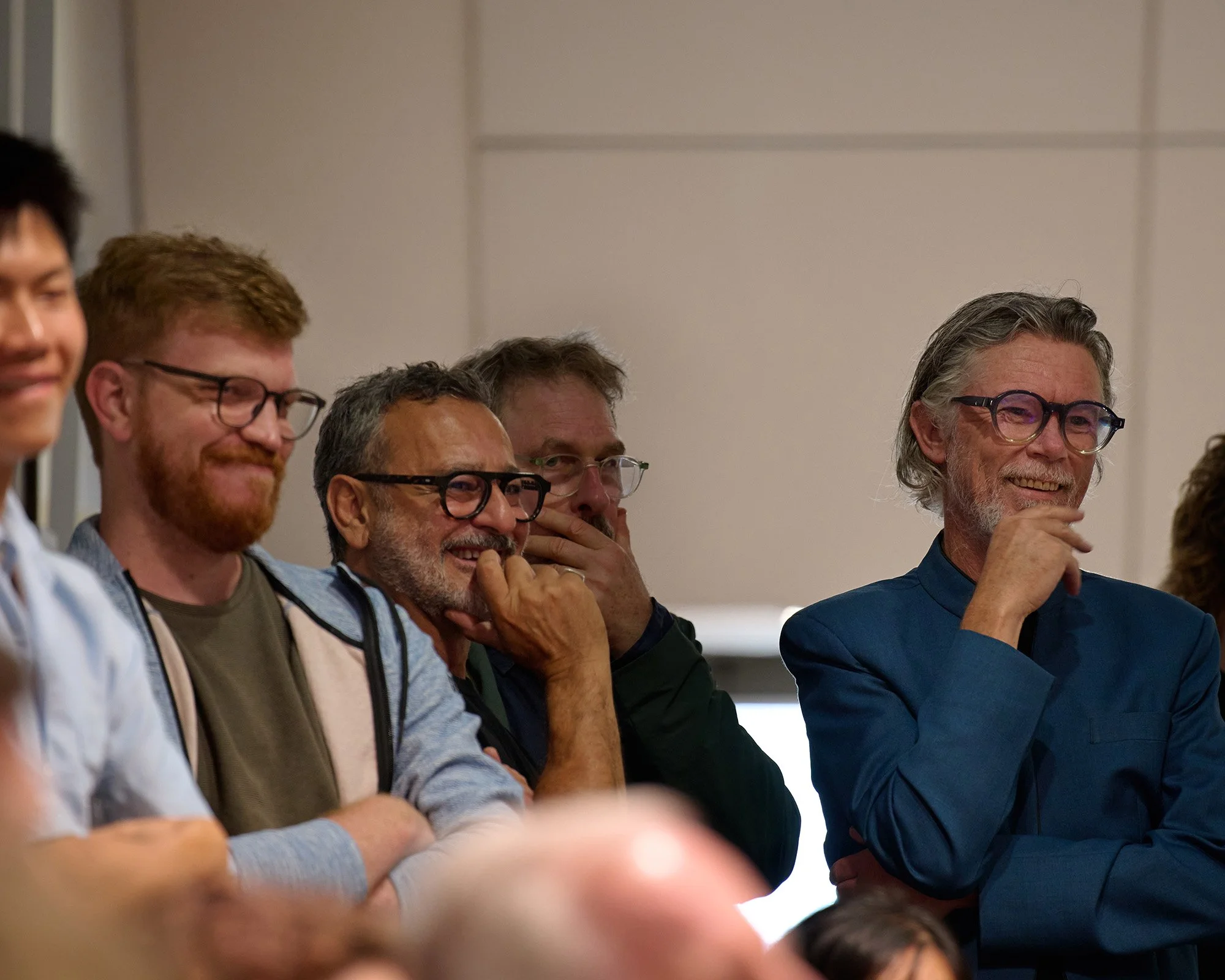
Field creative director Marcus Piper (far right) and editor Peter Salhani (centre), photo by Elizabeth Macovaz
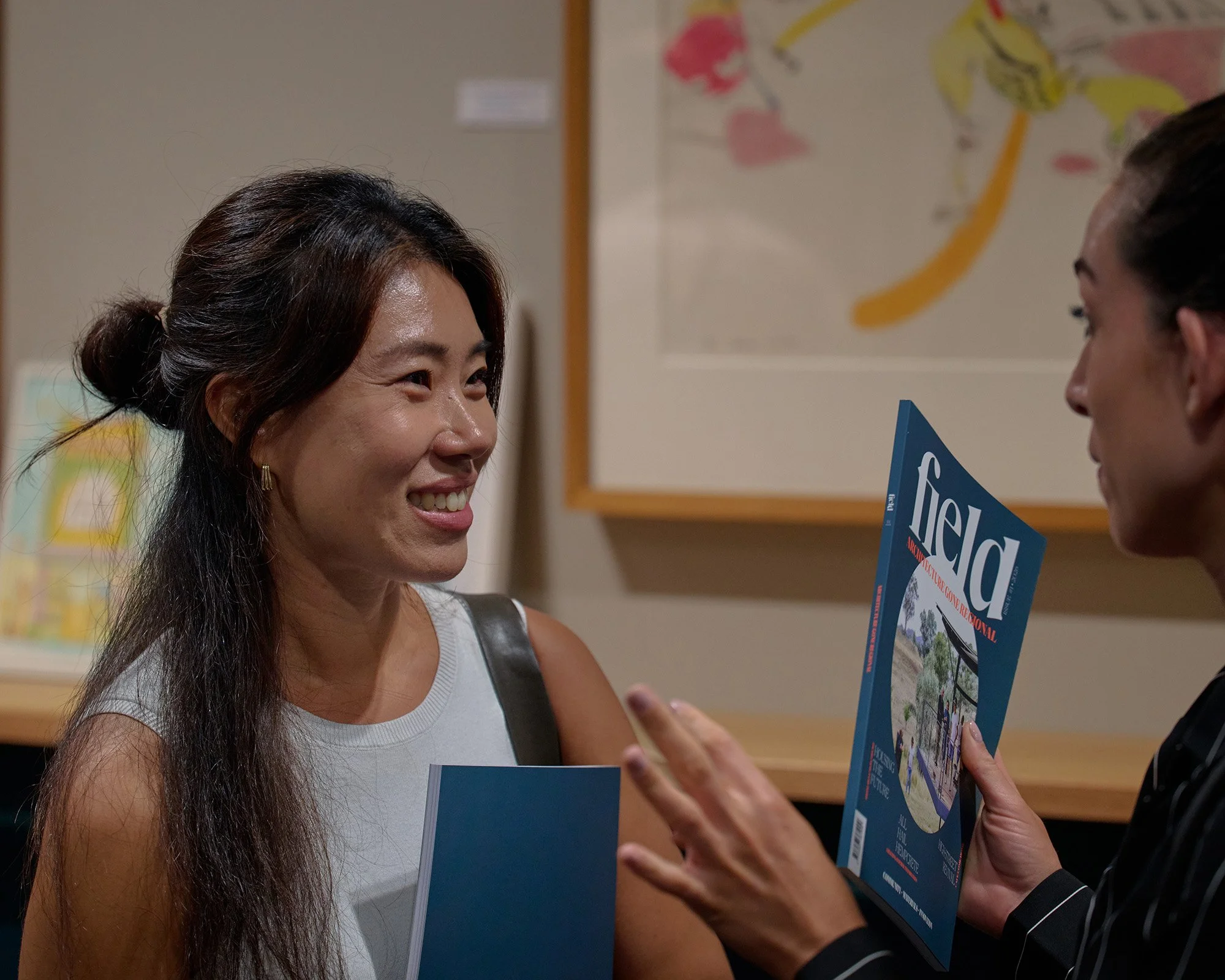
Photo by Elizabeth Macovaz
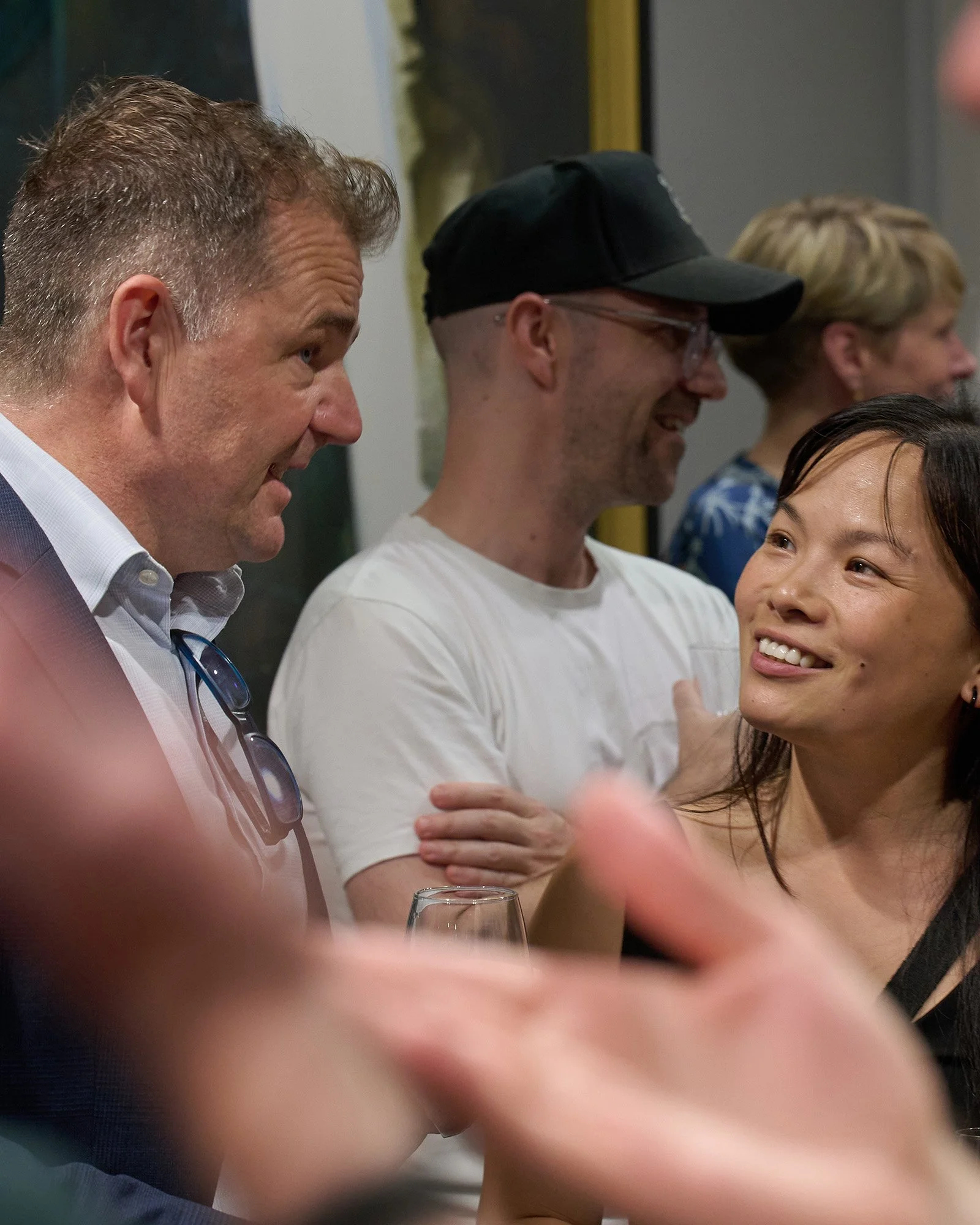
RAA committee member Phuong Le (right), photo by Elizabeth Macovaz
