
POWER OF COMMUNITY - event wrap by Talina Edwards
Yarrayne / Guildford, 12th-14th March 2026.
PHOTOGRAPHY BY Jade Cantwell
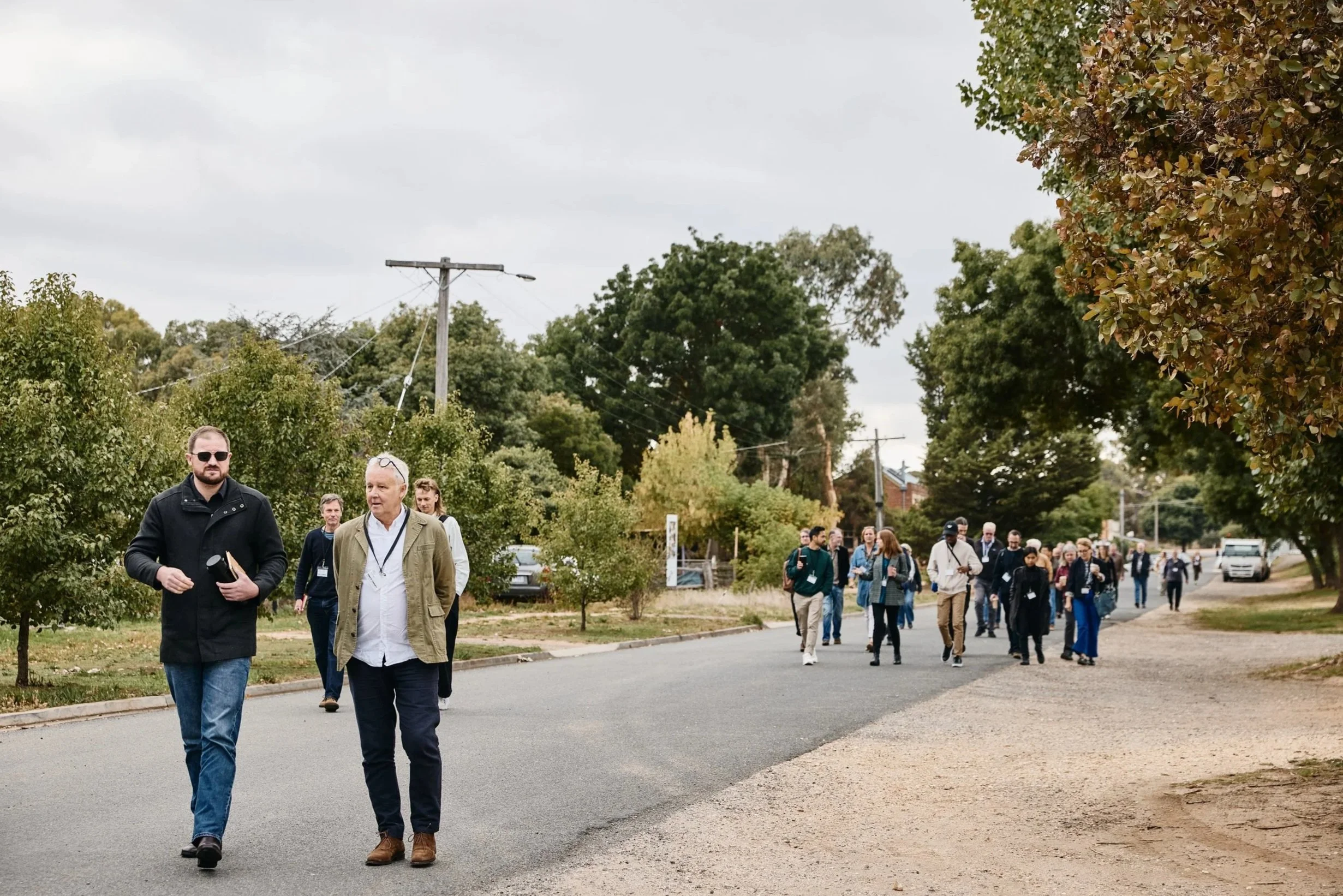
Delegates on their way to the Big Tree, photo by Jade Cantwell
Attending the Regional Architecture Association’s POWER OF COMMUNITY forum in Yarrayne / Guildford in Central Victoria on Friday 13 March 2026 (for the main seminar day*) was a meaningful reminder of the strength that exists when people come together around shared purpose. Held at Guildford Public Hall, the forum brought together voices from architecture, sustainability, energy, research and public leadership to explore the systems — both formal and informal — that support change.
*There were also ‘fringe’ events over three days, including workshops, talks and tours, which I was unable to attend.
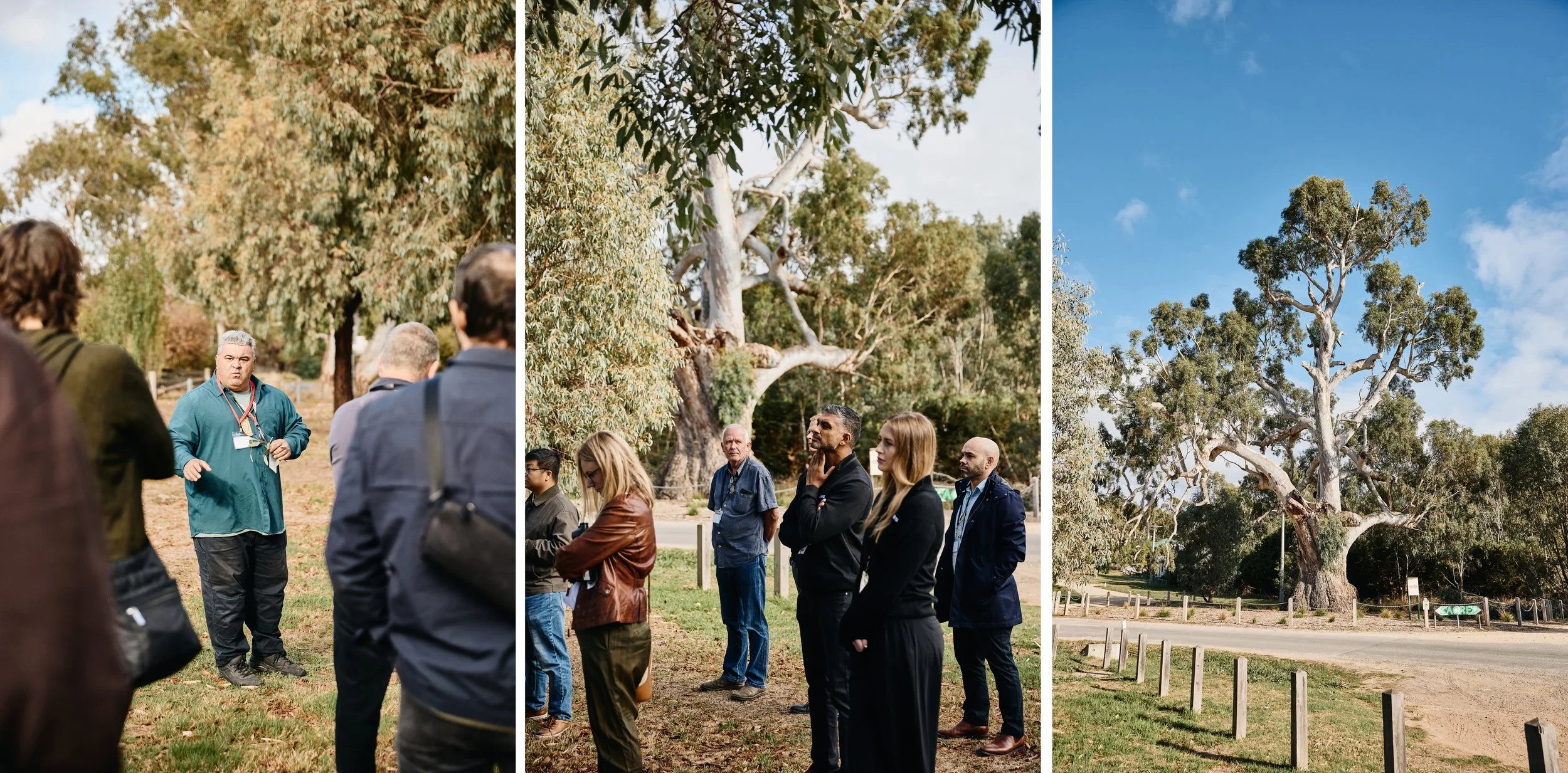
Welcome to Country with Djaara Traditional Owner Uncle Jason Kerr and the Big Tree, photos by Jade Cantwell
The highlight of the morning was Djaara Traditional Custodian Uncle Jason Kerr’s Welcome to Country, and the opportunity to meet “the Big Tree” in person. It felt especially apt to be in the presence of this significant tree, many hundreds of years old, which has witnessed generations of this community and would have many stories to share. She’s a real beauty, and it was the perfect start to the day: a moment to reflect on past ancestors, and to consider how we can all be good future ancestors.
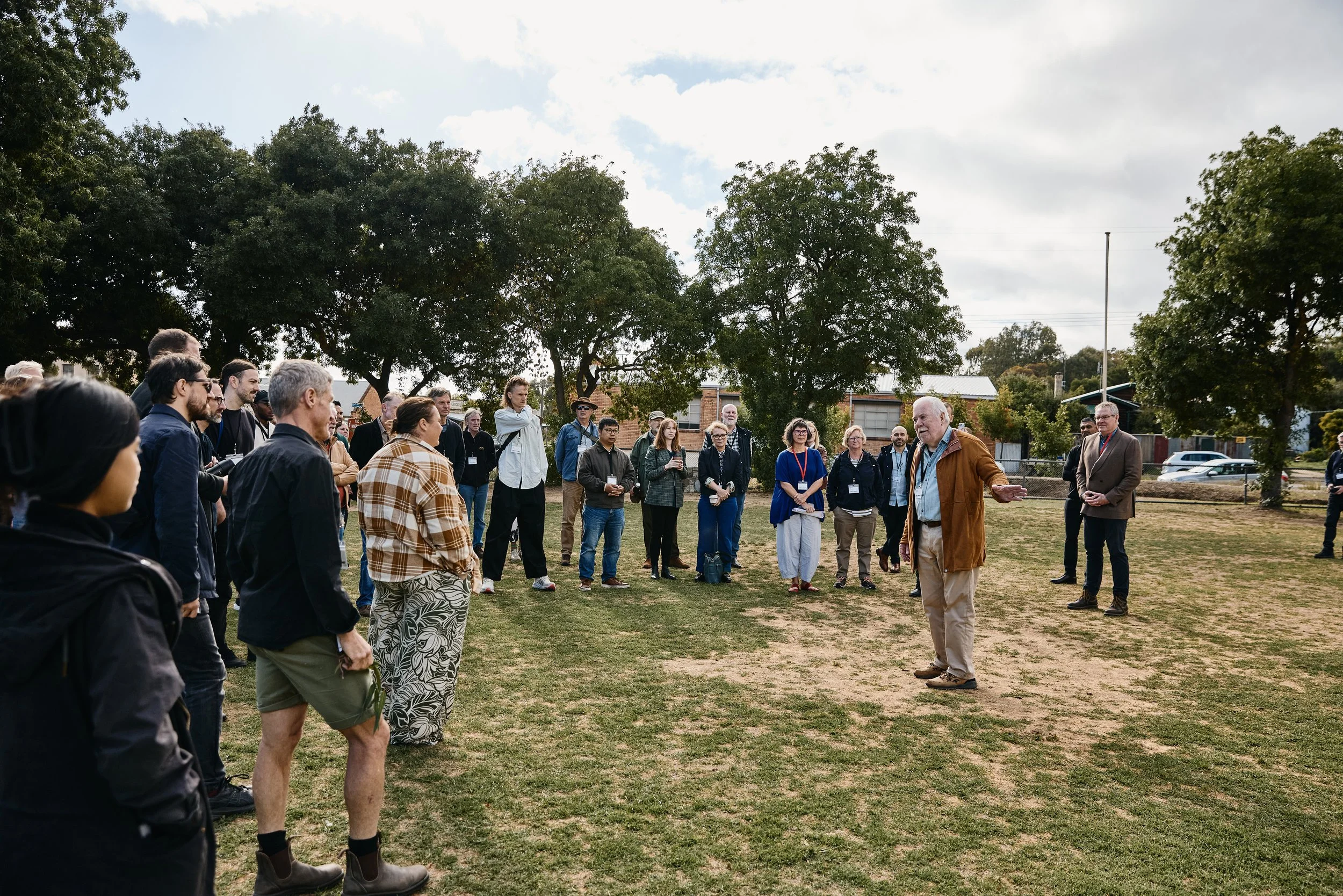
Ray Pattle OAM introducing delegates to the local area and its community, photo by Jade Canwell
Hearing from local historian Raymond Pattle OAM about Guildford’s more recent history as a small regional community, and the challenges it faces, helped set the scene for the day. It was a stark reminder of the butterfly effect, and of how interconnected we all are. One hardship in a community, or one business closure, can have long-lasting flow-on effects. Yet those same challenges can also bring people together despite their differences — a common story in smaller towns, and one that can feel quite different from an urban or suburban experience of knowing neighbours.
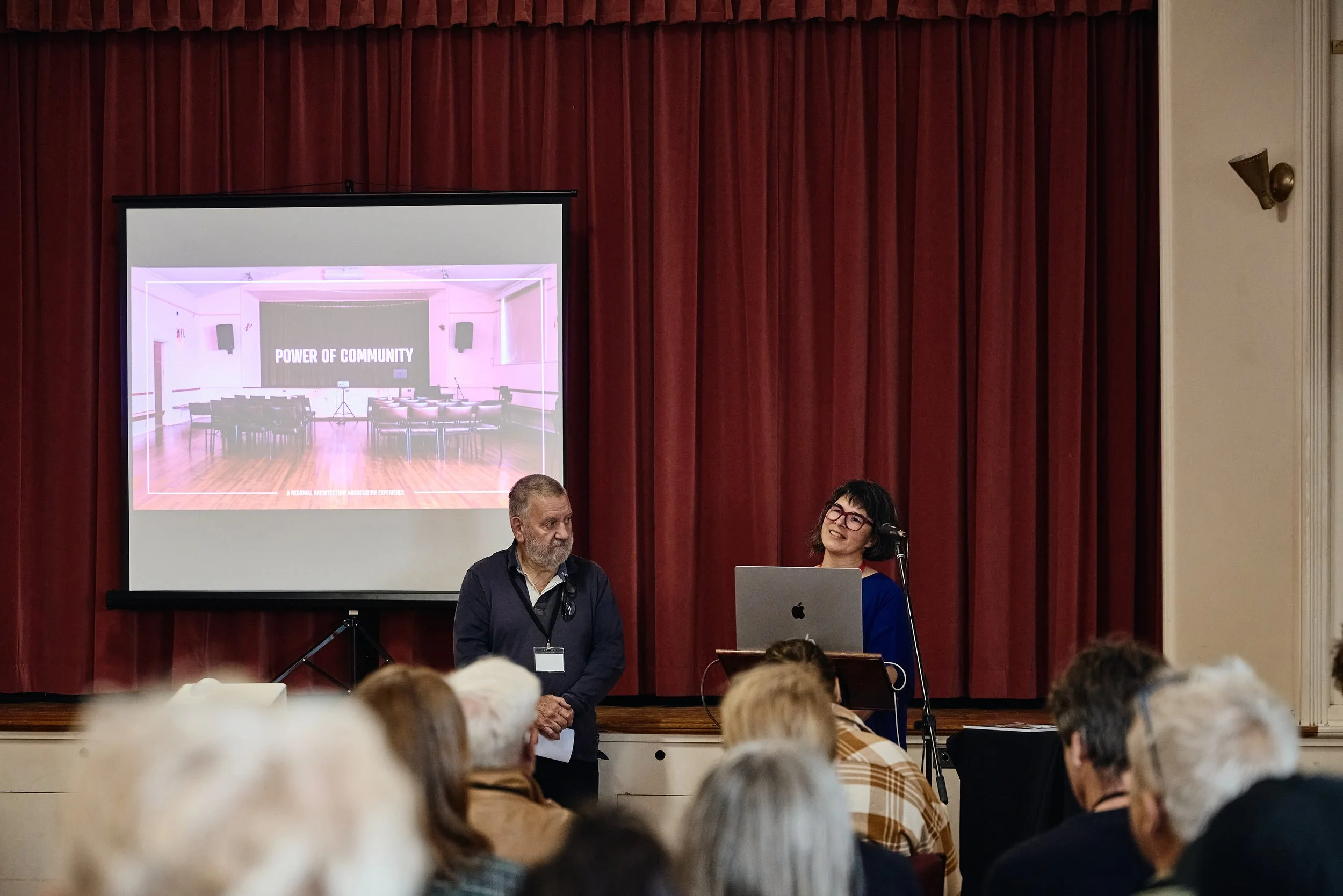
Co-creative directors Robert Mierisch and Emily Knight, photo by Jade Cantwell
RAA President Tim Lee, along with event co-creative directors Robert Mierisch and Emily Knight, also offered their introductions to the event’s theme. From the outset, the framing of the forum felt grounded in place, generosity and collective responsibility.
Across the program, what stood out most was the idea that lasting change relies not only on innovation or expertise, but on people — on communities willing to advocate, collaborate, test new ideas, and stay committed over time. For regional practitioners especially, this message felt both affirming and energising. Among the many contributions across the day, these were my highlights.
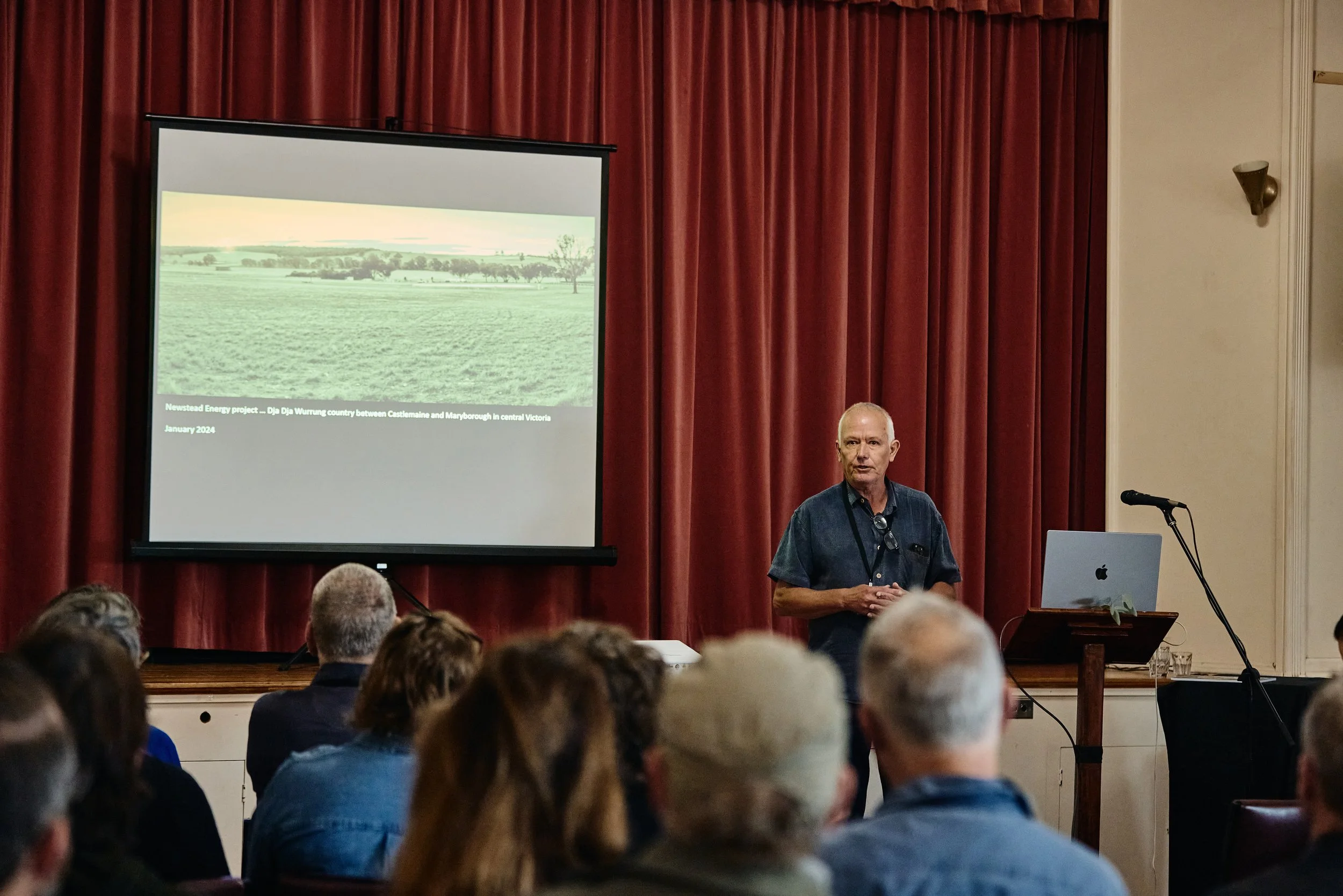
Geoff Park speaking about Renewable Newstead, photo by Jade Cantwell
Hearing about Renewable Newstead was a wonderful example of the true “power of community” to help bring renewable power to this region at scale. While not technically “community-owned”, the real story was about the grassroots work: door-knocking, talking to people, and speaking directly to the benefits of the proposal. It was true community spirit, and a reminder of the strength of relationships between locals — even those from quite diverse backgrounds — compared to a large corporation swooping in to take the reins. Key lessons from Geoff included:
You don’t have to be born in a place to be considered a “local”. It’s about care for the place and the people.
Working together for a common goal is strengthened when there is a broad range of skills and expertise within a group.
Having consideration for what drives people matters. Knowing their motivations helps communicate in ways that bridge divide.
You can’t expect to change people’s values. Meet people where they’re at and build from there.
While the technology for a project could be replicated elsewhere, the community in each area will never be the same, nor share the same values, needs or desires. That is part of what makes these kinds of projects difficult to deliver at scale.
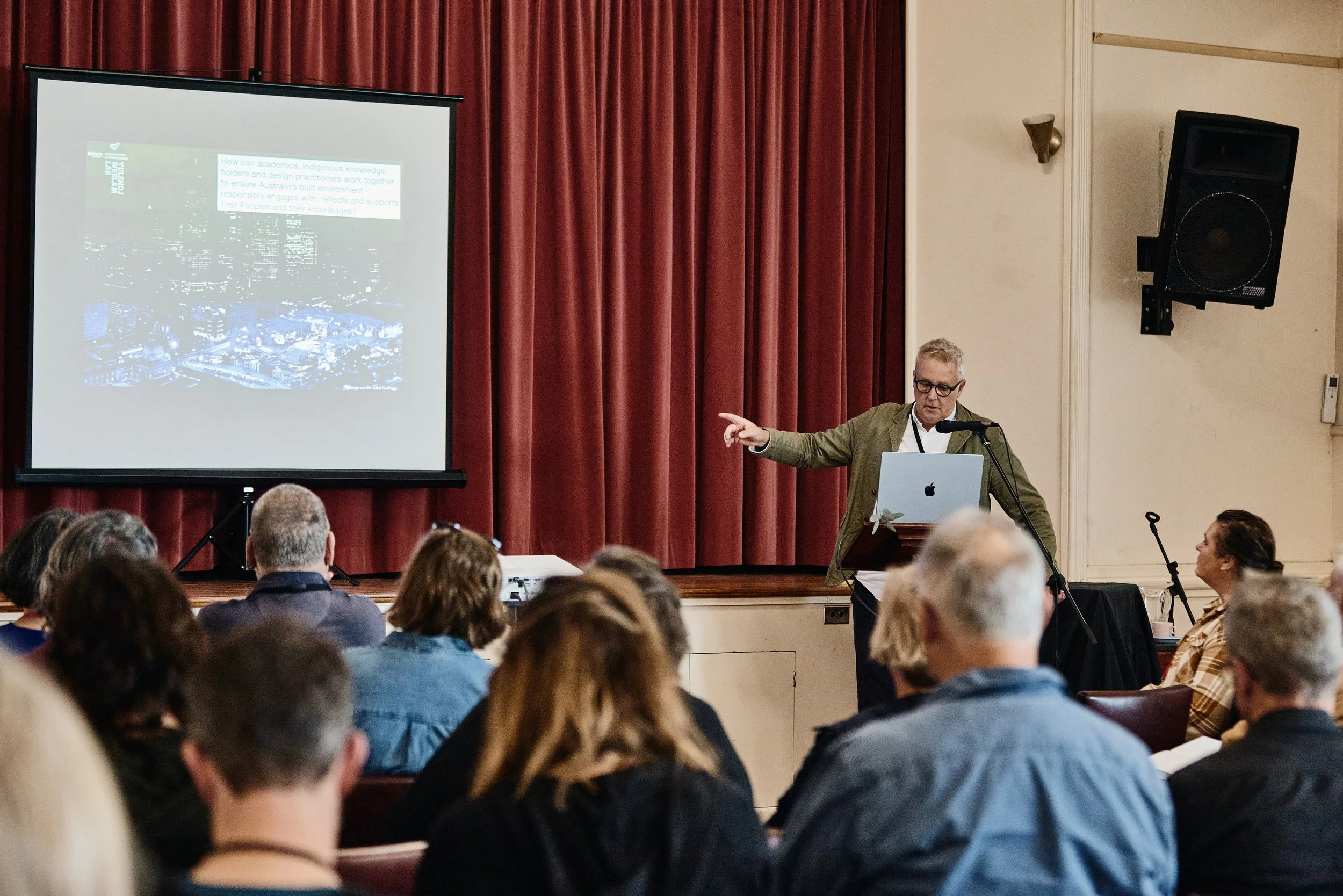
Dr Jock Gilbert, photo by Jade Canwell
One of my personal highlights was hearing Landscape Architect and RMIT academic Dr Jock Gilbert share stories about the wonderful work they’re doing with students and Traditional Custodians as part of the Yulendj Weelam Lab. I share his understanding that an Acknowledgement of Country should be much more than a formality — it is a way of showing respect, and of recognising a relational connection as a non-Indigenous person, because we are always on Country. It is not just about meeting a new person, but also about meeting a new place, and taking a moment for deep listening — just as we did with the tree earlier.
He works with Elder N’aarweet Caroline Briggs in the lab (among others), who explains that Wominjika means welcome to this land — and asks, what are your intentions for being here? This is a reminder that it’s a conversation we’re having with both people and place. Jock also spoke about building trust (and this is trust with the land too) with the projects they’re doing with their students, with respect to:
Responsibility
Reciprocity
Relationships
Respect
Much of the work they do is not just about co-creating a “design” or a finished outcome; it is about the process of relationally weaving narratives together. It works at a different, slower pace than the world of delivering buildings, and this has the power to create more meaningful outcomes.
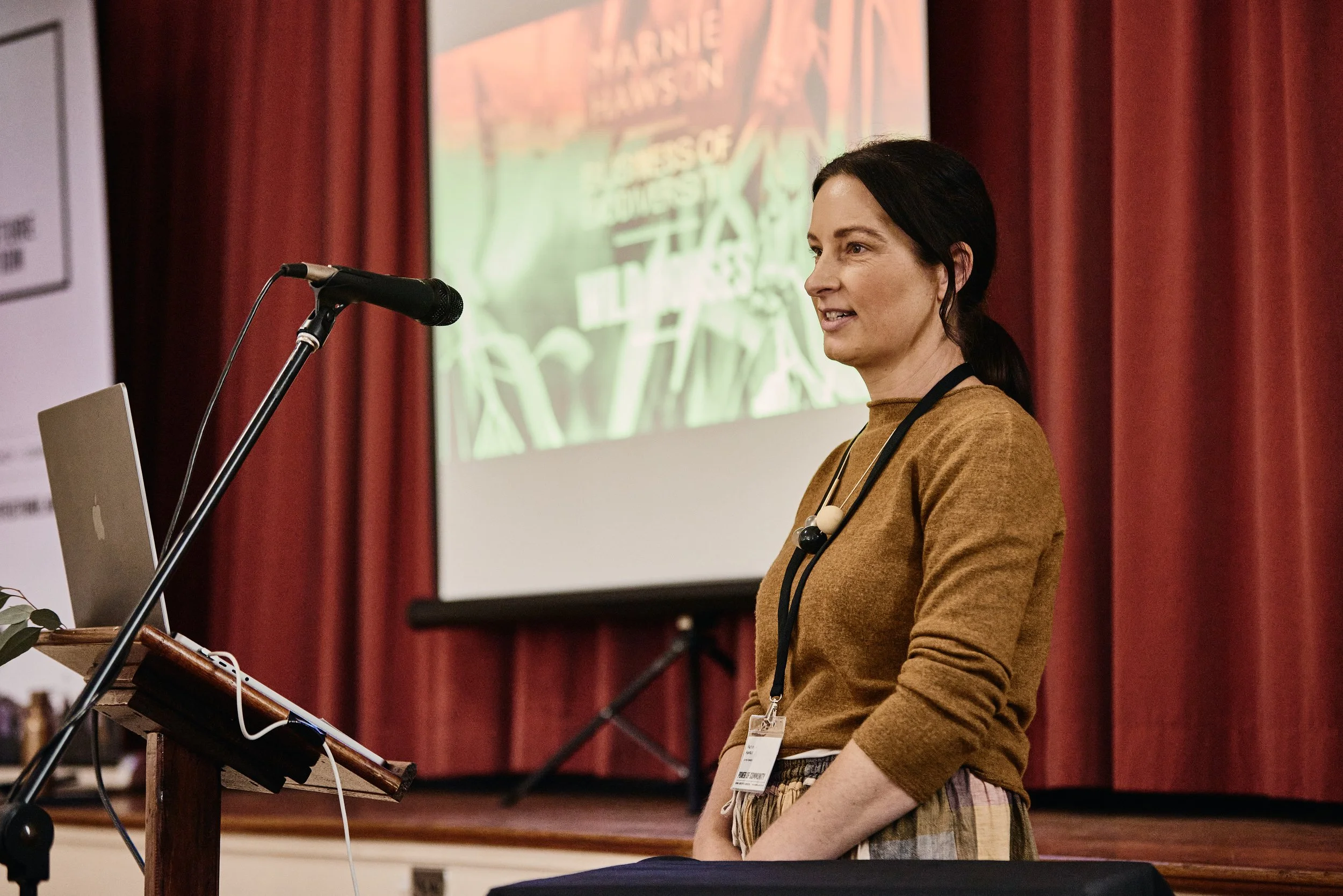
Marnie Hawson, photo by Jade Cantwell
Another highlight of the day was the presentation by regional photographer Marnie Hawson. She not only takes beautiful photographs of sustainable homes (and full disclosure: we’ve worked with Marnie to photograph our projects here in Central Victoria, so I’m already a fan!), she also shared her B Corp journey and her Business of Biodiversity, prompting us with the provocation: what if we designed buildings that gave back, and were nature-positive?
This ethos is close to my heart — considering nature, and our more-than-human community, as key stakeholders in our work. She shared many lovely examples and offered practical suggestions for what architects could be considering. Some of these included:
Remembering that money matters, and that we have purchasing power in what we specify.
When carbon-offsetting a business, considering biodiversity projects.
Asking, “what is the outcome for nature?” with each decision we make.
Understanding that biophilic design and designing for biodiversity are not the same thing — and thinking more deeply about how we create habitat for nature, especially when development so often takes it away.
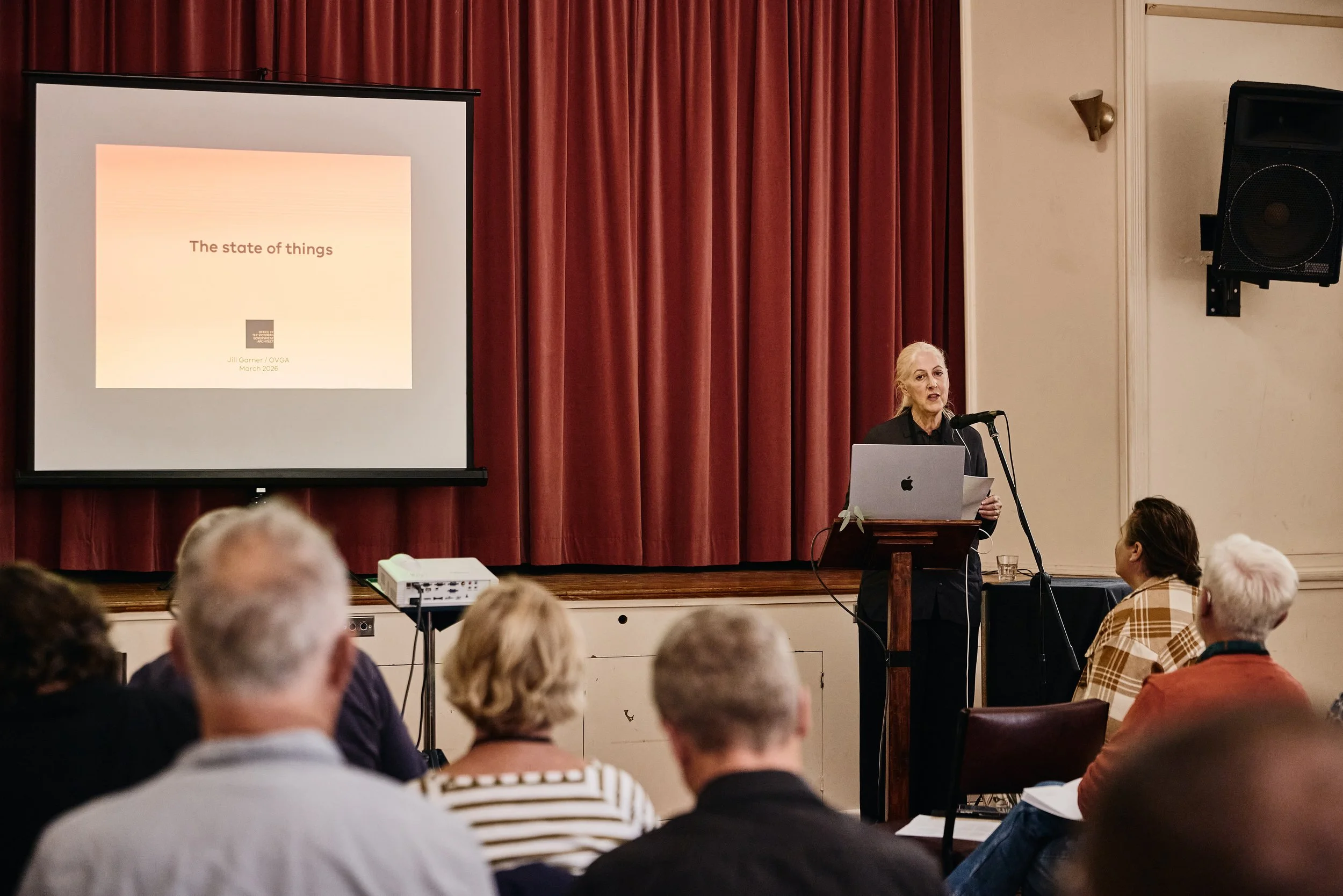
Jill Garner, Victorian Government Architect, photo by Jade Cantwell
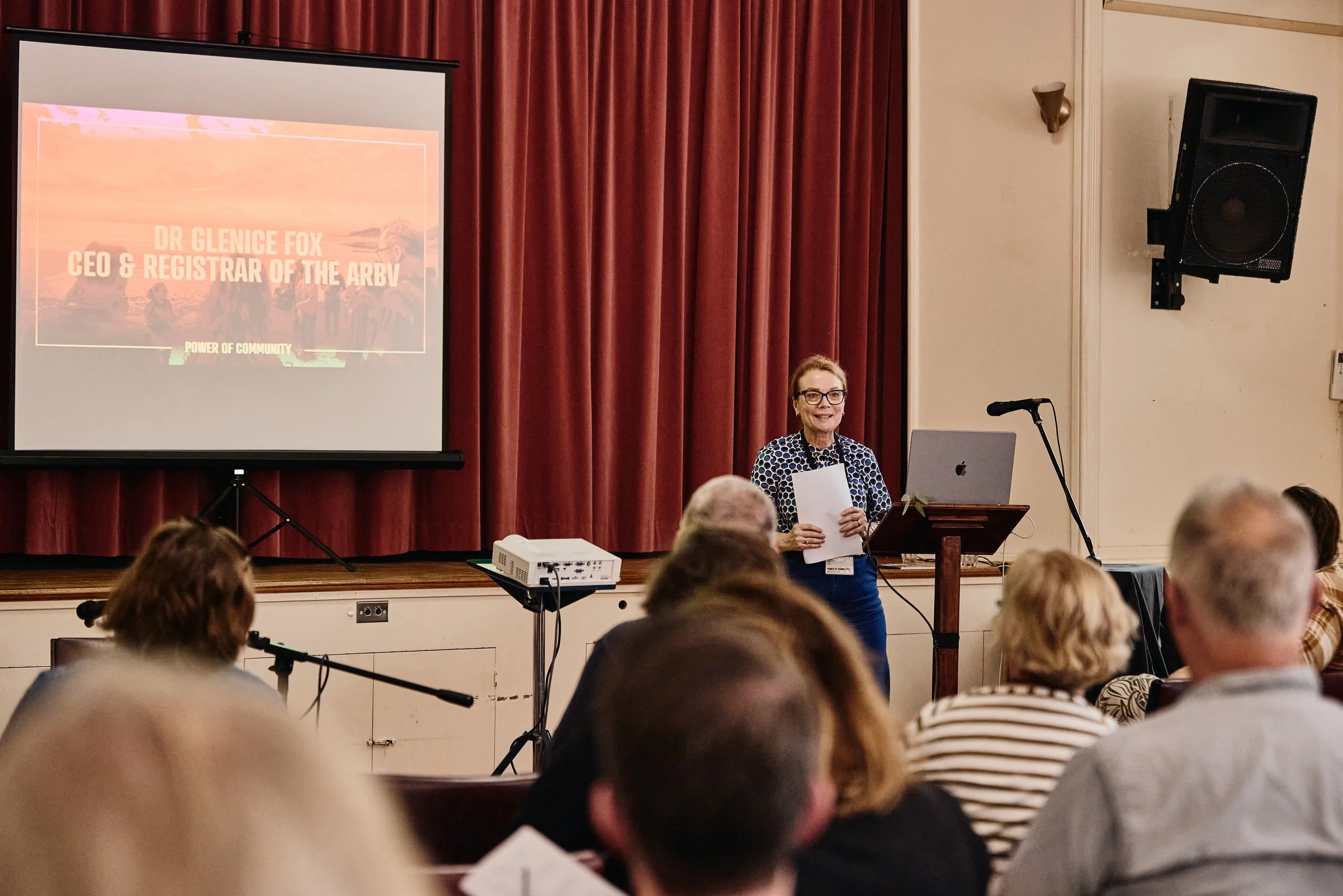
Dr Glenice Fox, CEO & Registrar of the ARBV, photo by Jade Cantwell
I was interested to learn that at the RAA’s NSW events, updates are sought from their registration board, and their state’s government architects. I thought it was a great addition to the program to hear more about the roles and responsibilities of the current work being done by Jill Garner, Government Architect, and Dr Glenice Fox, CEO & Registrar of the ARBV, with the opportunity for the audience to ask questions too.
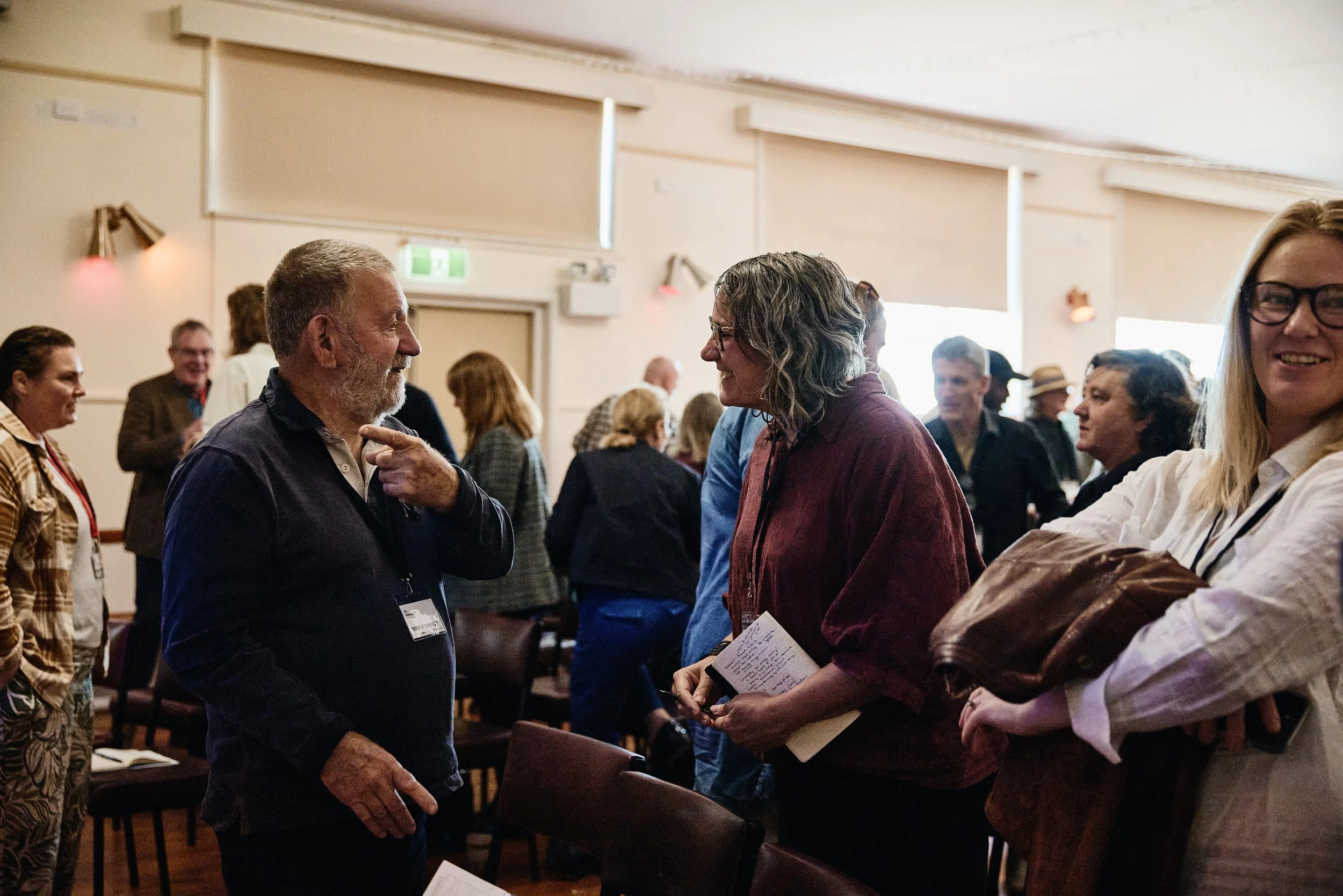
Author Talina Edwards at centre speaking with co-creative director Robert Mierisch, photo by Jade Cantwell
What felt most powerful throughout the day was that “community” was not treated as a vague or sentimental idea. It came through as something active and practical: built through trust, participation, listening, persistence and care. In regional practice, where relationships to place and people are often close and long-term, that message feels especially important.
More than anything, the forum was a reminder that regional architects are not working at the edges of the conversation, but within communities where meaningful change can be seen, shared and supported. In this era of uncertainty, that message is a source of hope. It’s a reminder that we can do anything on our own, but we can’t do everything — and that collaboration is key.
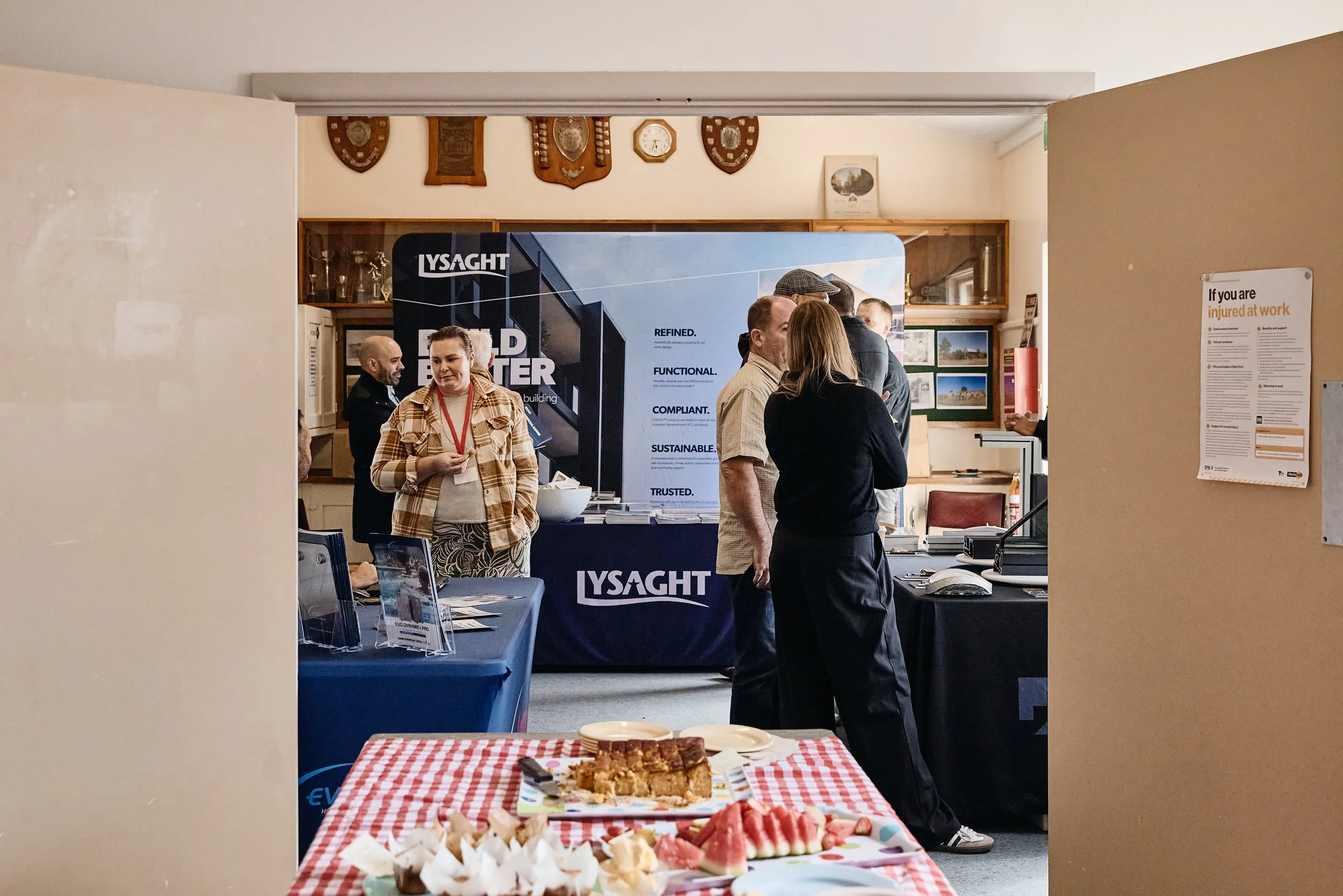
Some of the fabulous catering with Evoheat, AWS and Lysaght trade tables, photo by Jade Cantwell
Thank you to the RAA team, the creative directors, the speakers, and the suppliers who shared insights into some great products and materials too. A big thanks also to the wonderful catering staff — it felt as though the nurturing matriarchs of the C.W.A. were whipping up a storm in the community hall kitchen, yet the meals also had a contemporary focus on locally sourced, wholefood, home-cooked, allergy-friendly fare that was so delicious. The coffee-van to start the day was a genius inclusion for travel-weary architects in need of their morning caffeine hit.
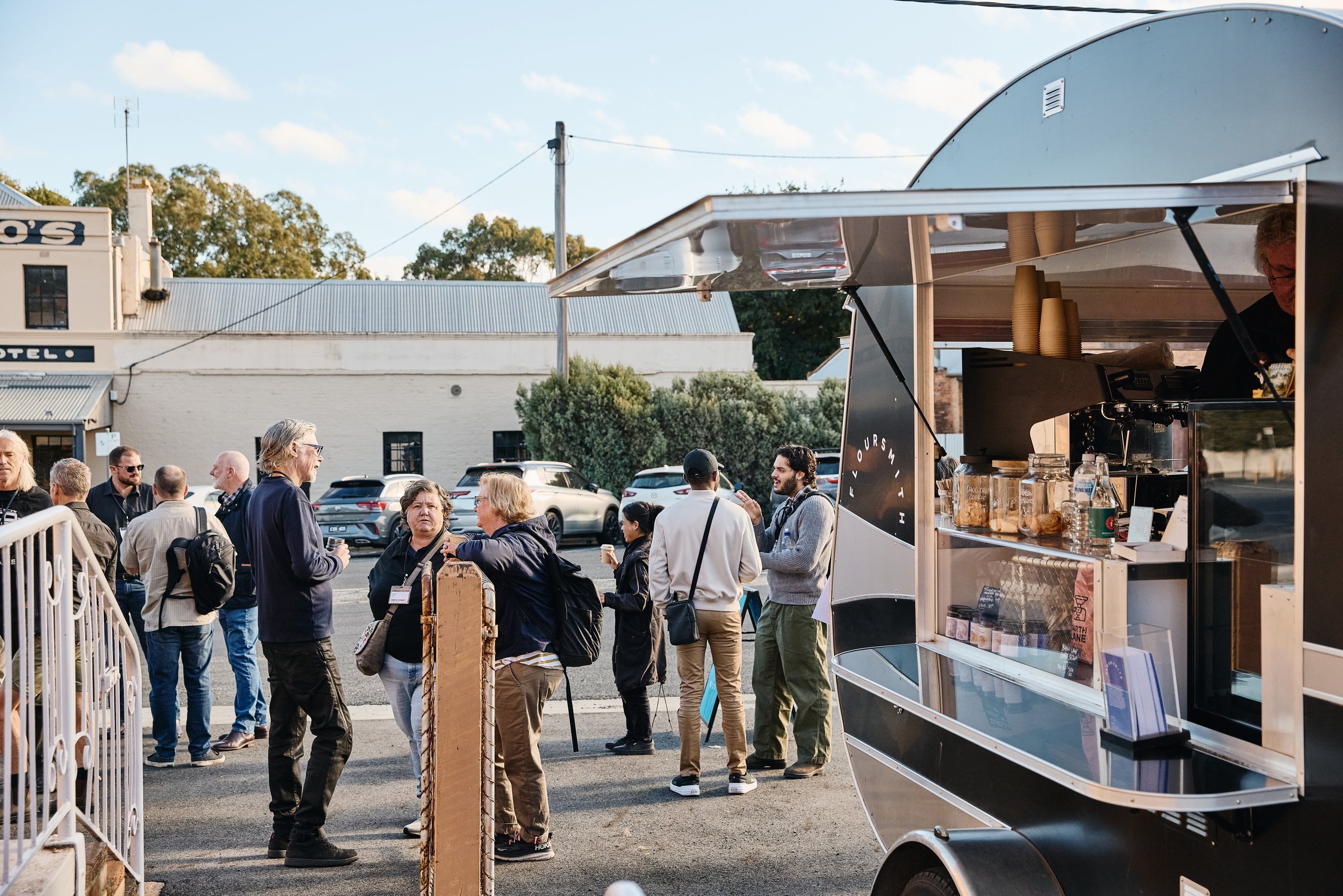
RAA community gathered around the coffee van, photo by Jade Canwell
Thanks, too, to fellow attendees, who all helped shape such a thoughtful and generous day. There were only a handful of locals, with many regional architects travelling from interstate, and it was heartening to hear that the day’s messages rang true for them as well. It was a valuable opportunity to gather, listen and reflect — and to be reminded of the real power of community.
Some of these lessons from the day have stayed with me in the weeks since, which is always a good sign of a thought-provoking event that inspires action. This was my first RAA conference, and I look forward to attending more RAA events in the future.
A special RAA thanks to the Technical Experts on hand during the event: Tanya Kibblewhite and Arnal Shyam from AWS, Adam Bonney from Evoheat, Kosta Kairis and Jonathan Cotterill from Lysaght and Nigel Puckeridge from Paperock. RAA would like to thank them for their commitment to design in the regions.
To become a member of RAA, join via the website or sign up to receive regular updates about our events and programs - and perhaps consider membership in the future.
