
Home Truths
Author: Prof. Anthony Burke
Architecture professor and ABC media presenter Anthony Burke is following over 100 housing projects in Australia and SE Asia. That’s a lot of grassroots intel on how tomorrow’s homes are being built today. Here, he shares insights and provocations about the critical role of shifting values, architects and the regions, from his online presentation for the RAA’s 2025 VITAL event.
When the Creative Directors of VITAL invited me to present at a Regional Architecture Association event in December 2024, I hadn't reflected much on the difference between the regional and urban projects our production teams follow, but it turns out that it's about a 70/30 split in favour of the regions. That's really interesting, because we only follow projects with some kind of innovation embedded in them. So, if I follow that logic: where are people innovating in architecture? Where are they doing things differently? Where are things being explored or prototyped? From my perspective, it's happening regionally.
In the current filming period with ABC shows, I've done over 110 meet-and-greets – initial conversations with homeowners about the aspirations for their home. Not necessarily their dream home, but their next house. Of course, this is a self-selecting group, because you only go on the show if you have some kind of story to tell, something innovative to share. So while we’re not looking at the middle of the bell curve of Australians, if you like, we are having these conversations with non-experts – ordinary people – who are really going for it in terms of design.
And that's very telling, because for us in architecture, we need to tune in to that more than we do at the moment. Our focus tends to be up the chain – policy, finance, regulations, those areas. It's difficult for us to look down the chain, at feedback from the homeowners themselves, but I think that conversation is vital.
Housing is a big topic right now, but what kind of housing crisis are we in? I don't think this is as straightforward as the media would have you believe; I think it’s much more culturally existential. And I also think our perspective in Australia is quite narrow when it comes to architecture and design. For context, one of the things I find remarkable, is that the residential land component of our wealth as a country is equivalent to 74 per cent of our GDP – that’s bigger than anything else we do. Bigger than mining, bigger than bonds or any other asset class. That says a lot about how we think of our residential homes as assets.
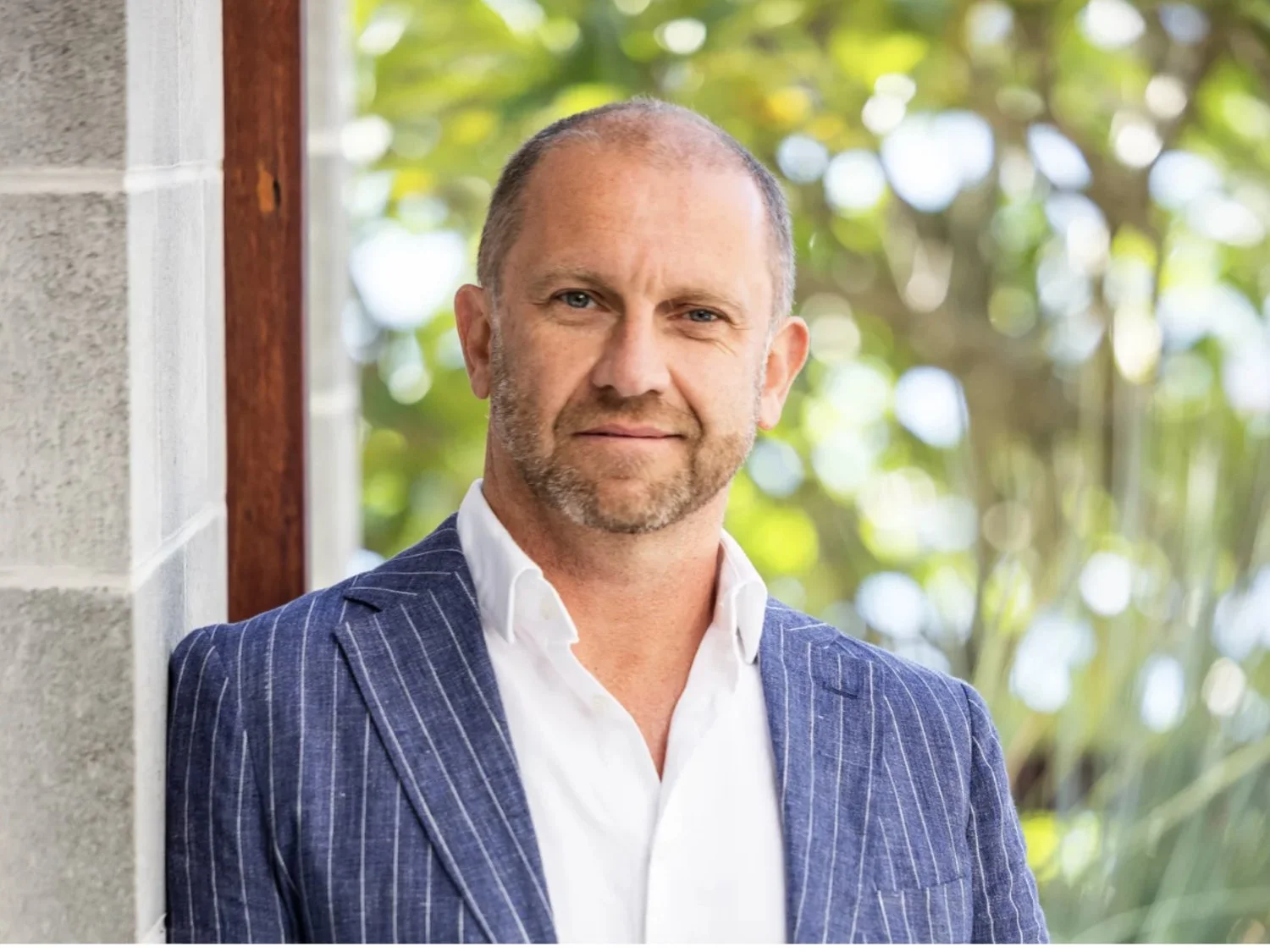
Professor of Architecture and TV presenter Anthony Burke.
Depending on who you talk to, the housing crisis is an issue of demographics, or it’s costs, or it’s supply and demand, or it’s land availability near jobs. Or it's a generational divide that's happened as the boomers hold on to their property, while ‘generation rent’ can’t even get into the housing market. The big fear about this wealth divide is that it’s fracturing our egalitarian idea of Australia, of what a home is and who is allowed to have one, based on generational wealth transfer.
On average, the research is telling us that we have a shortfall of about 433,000 properties for social or affordable housing, and the other side of that, for context about cost, is the rental price increases that we're seeing year on year, as much as 8.5 per cent in 2023. That affects one-third of all Australians, because we are now effectively thirds: one-third homeowners, one-third mortgage holders and one-third renters.
The media and politicians would have us believe that supply and demand is the biggest issue. But I don’t think that’s true – and here’s why. We've got about 11 million homes in Australia. There are a million – 10 per cent more or less – vacant at any moment in time. There are 13 million spare bedrooms around the country on any given evening. And there are, by contrast, 122,000 people who are homeless in Australia on any evening. So if you just do the maths, we could open up one per cent of the existing housing stock and we would solve the housing crisis – if our idea of solving the housing crisis was just to put a roof over everyone's head and let them feel safe and secure. So the question remains, as an affluent nation, how do we choose to tackle the housing issue, when housing is at the core of our personal and national wealth?
We've got about 11 million homes in Australia. There are a million – or 10 per cent more or less – vacant at any moment in time.
Those who talk about demographics and supply and demand are really talking about the link between homeowners and construction, which is where the government is pumping all the money right now: into a pipeline of delivery. And that’s great, but I would argue that it’s actually our idea of home that is broken, and the building as usual (BAU) way we build them. I use the phrase “BAU is broken” – which I like in this context because BAU is also the German word for building, or, home.
Sustainability wise, we are killing the planet one house at a time, with something like 30–35 per cent of the materials that go into a building site ending up in a skip, so we're not doing ourselves any favours in how we're building. And then there’s the question of size.
We currently have, on average, the second biggest new house size in the world, at 236 square metres – about a metre behind the Americans, last time I looked. That’s around three times the average house in Portugal, seven times larger than an average Hong Kong house, twice as big as Italy and the rest of Europe. So, if people in the rest of the world can live happy, productive lives without giant houses, why can’t we?
Demographically, Australia has changed enormously from when ‘The Great Australian Dream’ of home ownership for all took root in the postwar boom. The traditional definition of a nuclear family is today in the minority – accounting for 44 per cent of Australians today and falling, according to the Australian Bureau of Statistics (ABS) family projections for 2046. So 56 per cent of Australians exist in some other version of family. That's interesting because the way we keep designing houses is based on a nuclear family from the 1950s.
The type of family increasing the fastest between now and 2046 will be single (male) parent families of two kids – projected to increase 40–70 per cent. Let’s put that family in a home anywhere in Australia. What kind of home jumps into your mind? I bet it's a three-bedroom, two-bathroom, carport, driveway, small backyard, a bit of a front yard, single-storey, brick house. And for me, that's the problem. Why hasn’t the idea of what a home in Australia looks like changed in 70 years?
This is what we should all be thinking and talking about. Because if we just keep building more of the old idea of what a home is, even though it no longer reflects our society, then we’re actually just building more of the problem, not a solution – throwing good money after bad. And that’s what is happening.
At this point, I want to introduce some wildcards into the conversation. Nicole Gurran, Professor of Urban and Regional Planning and Design at the University of Sydney, recently told me that in her mind, it's not a question of supply and demand. The crisis is a question of access. And how do we find the mechanisms to release excess housing holdings back to the people who need it most, where they need it the most? That’s a big problem because there’s no mechanism for effectively talking about that.
David Kelly, a cultural geographer at RMIT’s Centre for Urban Research, said we solved the homeless crisis during Covid because all the rules changed overnight. In that moment, suddenly, people weren't on the street anymore, they were in shelters or used hotels. They had a roof over their head, and it was one that was enduring for more than one night at a time. Yes, it’s an extreme example, but it makes you think that if we have the tools at our disposal to make changes when we have to, what exactly is holding us back?
In Jakarta, Kampoong Guha (The Guild) by Realrich Architecture Workshop (RAW), a project that really questions the idea of what a home is. I love this project because, typologically speaking, it isn't a house at all. It started off as a house, then became a house and an office. The office grew to have 20 people, that then included a library, which was open to the public twice a week. Then there was a dentist, then there was housing for the workers. Then there was actually a farm on the roof, growing food. So you've got, a tortoise and goats and chickens up there, and of course, to our trained architectural eyes, this looks like a bit of a mess, but actually it's a complete delight to walk through.
WHAT IS A HOME?
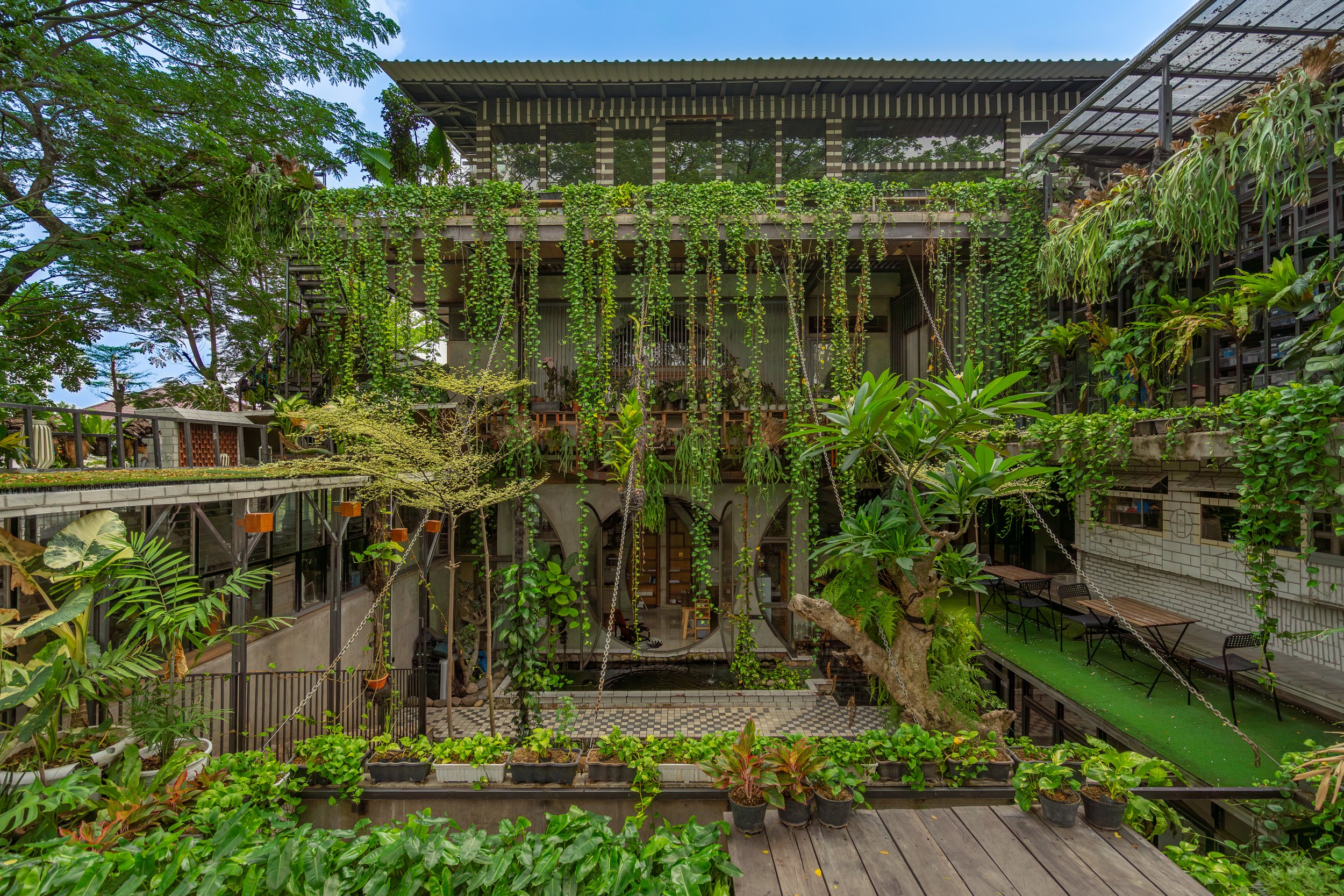
Courtyard at Kampoong Guha, Jakarta, by Realrich Architecture Workshop (RAW).
Photo: Lu Luil Ma Nun, Aryo Phramudito
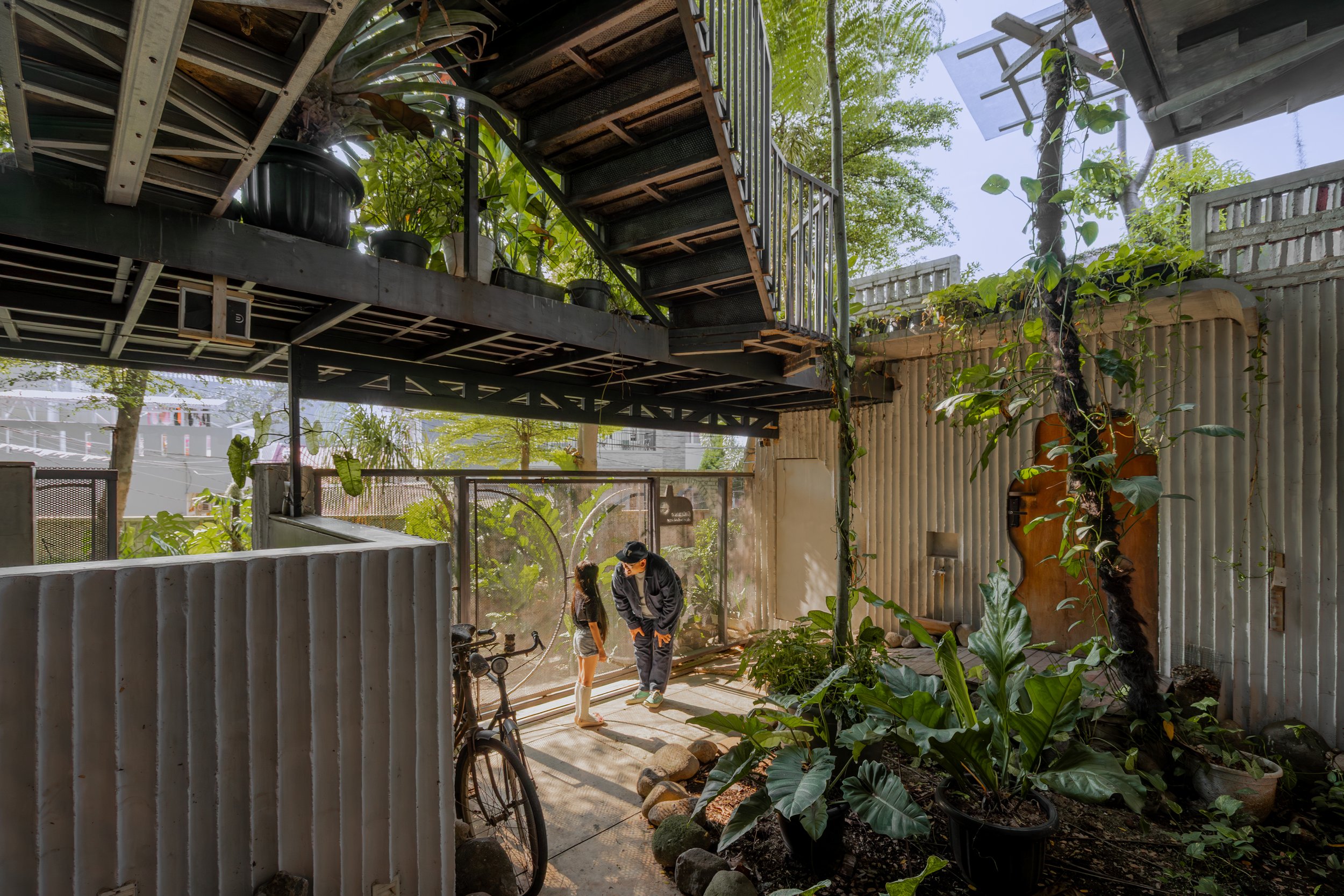
Library entrance at Kampoong Guha, Jakarta, by Realrich Architecture Workshop (RAW).
Photo: Lu Luil Ma Nun
The whole place is fantastic, heaving with social connections and interaction, that are so far outside our idea of what is possible in Australia. That’s why I fell in love with it. I challenge anyone here to open up their front room on the street as a public library twice a week to whoever walks by. Can you even imagine that? But that's what's happening in Jakarta. The architects at RAW found a way to make it all work. A way to bring a community, a whole neighbourhood, into that kind of thinking, which I think is really beautiful.
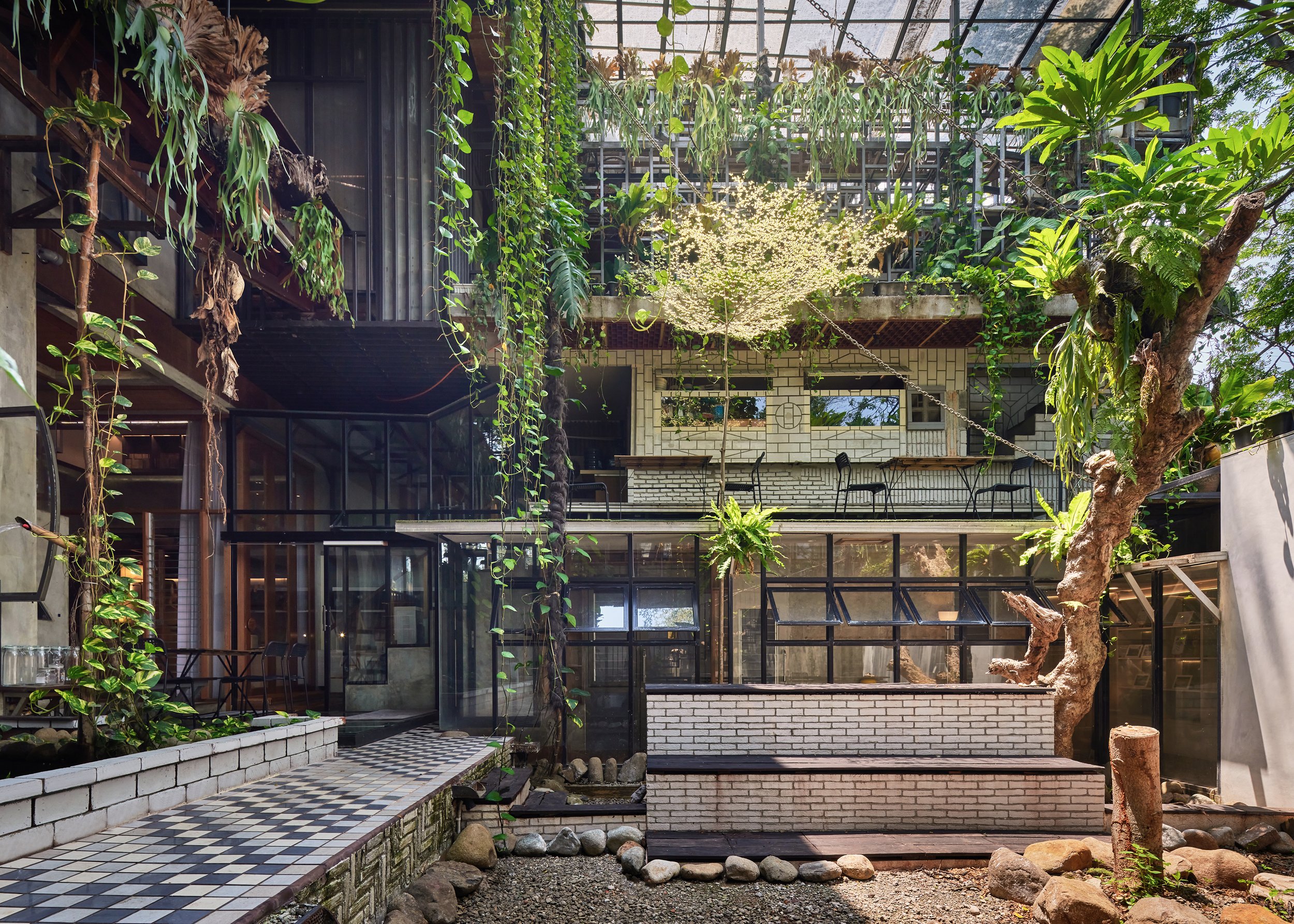
Courtyard at Kampoong Guha, Jakarta, by Realrich Architecture Workshop (RAW).
Photo: KIE Arch
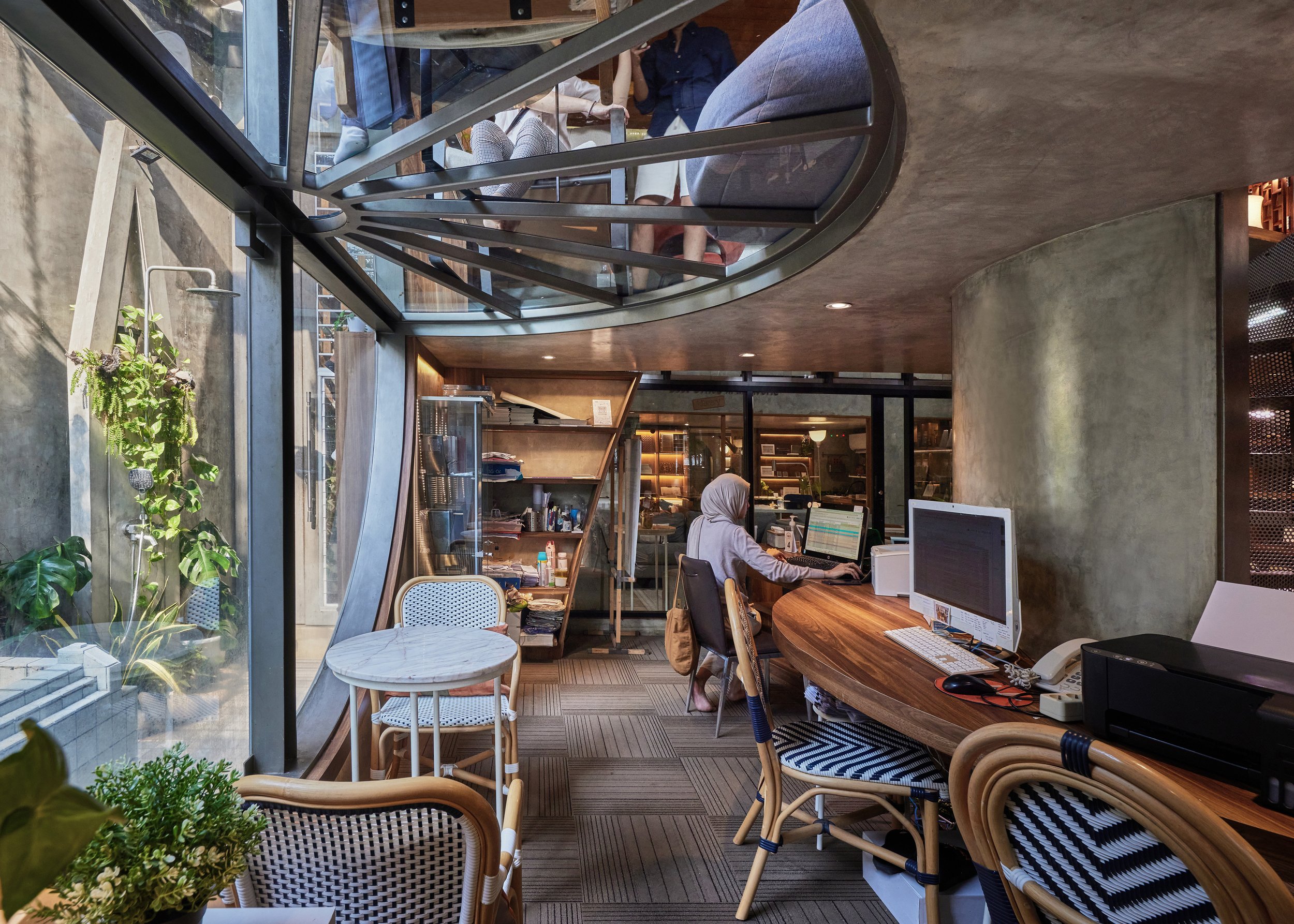
Library Mezzanine at Kampoong Guha, Jakarta, by Realrich Architecture Workshop (RAW).
Photo: KIE Arch
We urgently need to rethink our housing typology, away from the vanilla models of the past to embrace a diversity that reflects today’s society and its many forms of family.
So, the typologies are one idea. The second idea is de-risking innovation. We urgently need to rethink our housing typology, away from the vanilla models of the past to embrace a diversity that reflects today’s society and its many forms of family. This should be a bigger government priority. I’d like to take one tiny slice of the $20 billion the federal government is putting into housing supply and put it towards new typologies and actually test them, so people can walk around in them.
Solving the crisis is a generational and cultural project. I think we’re just at the beginning of 20 years of innovation before we arrive where we need to – at the next version of the Australian home. We won't know what that looks like for 20 years, but we, as architects, together with our clients, have to work on that now – to make mistakes, fail fast and fail often, in search of the models that will work actually have a chance of rising up.
How is this a regional issue? The regions represent a huge asset for testing new models, that reframe typologies away from the typical false binaries of city/country, high-rise/low-rise, high-density/low-density. Does that mean we should start an exodus from cities to the country? No. There's already a slow growth in migration into the regions, and steady organic growth over time is better for those communities than the boom and bust of bygone days.
The good news is, having travelled a lot around regional Australia, especially in the past six years shooting for TV, I've been lucky enough to witness a lot of innovation and great things happening in regional Australia, which I don’t think is being spoken about enough. People like the CSIRO are holding a couple of Living Labs around Australia right now: one in Darwin, one in Sydney, and in Lismore, the Northern Rivers Living Lab is doing the same sort of thing – looking at alternative models of housing people and galvanising communities for resilience, often in the face of natural disaster or climate change emergencies.
Orange, in the NSW Central Tablelands region, is another good example of leadership. They're already talking about themselves as the ag-tech hub – the press is pumping them up as the next Palo Alto of innovation in the regions, which is really interesting. There’s a lesson here for our profession. We have an amazing platform for advocacy but we don't always use it very well. We're not talking to the average Australian, who is going to shift the needle of culture little by little.
I often return to a quote by Robin Boyd because I think there’s truth to this idea that in Australia we shuffle about in mediocrity, scared of big ideas. But I think the time for that is over, and we have to find a way (and the courage) to prove Robin wrong.
“The basis of the Australian ugliness is an unwillingness to be committed on the level of ideas. In all the arts of living, in the shaping of all her artefacts, as in politics, Australia shuffles about vigorously in the middle – as she estimates the middle – of the road, picking up disconnected ideas wherever she finds them.” (Robin Boyd, The Australian Ugliness, 1960)
Anthony Burke is a Professor of Architecture at the University of Technology Sydney, a TV presenter, local and international tour leader, event host and global lecturer, with an endless fascination for the role of architecture and design in shaping our lives.