
ARCHITECTURAL INTELLIGENCE - event wrap by Hanna Shojaee Pour
MEANJIN / BRISBANE, 28-30 MAY 2026.
PHOTOGRAPHY BY NATALIE McCOMAS with fringe event images by Louisa Gee & Rebecca Whan
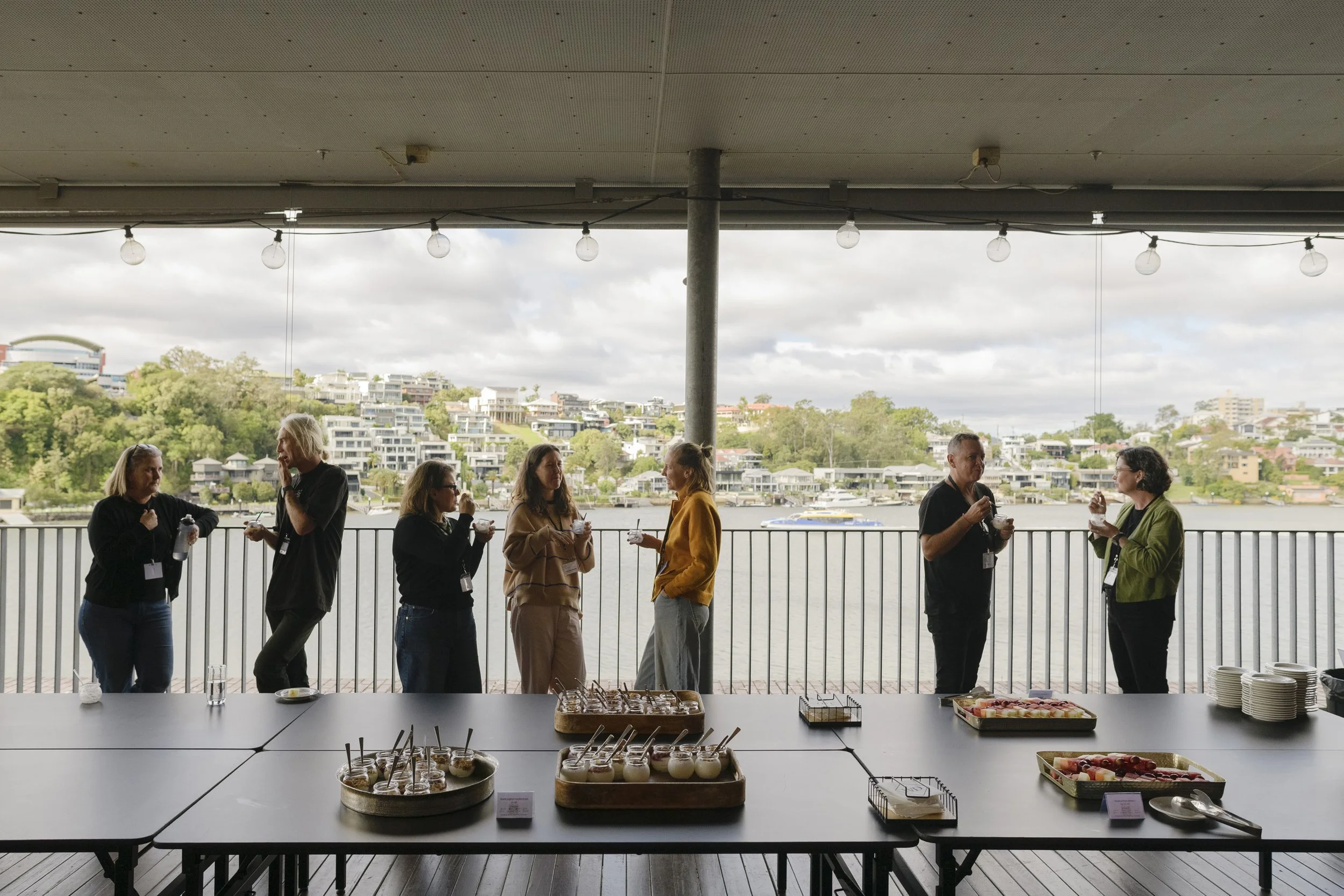
Delegates enjoying the river view from the Brisbane Powerhouse. Photo: Natalie McComas
I came to this event from Tasmania, which - if you've ever tried to get out of Tasmania - already requires a certain level of commitment. This was my first time in Brisbane, my first in-person RAA event, and, if I'm being honest, the first time after quite a while that I'd been in a room with that many architects at once outside of a university corridor. I'm a researcher in architectural online media, which means I spend most of my time thinking about how architecture firms present themselves online rather than actually being in rooms with them. So there was a slight irony in arriving at an event titled Architectural Intelligence with a notebook, a recorder, and a mild obsession with Instagram analytics.
The three-day program was structured around a Thursday fringe, a Friday main seminar day at the Brisbane Powerhouse, and a Saturday of site visits. I joined the urban sketching workshop on Thursday afternoon and the Green House site visit on Saturday, framing the main event on either side with a kind of slow, observational bookending that turned out to be oddly appropriate.
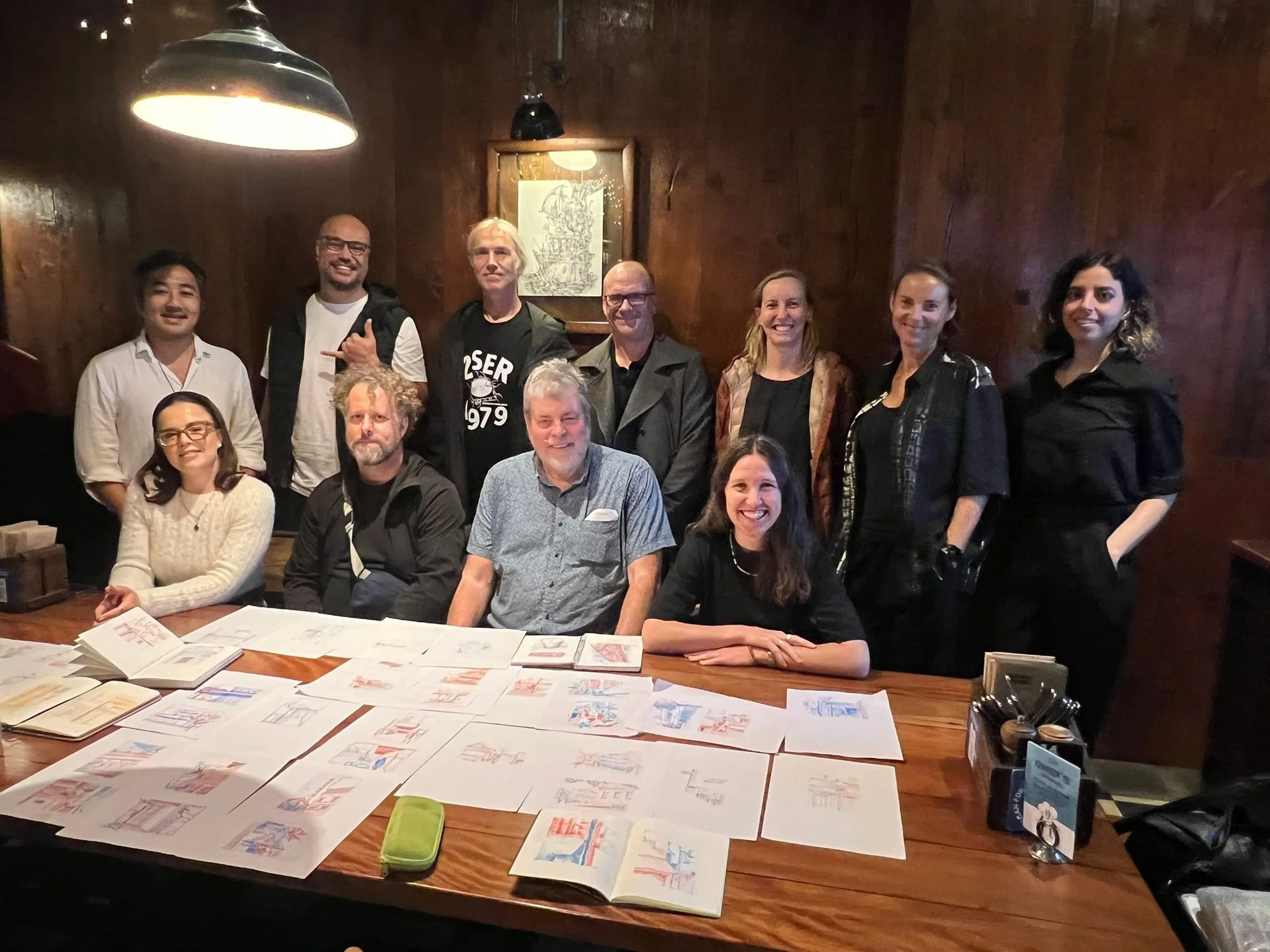
The drawing workshop group group with Peter Richards (centre) and our author (far right). Photo: Louisa Gee
THURSDAY: SLOW LOOKING
The urban sketching workshop, led by architect and teacher Peter Richards, started outside the Brisbane Brewing Co in West End and moved through the neighbourhood from there. Richards' premise was straightforward: sketching as a mode of careful looking, a way of really occupying a place rather than moving through it. We worked in coloured pencil; small, quick, committed, and it became clear almost immediately that the discipline of having to put something down on paper forces a kind of attention that photography doesn't. Richards’ philosophy felt like a necessary grounding exercise before a weekend focused on “intelligence”. Moving through the urban environment with coloured pencils, I felt the shift from my usual research-heavy mindset to a more tactile mode of observation.
I'm not going to claim my drawings were good. But the afternoon had a particular quality to it, it was unhurried, hands-on and grounded, which set a useful tone for what was about to follow. There's something worth noting in the fact that an event about artificial intelligence began with an exercise in making marks by hand.
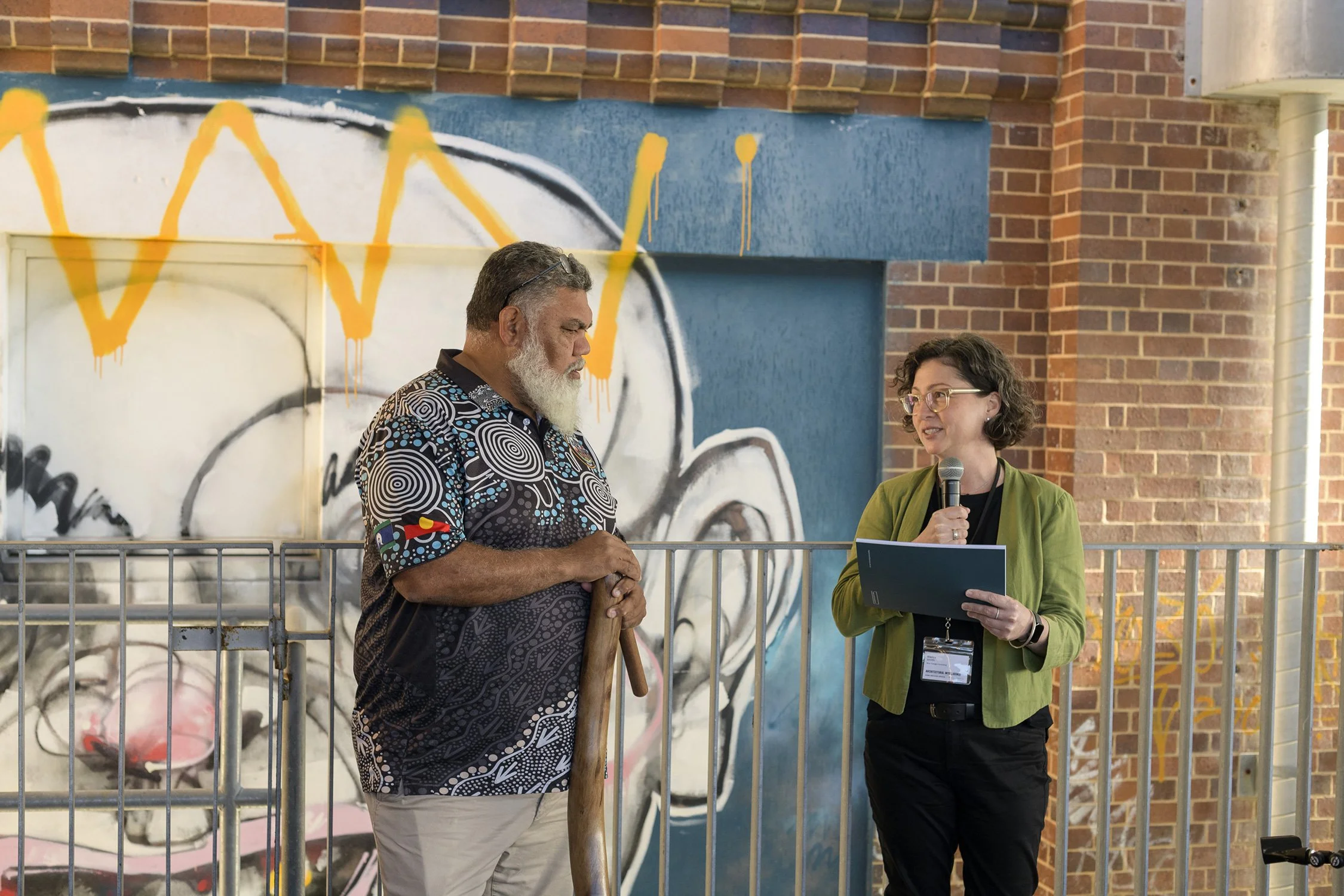
Co-creative director Bianca Smith (right) introducing Goma Conlon (left), a proud descendant of the Wakka Wakka, Kabi Kabi, Koa and Kullilli Nations, who delivered a Didgeridoo Performance on behalf of the Turrbal People of Brisbane. Photo: Natalie McComas
FRIDAY: THE MAIN EVENT
The Brisbane Powerhouse is a converted power station on the river in New Farm, and it's the kind of venue that makes you feel like something is about to happen. The seminar day opened with a Welcome to Country, followed by introductions from creative directors Sarah Aldridge and Bianca Smith. Smith, who described herself as a “data systems and processes nerd”, set the day's central tension early: the intersection between technological capability and whatever it is that makes the profession irreducibly human.
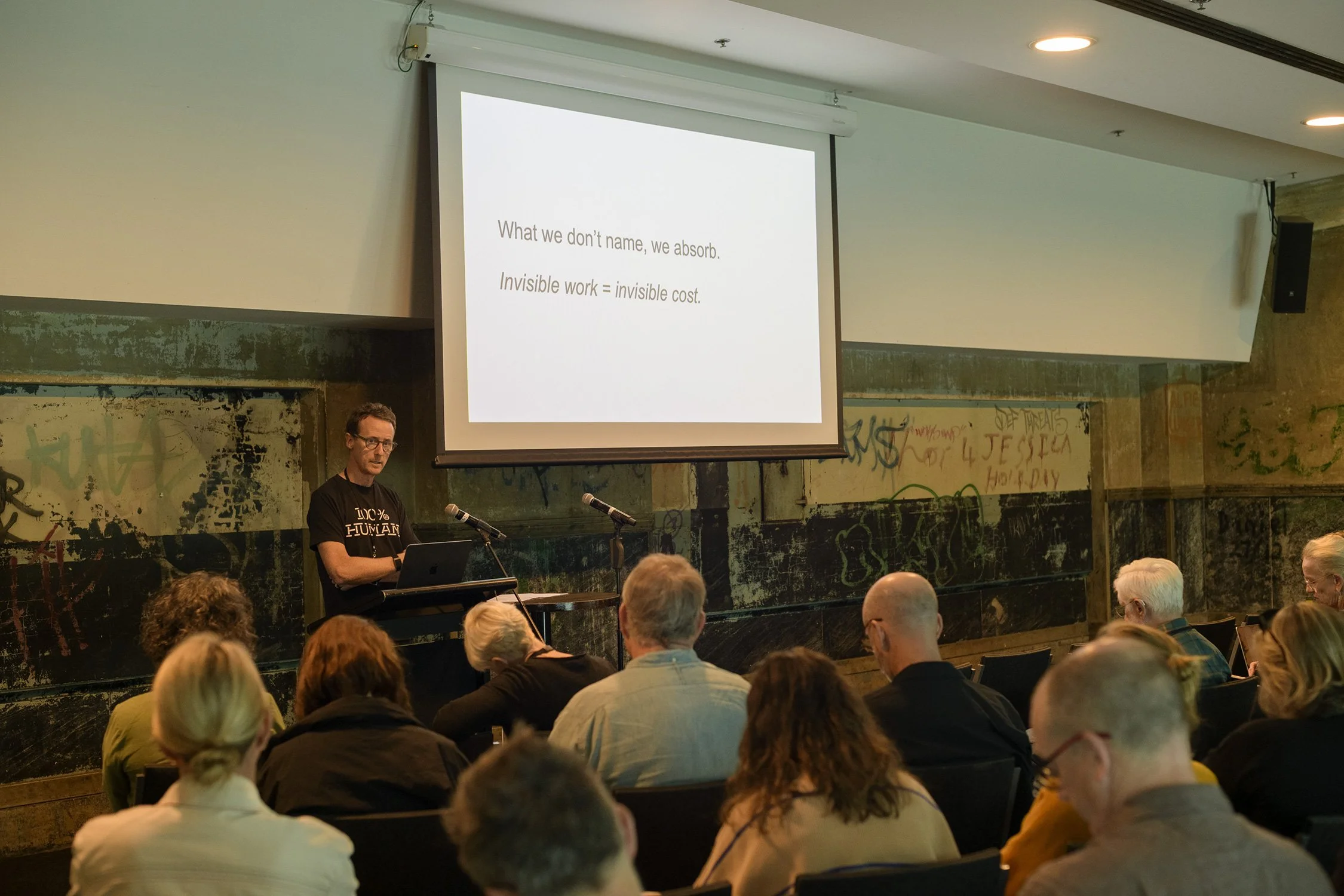
Brian Clohessy. Photo: Natalie McComas
SESSION ONE: WHAT AI ACTUALLY IS (PROBABLY)
Brian Clohessy of BVN opened with a talk that was a therapy session for many, focusing on the emotional labour of architecture. His framing - AI as a “wildly enthusiastic first-year student” landed well. He drew a line back to the profession's transition from drawing boards to CAD, noting that increasing the speed of production tends not to result in architects doing less work; it tends to result in clients expecting more of it. The technology absorbs the time it saves.
What Clohessy argued is that the more durable value of AI lies not in generating content but in managing the emotional texture of professional life: drafting a calmer response to an angry client email, summarising a messy meeting into something usable, smoothing out the “bad friction” of communication. It's a modest but genuinely useful framing, not AI as design oracle, but AI as the thing that stops you from sending an email you'll regret at 11pm on a Tuesday.
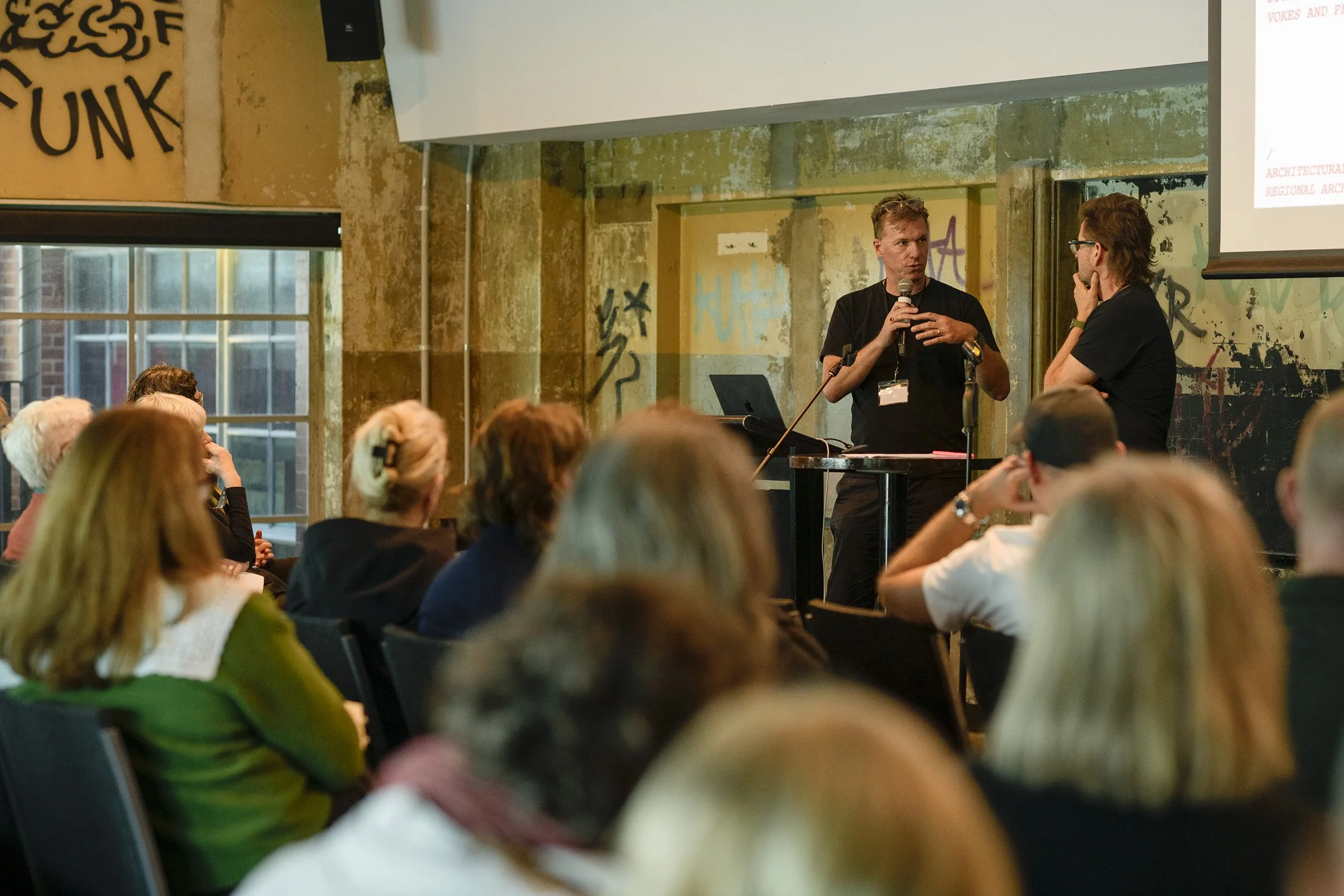
Dr. M Hank Haeusler (left) and Stuart Vokes (right). Photo: Natalie McComas
SESSION TWO: SCALE & SUBSTANCE
Dr M. Hank Haeusler from UNSW brought a different register entirely. His argument was structural: the construction industry faces the challenge of housing a global population of 9.7 billion while meeting net-zero targets, and the only way to do that at the required scale is through digital tools applied with genuine precision. He was direct about what this requires, what he called “digital literacy”: the ability to ask the right questions of a system and understand what you're getting back. He framed AI as a “one-trick pony”, arguing that its intelligence is limited to highly specific tasks with precise data.
Stuart Vokes of Vokes and Peters offered a personal counterpoint, a practitioner’s account of moving from a near-obsessive interest in structural intelligence and modular grids toward something more pragmatic. His work with Block Modular has put him at the intersection of volumetric construction and traditional practice, and he was candid about what that reveals: that the Australian building industry is, in his words, broken, and that modular companies won't fix it by simply replicating the behaviours of traditional builders. The precision of manufacturing is a different discipline, and it demands to be treated as one. His provocation “just how much house is enough?” was one of the genuinely useful questions of the day.
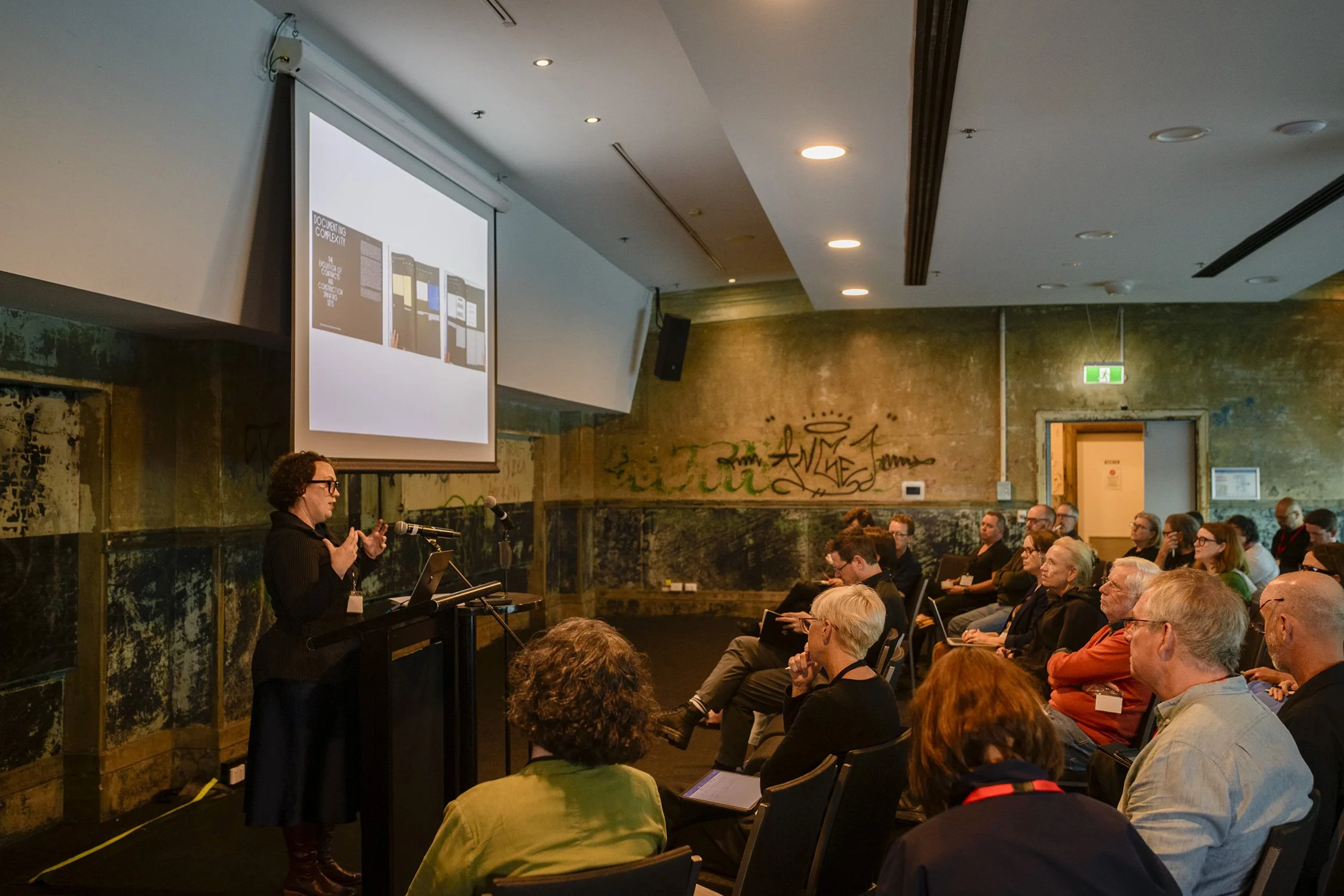
Dr Kirsty Volz. Photo: Natalie McComas
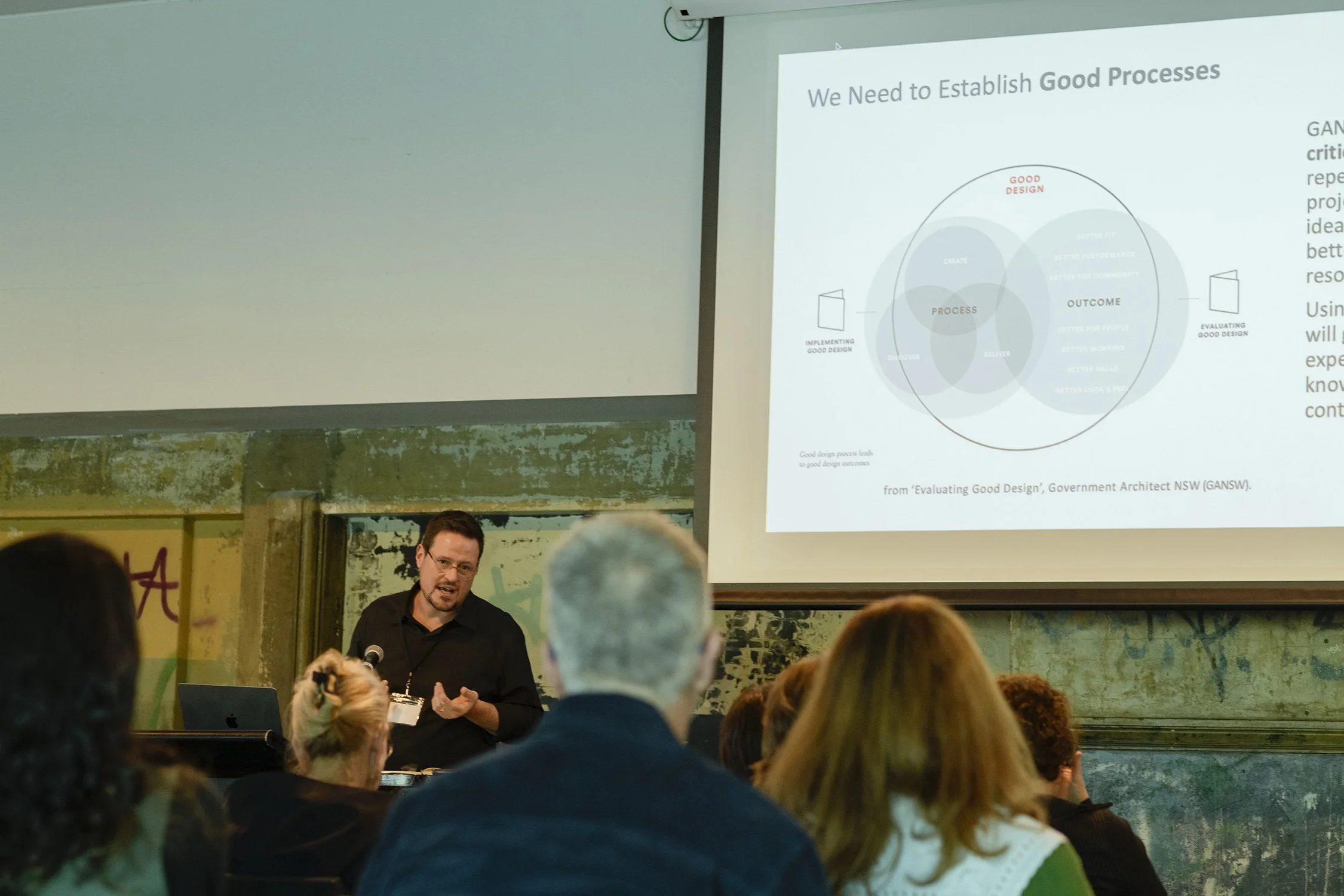
Sam Charles-Ginn. Photo: Natalie McComas
DATA, GOVERNANCE & EVIDENCE
Dr Kirsty Volz of QUT reframed what architectural expertise can do when it moves beyond individual building design. Her research on 3D-printed housing in Dubbo, where sensors embedded in the structure collect data on indoor environment quality, offered a concrete example of architecture as evidence production. For communities where energy efficiency is not a design preference but a financial necessity, being able to prove that an innovative construction method actually works carries real weight. Drawings, she argued, are artefacts of the profession, not just representations, but records.
Sam Charles-Ginn from the Office of the Queensland Government Architect spoke about design governance through nine principles aimed at producing what he called a “Statement of Design” for public works. The framework is about ensuring that projects deliver social impact beyond their completion, which sounds like a reasonable aspiration until you consider how rarely procurement systems are structured to incentivise it. The conversation between good design intent and the machinery of public delivery is not new but having it out loud in a room of practitioners is still useful.
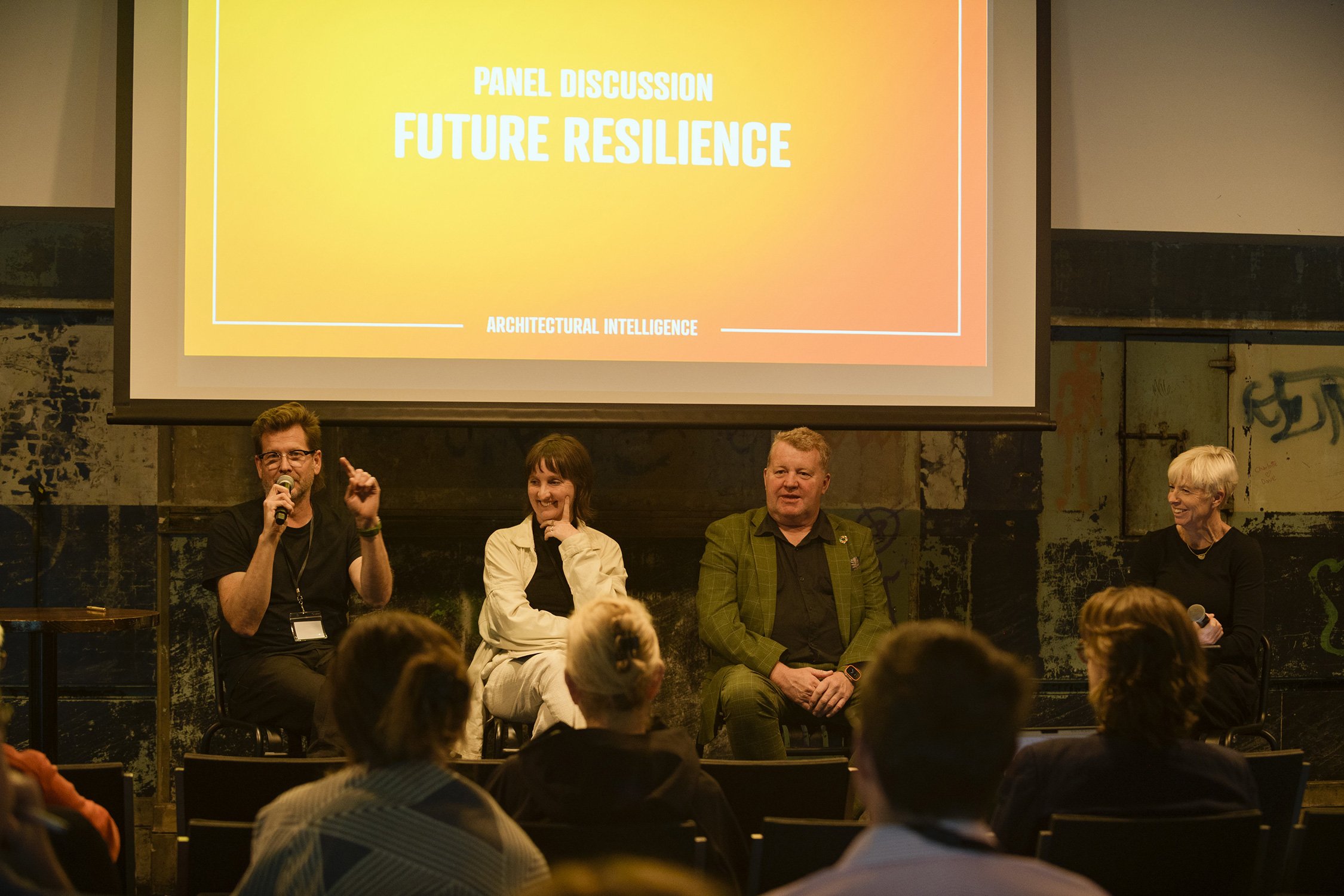
L-R: Stuart Vokes, Emma Healy, Tim Elgood & Sarah Aldridge. Photo: Natalie McComas
SESSION FOUR: THE PANEL
The afternoon panel moderated by Sarah Aldridge and including Tim Elgood of ADP Consulting, Emma Healy (Department of Housing & Public Works), and Stuart Vokes (Vokes & Peters), turned toward bigger-picture questions about where the profession is going and what it's for. Elgood's framing of social impact as the emerging currency for built environment professionals felt like it belonged to a conversation that has been slowly becoming mainstream. Healy's emphasis on Indigenous terms of reference in design governance brought some of the day's most direct language about what architecture means to communities for whom it is not an aesthetic question but a question of identity and continuity.
Vokes, returning for his second session of the day, made the observation that stuck with me most: that architecture is the only industry that sells the first prototype to a client, with zero research and development built into the fee. Every project is a live experiment. The architect's role, in his telling, is to be the “circuit breaker”, the person in the room who advocates for beauty, comfort, and joy in a conversation that is mostly about liability and cost. It's a high-wire act with limited institutional support, and he didn't pretend otherwise.
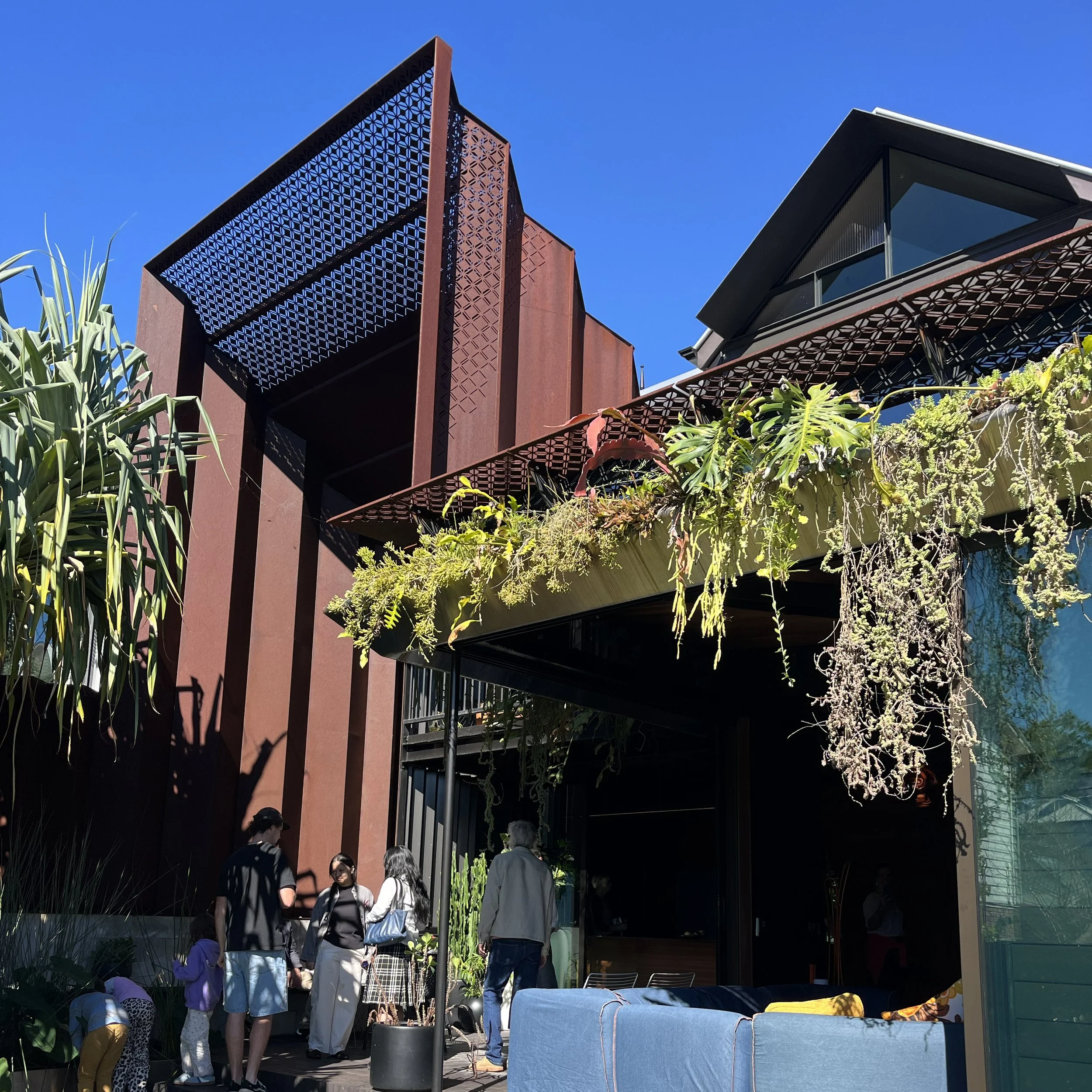
Green House By Steendijk Architecture. Photo: Rebecca Whan
SATURDAY: THE GREEN HOUSE
The Saturday site visit to Steendijk Architecture's Green House - a reworking of a historic Queenslander - offered the best possible corrective to a day of abstraction. In the project, the logic of the Queenslander form (elevated, ventilated, responsive to climate) becomes legible again in a contemporary register. After a day spent discussing the future of the profession at scale, it was clarifying to stand in a room where the decisions were small, specific, and visible.
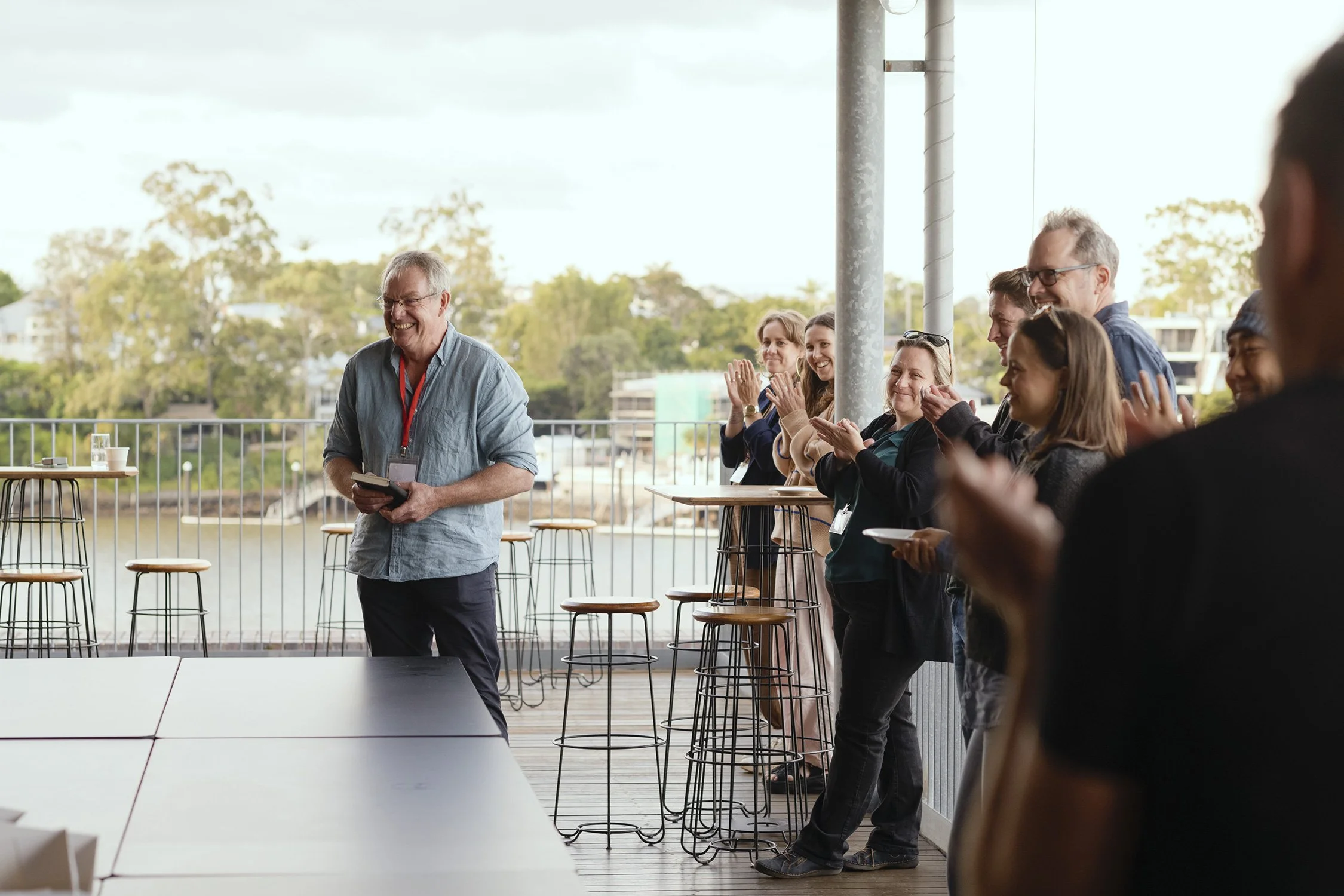
RAA President Tim Lee marking the association’s 5th birthday at the event. Photo: Natalie McComas
reflections from the intern’s desk: a note on the bigger picture
I spent much of the Friday recording talks and taking notes, which is, admittedly, an occupational hazard when your research is about how architecture firms communicate. What I kept returning to across the day was a tension that the event's title, Architectural Intelligence, captures without fully resolving. “Intelligence” in architecture has always been multiple things at once: technical competence, design judgment, relational skill, material knowledge, civic responsibility. AI, in this context, is not replacing that complexity; it's arriving into it, with all the affordances and frictions that implies.
Several speakers touched on this without quite naming it. Clohessy's framing of AI as a communication tool, Haeusler's insistence on digital literacy, Vokes's question about what the industry is actually for… these are all, in different registers, arguments about where human judgment sits in relation to machine capability. The answers aren't settled, which is perhaps why the room felt engaged rather than satisfied.
What the event did well was resist the temptation toward either uncritical enthusiasm or reflexive anxiety. The conversations were grounded and occasionally funny. As RAA celebrates its fifth birthday, I think it’s clear that the association’s true intelligence lies in its people. Brisbane, it turned out, is a perfectly reasonable city.
A special RAA thanks to the Technical Experts on hand during the event: Gabriel Tieppo and Meg Shaw from Allegion, Adam Bonney and Lachlan Mills from Evoheat, Jeff Trevarthen, Linda Le and Jane Burgess from Danpal Marcio Da Silva and Daniel Page from No. 1 Roofing & Building Supplies, Luke Wyatt and Keityn Miller from Stone Style and Hamish Kofoed from Viridian Glass. RAA would like to thank them for their commitment to design in the regions.
To become a member of RAA, join via the website or sign up to receive regular updates about our events and programs - and perhaps consider membership in the future.
