
ARCHITECTURAL INTELLIGENCE - event wrap by Rebecca Caldwell
MEANJIN / BRISBANE, 28-30 MAY 2026.
PHOTOGRAPHY BY NATALIE McCOMAS
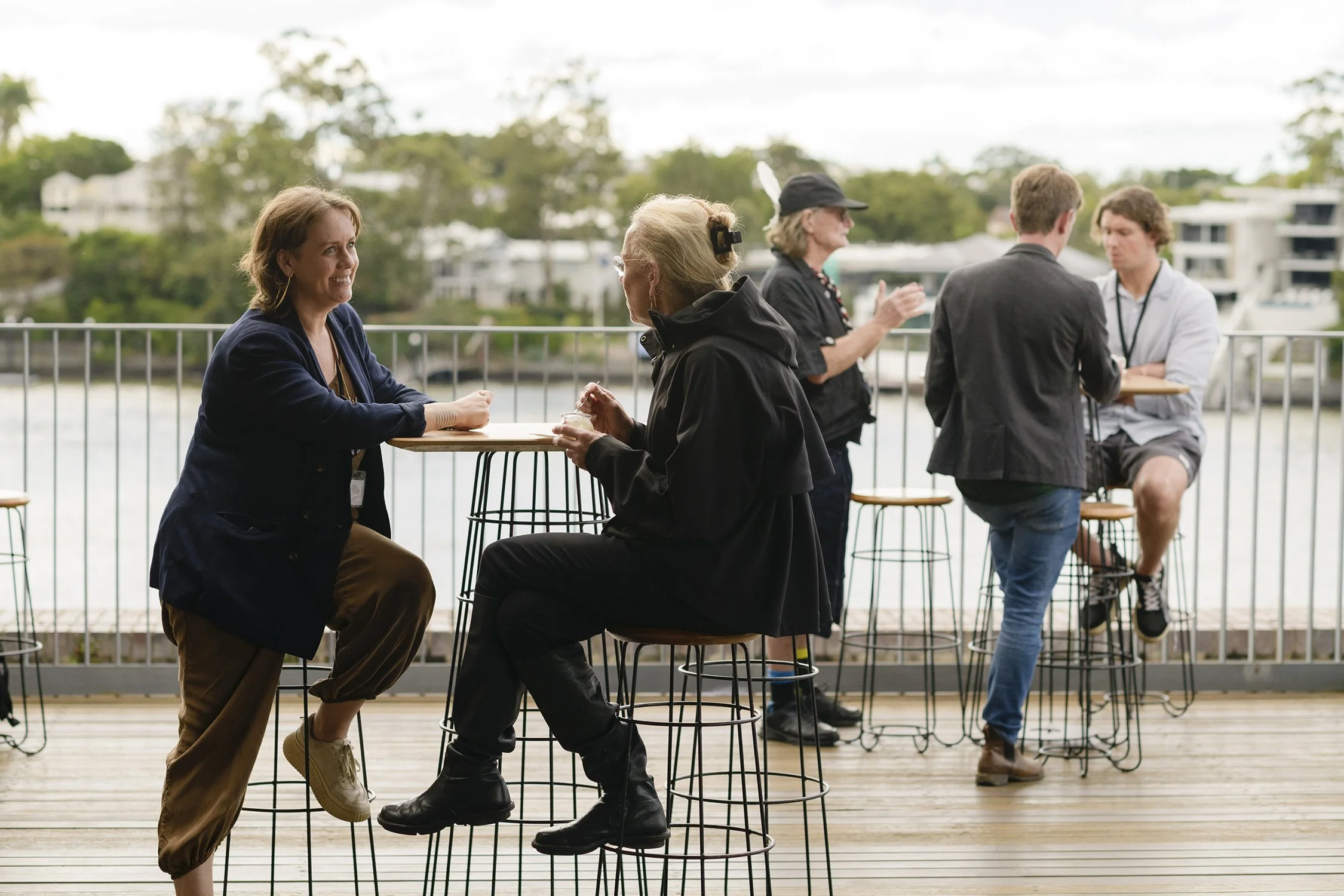
Author Rebecca Caldwell enjoying the social side of the event. Photo: Natalie McComas
“I want you to pick up on themes and ask probing questions of me so I can think about what and how to write this. I do not want you to write it or make assumptions, make up any facts or be flattering. I want you to be analytical.”
(What I told my friend Chatty-G before loading in the prospectus, my notes and my key takeaways)
Before I dive too far into the dense, syrupy content that is Artificial Intelligence I just wanted to make a small reflection on this gathering. Before the day even started I learned two things:
Regional Architecture Association also known as RAA is said ‘RAARRRGGH’ (like a lion); and,
This is a really warm association of architects for whom connection is seriously valuable - resulting in a wonderful day and evening of conversation and new friendships.
Over 5 keynote talks curated cleverly by Sarah Aldridge and the team, AI sat in the background of almost every conversation, but was rarely the main character. Rather than discussing which tools to use or how to write the perfect prompt, speaker after speaker circled around a more fundamental question: if technology can increasingly produce the things architects make, what is it that architects actually do?
Hint: the answer wasn't drawings.
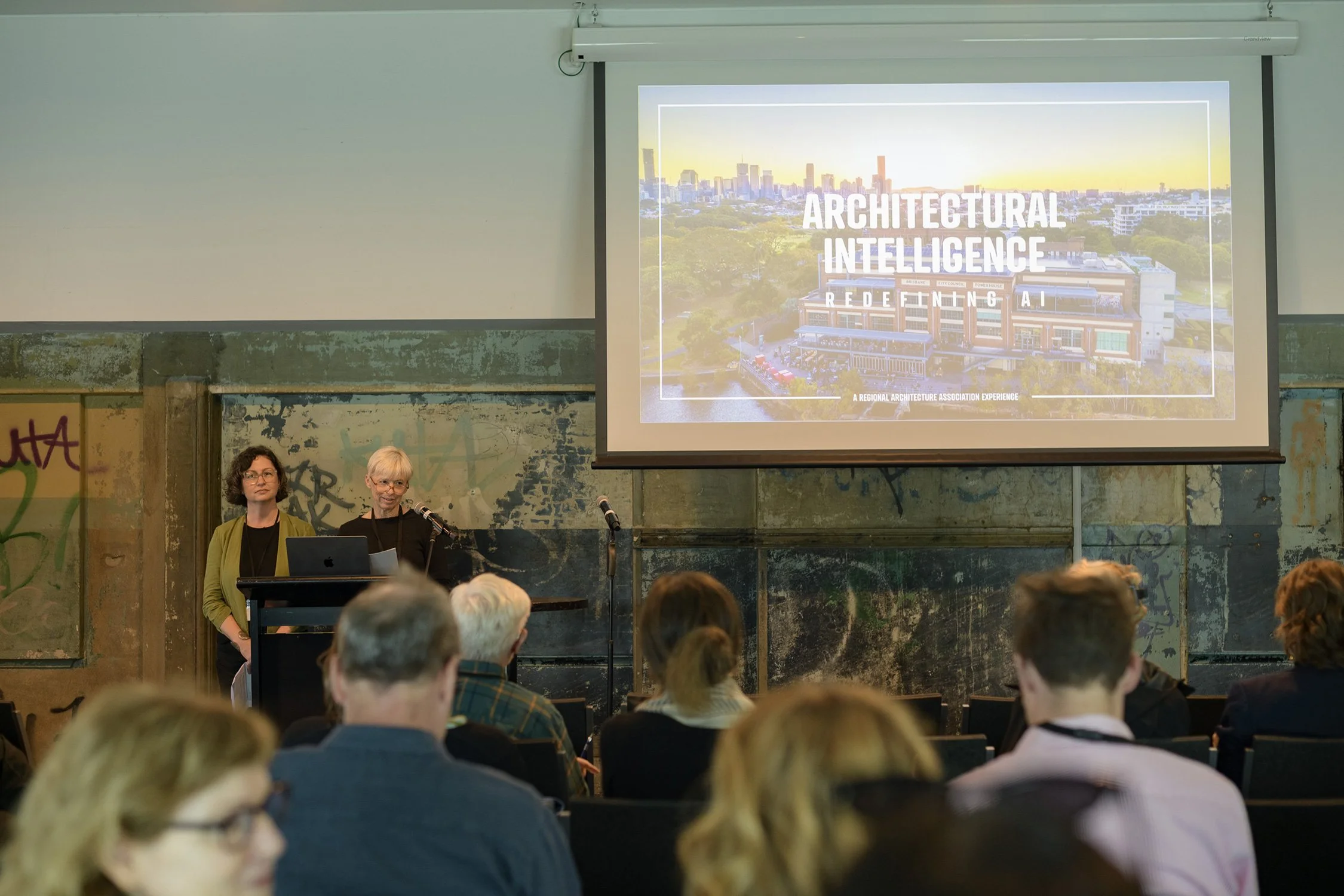
Co-creative directors Bianca Smith & Sarah Aldridge. Photo: Natalie McComas
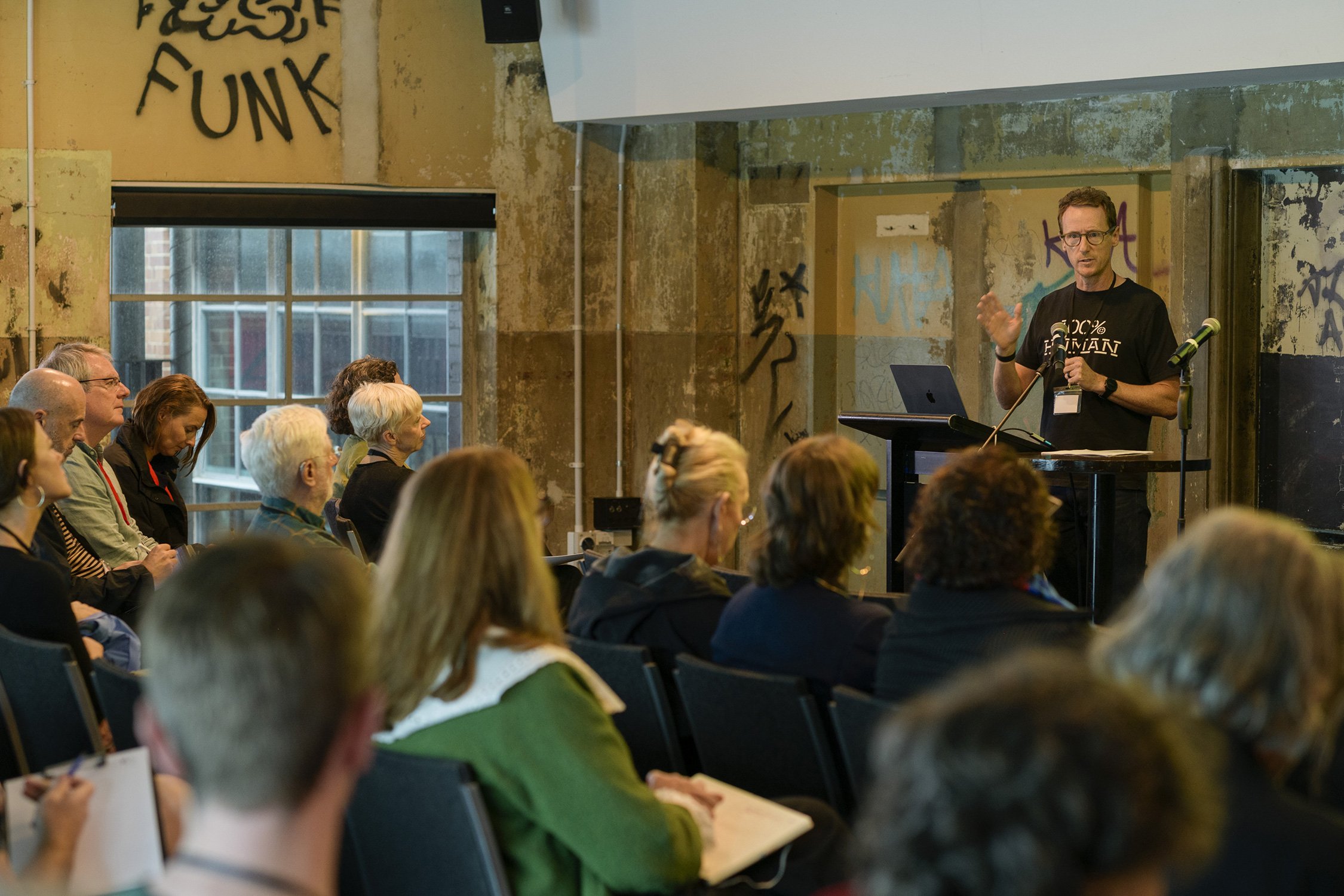
Brian Clohessy. Photo: Natalie McComas
Kicking off the day with humour, Brian Clohessy, described AI as being "a bit like an architecture student - always enthusiastic, sometimes brilliant and always needing oversight". His focus was on what becomes more valuable as technology advances: judgement, empathy, relationships, care and the ability to navigate complex human relationships.
In his view, AI becomes a lightning rod for defining what is distinctly human.
We were asked what our first feeling was when we thought about AI. Mine was ignorance. My neighbours and many others in the room identified fear. Perhaps most significantly, fear of losing relevance. The question lingering underneath many conversations wasn't whether AI can produce drawings. It was whether architects will still recognise themselves in the work.
That thread continued throughout the day.
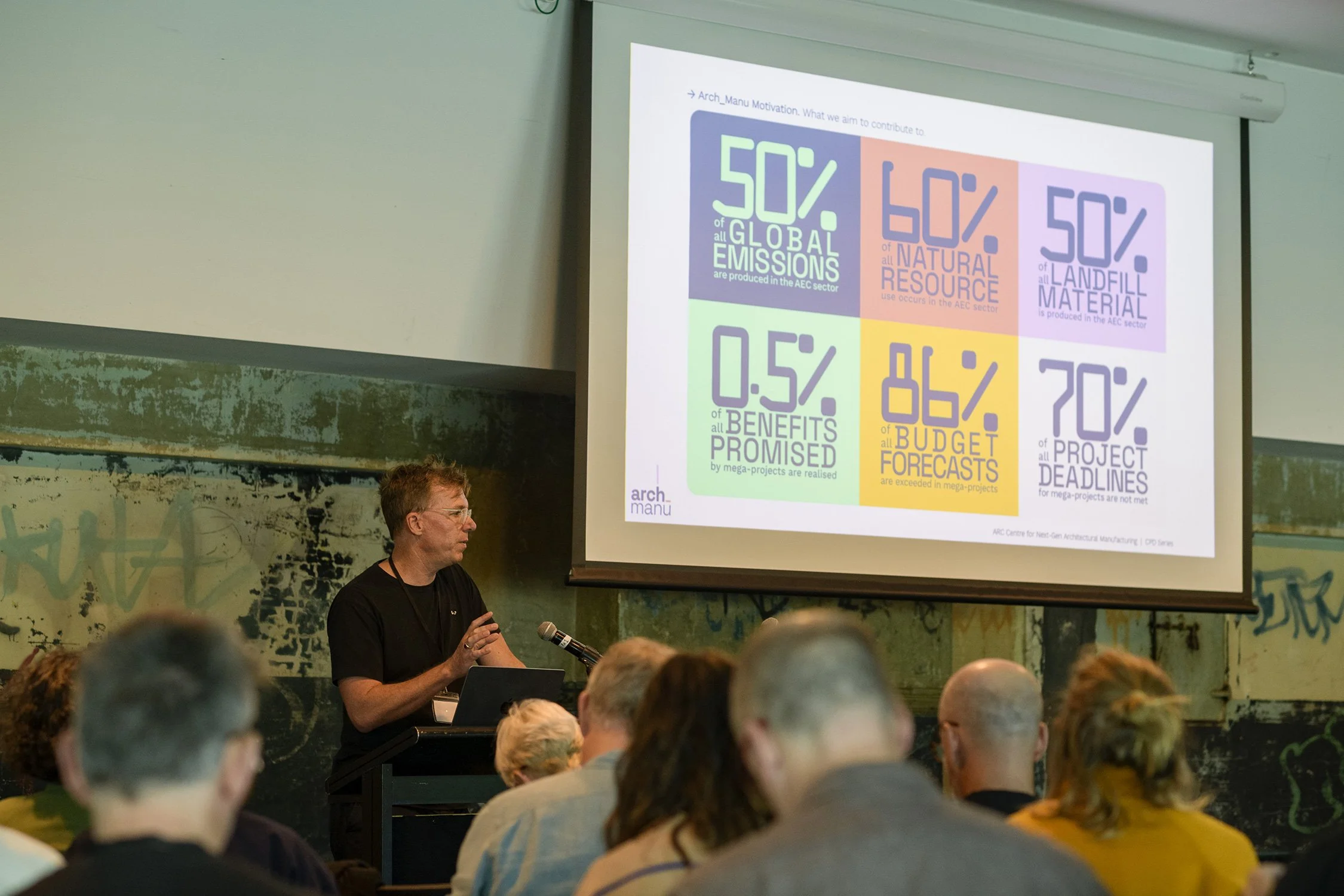
Dr M. Hank Haeusler. Photo: Natalie McComas
Dr M. Hank Haeusler, who heads up Arch_Manu at UNSW, brought the most technical lens to the conference. His work focusses on optimising architectural processes through digital means, with the goal of helping the industry respond to the economic, social and climatic challenges racing towards us.
His message was clear: the profession needs to rapidly improve its understanding of AI and digital workflows. But rather than thinking big, he encouraged the room to think "very, very small" - scope, job, task and process mining. Only by understanding the minutiae of how we work can we generate enough meaningful data to train AI systems for architectural applications.
As my Practice Manager will confirm, I'm hard-pressed enough to complete my timesheets each week so the words ‘process mining’ makes me squirm. But the point looped me back to Brian's opening talk. What we don't name, we absorb. Invisible labour has invisible value (exactly why I fold the washing in the dining room!).
For architects, some of the most important parts of our role are rarely documented at all. The emotional labour of projects. Difficult conversations. Relationship management. Judgement calls. The work of keeping people moving in the same direction.
As Brian observed the question is not ‘how can this help me do more? But how can this help me do the deeply human part of my job with less emotional cost.”
Perhaps some process mining isn't the worst thing I could be doing…
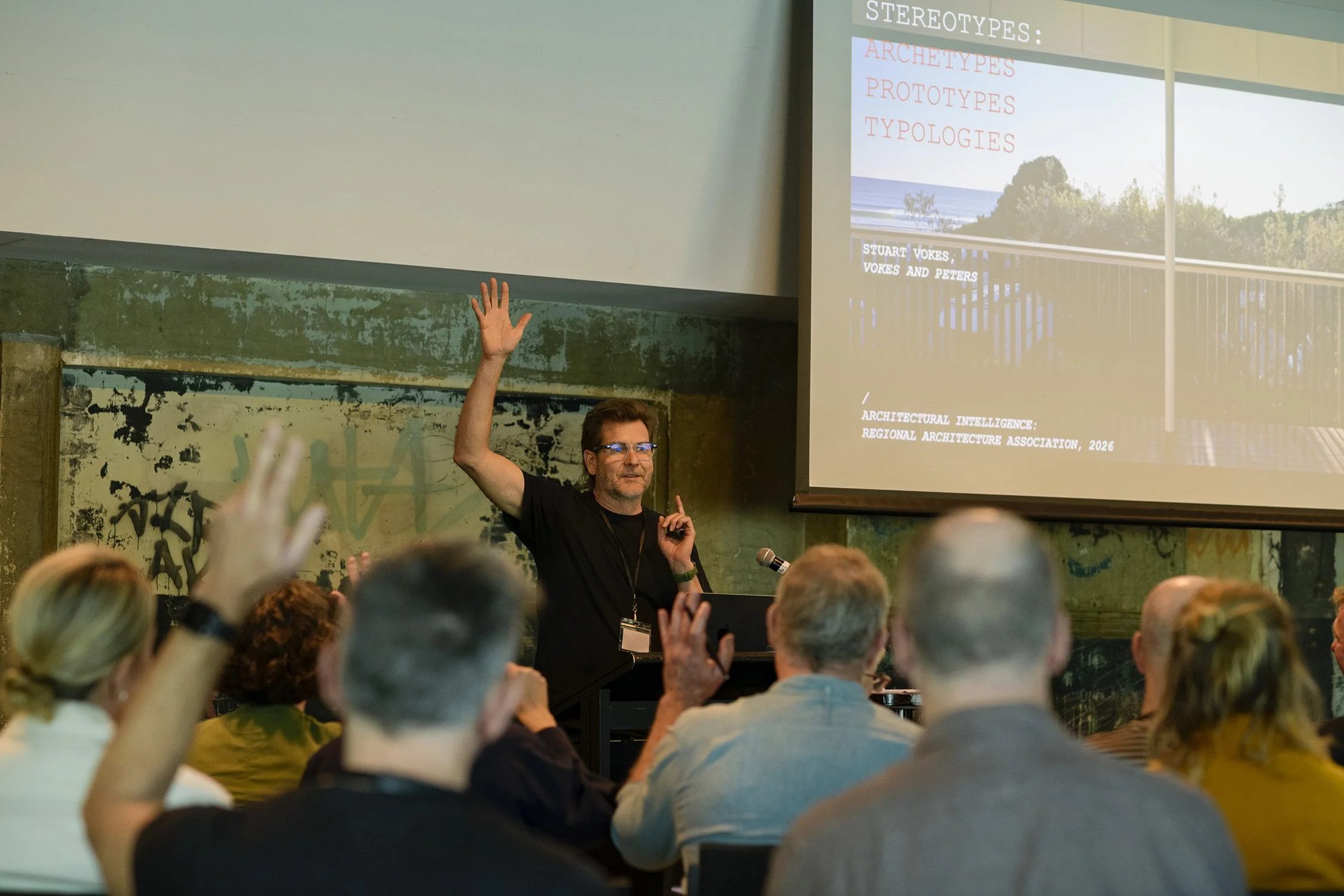
Stuart Vokes. Photo: Natalie McComas
For an architecture conference, the surprising thing was that it took until our third speaker to see some architecture!
Stuart Vokes walked us through his own evolution of thinking around ‘the home’ and modular planning. What began as a fascination with structure and the unforgiving sheet grid has, over time, been softened and shaped by clients, builders and the realities of occupation.
His work with Blok Modular has convinced him that modern methods of construction have enormous potential to improve housing delivery, but they are not a silver bullet. Instead the promise of factory-built housing may offer us another opportunity for impact and (dare I say) relevance to society.
But if the ideal home can be optimised, pre-planned and efficiently manufactured, what role remains for architects?
Stuart's answer seemed refreshingly human. Despite all our talk of efficiency, people remain stubbornly attached to individuality, customisation and self-expression.
The desire to make something our own continues to resist optimisation.
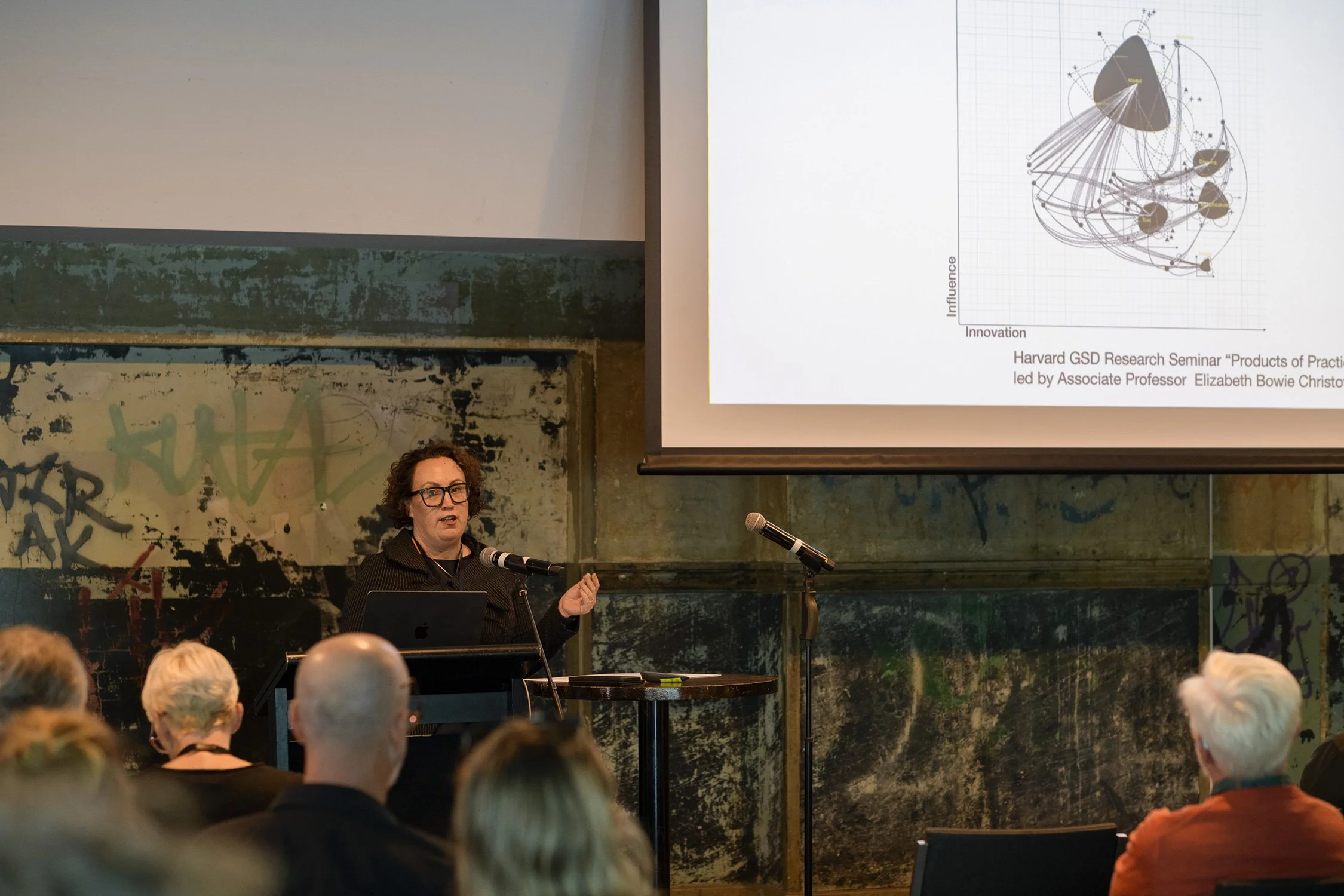
Dr Kirsty Volz. Photo: Natalie McComas
After lunch, Dr Kirsty Volz challenged the assumption that drawings are the enduring artefact of architecture. Historically, she argued, the model has often been the more powerful communication tool and, in the face of new technology, is again becoming increasingly important, both as a design tool, and as a means of measuring building performance after occupation.
As traditional outputs become automated, drawings don't disappear; they simply become one output amongst many. What survives automation is the thinking we bring.
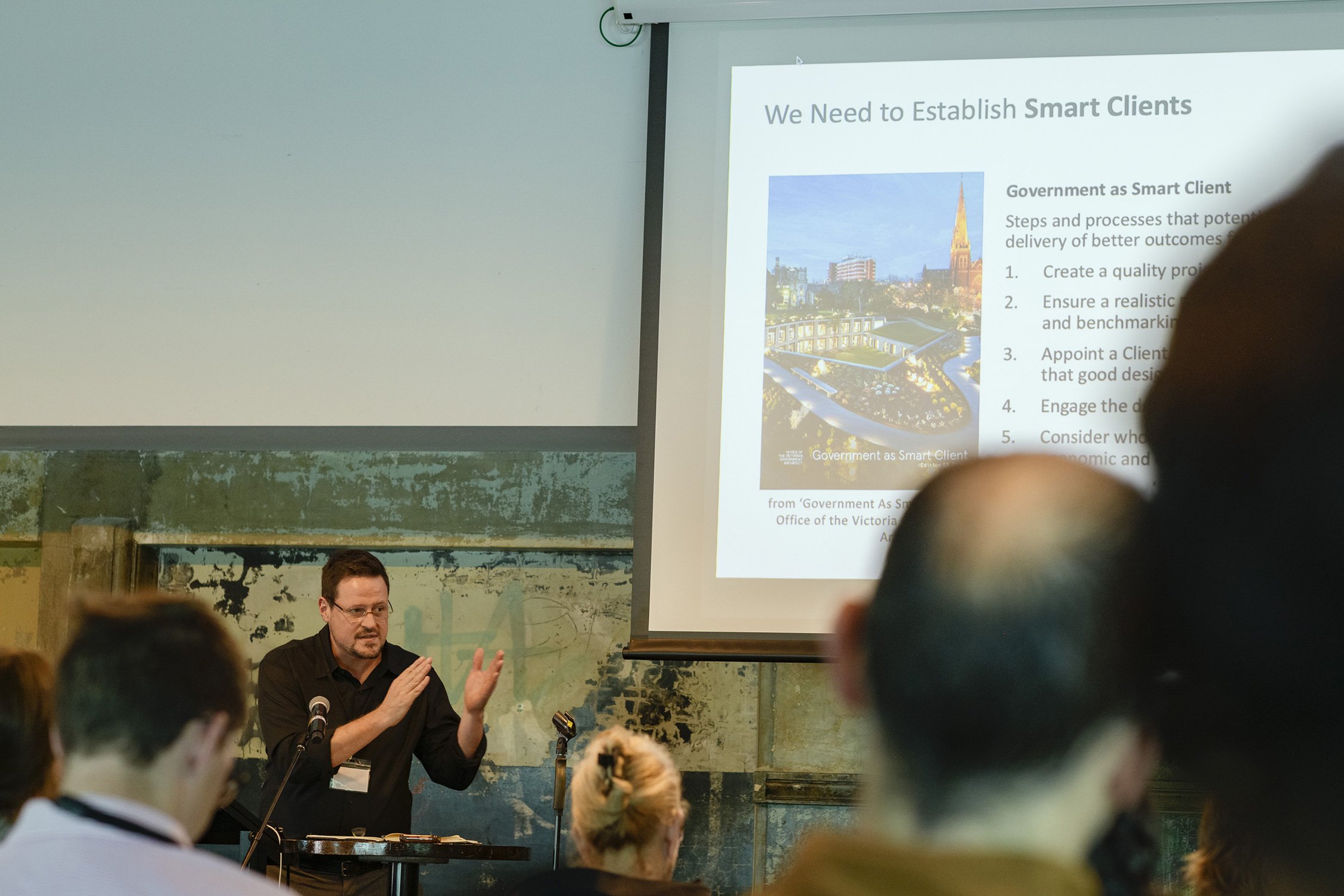
Sam Charles-Ginn. Photo: Natalie McComas
That idea was reinforced by Sam Charles-Ginn's discussion of the Office of the Queensland Government Architect. Like many in private practice, I have often viewed government as slow-moving and bureaucratic. Understanding the rigour behind design frameworks, review processes and outcome measurement offered a different perspective. Good design outcomes are supported by systems, evidence and accountability.
Together, their talks highlighted the growing importance of data, measurement and feedback. Whether discussing housing, sustainability or public infrastructure, the message was clear: architects need to get better at measuring outcomes and learning from them.
Data is becoming an architectural artefact in its own right.
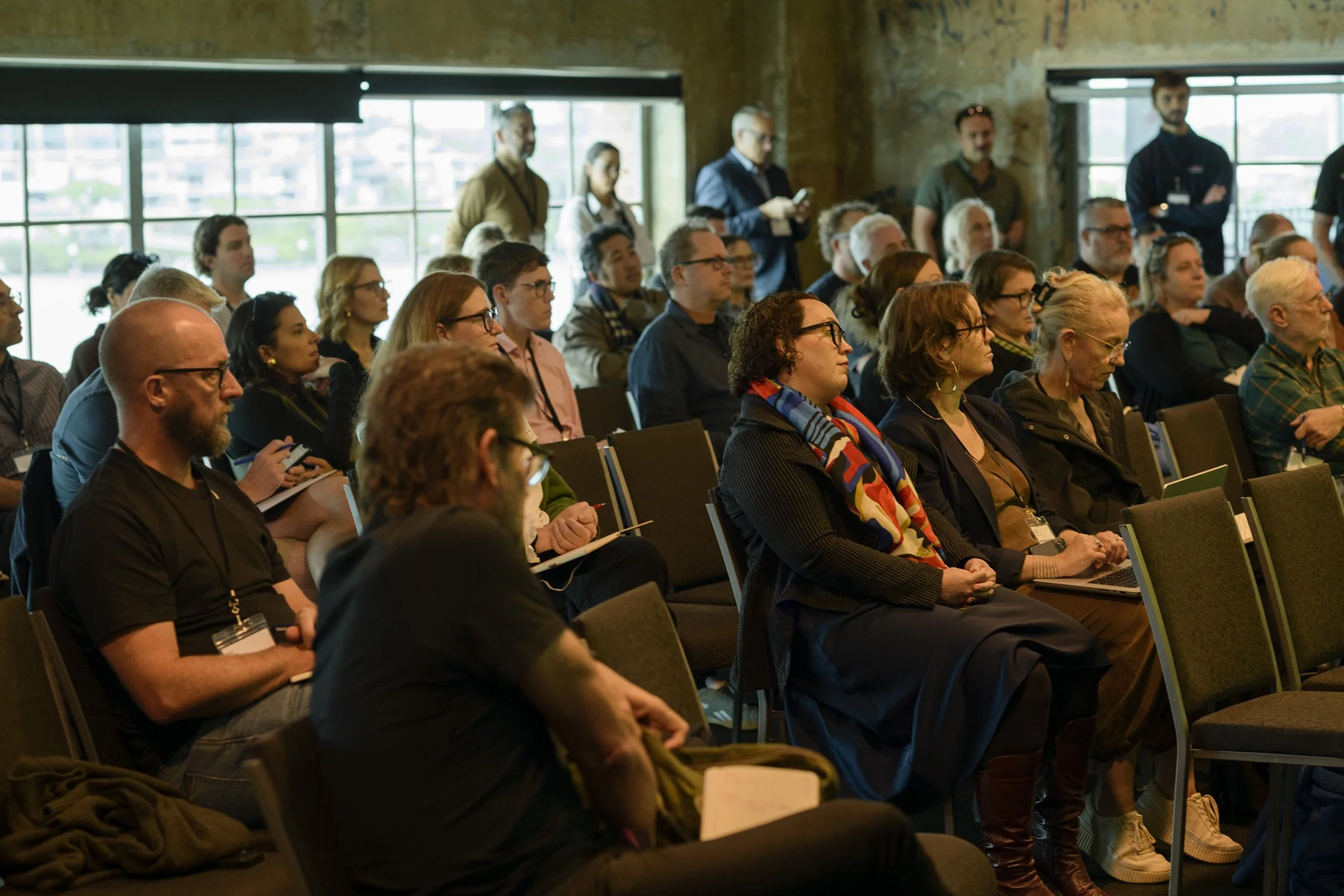
Photo: Natalie McComas
If I had to rename the conference, it would probably be Architectural Intelligence: Beyond the Drawing.
Because while AI was the catalyst, it wasn't really the subject. The subject was the future value of architects.
My strongest takeaway was to approach AI with curiosity, to move thoughtfully towards it, or thoughtfully away from it, but not to pretend it isn't reshaping the landscape around us.
Technology will continue to change how we work. It always has. The more important question is whether we use those changes to create more drawings, more reports and more output. Will we absorb the efficiency and ‘raise the bar’ or will we reclaim time for the things that only humans can do.
The conference left me convinced that judgement, empathy, innovation, leadership and social impact are still where our greatest value lies.
Thanks RAA for a fantastic day!
My top three actions for Monday morning:
1. Find one friction point.
Identify one repetitive task, process or point of churn and see if AI can remove it, leaving us more time for design and relationships.
2. Turn on Copilot.
Start understanding AI within our own systems and ensure staff aren't using free AI tools with client or company information.
3. Invest in learning.
Allocate time and budget to educate ourselves and the team. If AI will be as transformative as CAD, then we need to lean in, adapt and make informed decisions about where it helps - allocate budget towards this in 2026/2027 year.
A special RAA thanks to the Technical Experts on hand during the event: Gabriel Tieppo and Meg Shaw from Allegion, Adam Bonney and Lachlan Mills from Evoheat, Jeff Trevarthen, Linda Le and Jane Burgess from Danpal Marcio Da Silva and Daniel Page from No. 1 Roofing & Building Supplies, Luke Wyatt and Keityn Miller from Stone Style and Hamish Kofoed from Viridian Glass. RAA would like to thank them for their commitment to design in the regions.
To become a member of RAA, join via the website or sign up to receive regular updates about our events and programs - and perhaps consider membership in the future.
