
FIELD guide, May 2026
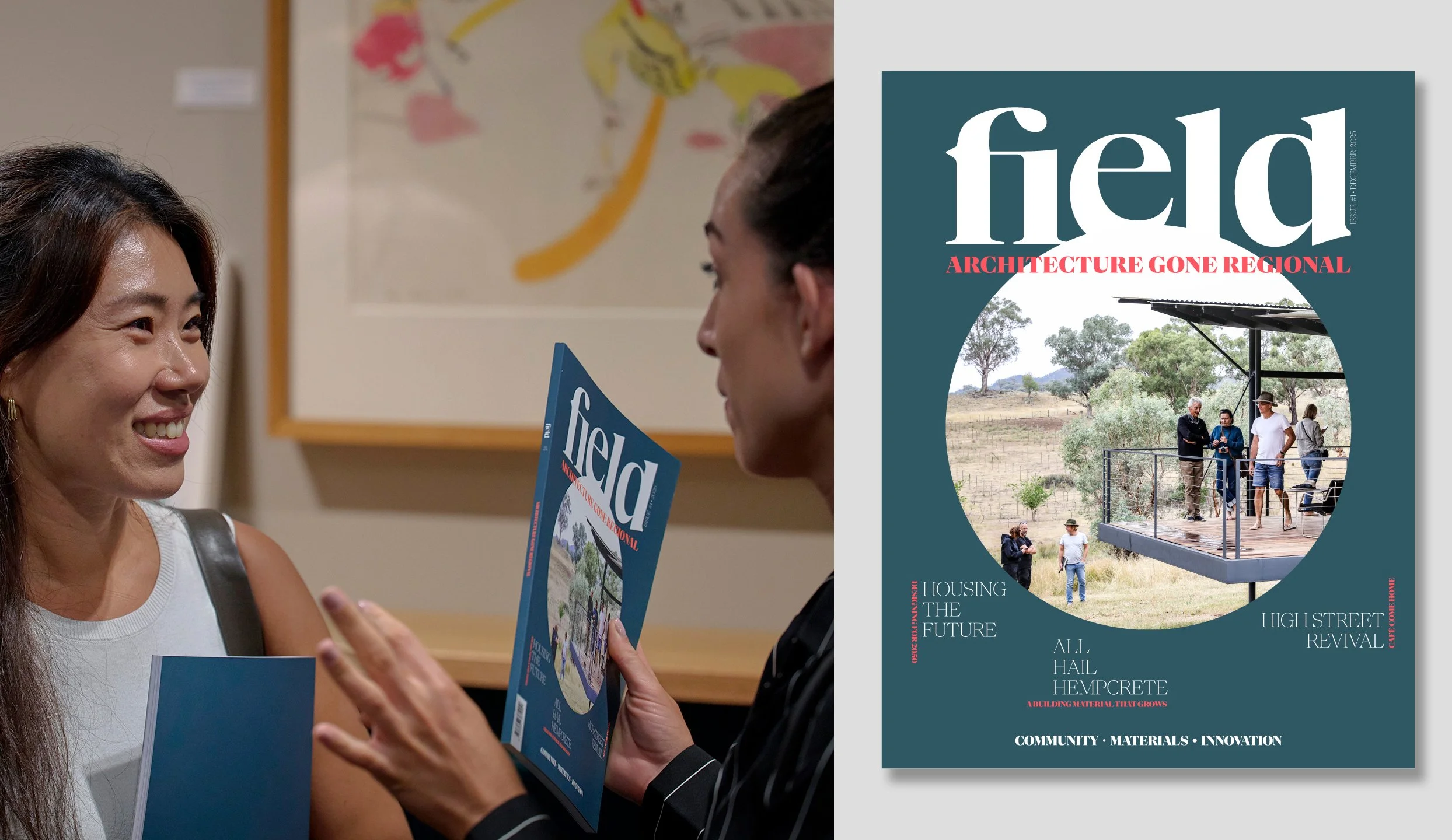
Field celebration Sydney, February 2026. Photo: Elizabeth Macovaz
Editor of the RAA journal, Field - Architecture Gone Regional, Peter Salhani shares feedback from Issue #1, and ideas for using Field as part of your marketing strategy.
As we hit the halfway mark of 2026, I thought I’d share some feedback on Issue #1 of Field — Architecture Gone Regional, and thank everyone who sent us messages saying how much you’re enjoying the content. The issue has struck a chord, so we’ve included some of your comments at the end of this article. I’d also like to thank the contributors and editorial team (they hate the word ‘committee’) for supporting Marcus Piper and I in producing it — there is such good energy around this project, we’re all working hard to make it succeed.
The vision for Field is to shine a light on the essential and exceptional work of architects in regional Australia, in a relatable, story-based manner to engage a wide audience; anyone from designers and decision-makers, from students to mum-and-dad home-owners or the archi-curious. This involves curated choices about projects, writers and non-writers, who all have a voice worth sharing.
It would be impossible to have projects from all 250+ RAA members in a 96-page publication, but what we’ve aimed to do is create a wide selection of projects. This brings me to the second core vision of Field; as an invaluable part of the marketing toolkit for each and every RAA member, particularly those practices who, for lots of legitimate reasons (time, resources or uncertainty of where to start), do not actively market their services and skills.
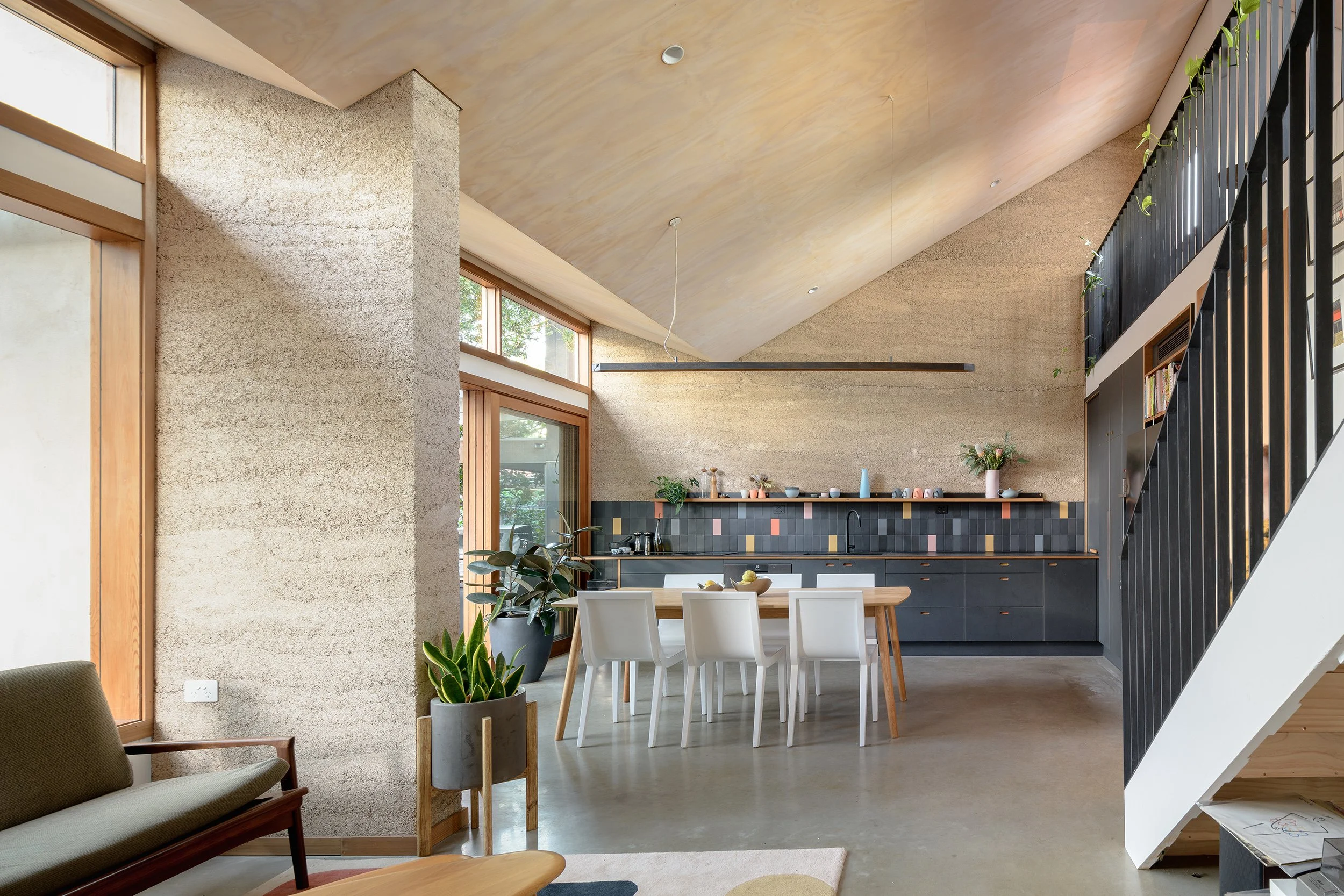
A living, breathing hempcrete home extension by Emily Knight Design. Photo: Ben Guthrie
Some small practices I’ve spoken with tell me they do a bit of social media here and there – some ad hoc Instagram, a bit less Linkedin, and occasional awards entry. Media can be time consuming, and from the minute you start, it feels like you’re never doing enough. Partly that’s because architecture is a slow-burn initiative, while media (especially social media), is, by definition, fleeting.
Field gathers stories from the regions, with people speaking authentically from topics ranging from the health benefits of using natural building materials, to the frustration of being a regional architect having to compete for local projects in your own patch with well-heeled city practices.
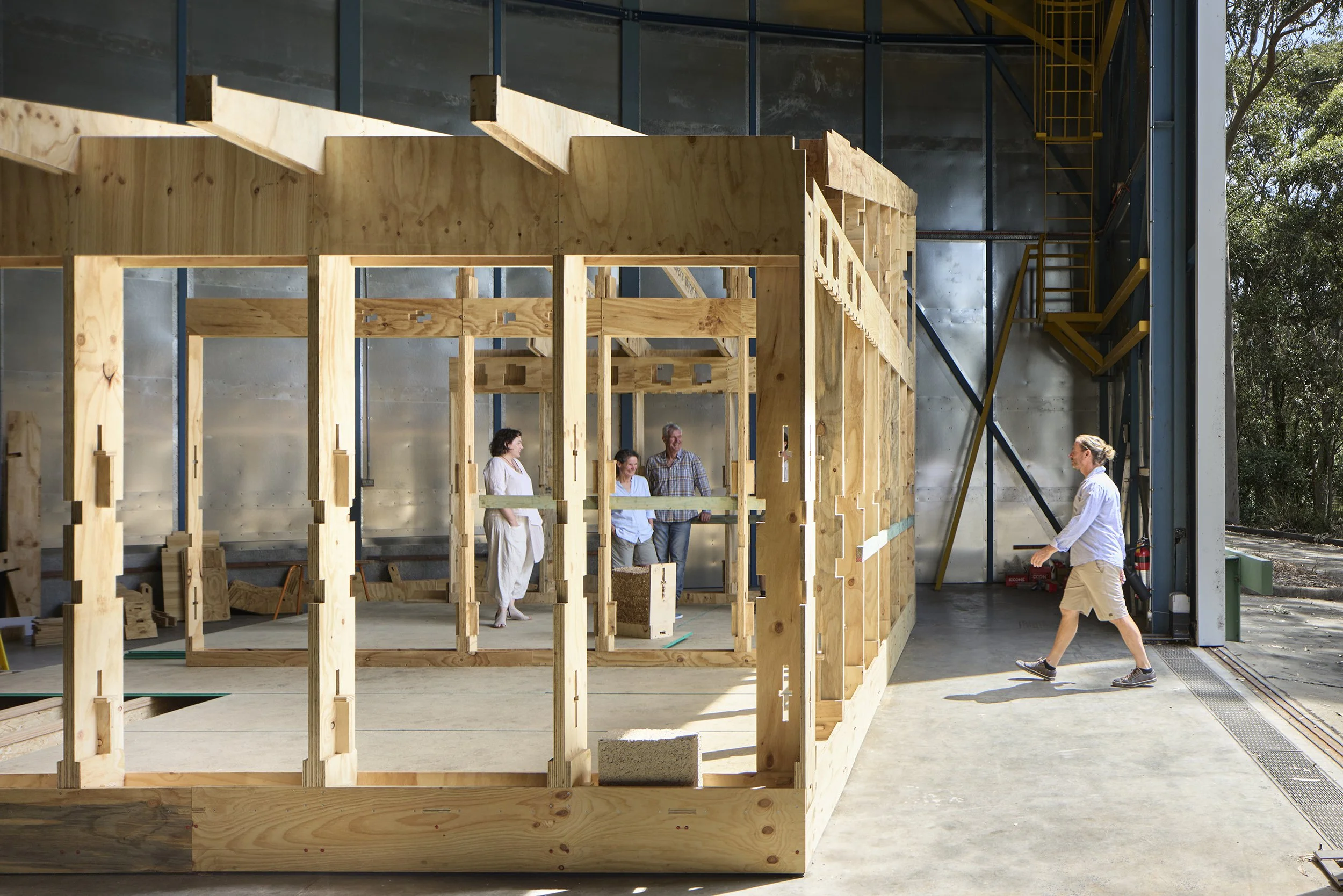
Prototype of Fast Slow modular housing system, developed with University of Newcastle and industry leaders, Mudtec. Photo: Ashley Sorensen
These stories offer relatable insight and learning, with people at the centre of the discussions. They make the reader’s experience real and tangible, inviting them to better understand the value of architects and architecture. We know that while many (if not most) people believe they don’t need or can’t afford an architect, few, if any, actually know what we do. This is particularly acute in regional Australia.
So, here’s a mini challenge for those who need more marketing – use Field as a tool, one created by regional architects about regional architecture. Give or send a copy to a contact who might be thinking about using your services, and point them to an article you think might interest them. There are many to choose from big picture to small – 20 in all. Whether it’s the Home Truths about housing (page20) from Anthony Burke, or collective housing projects surveyed by John de Manincor (page 24), to a new prefabricated housing model developed by Sara Breen Lovett (page 58), using natural materials in modular form to accelerate the building process.
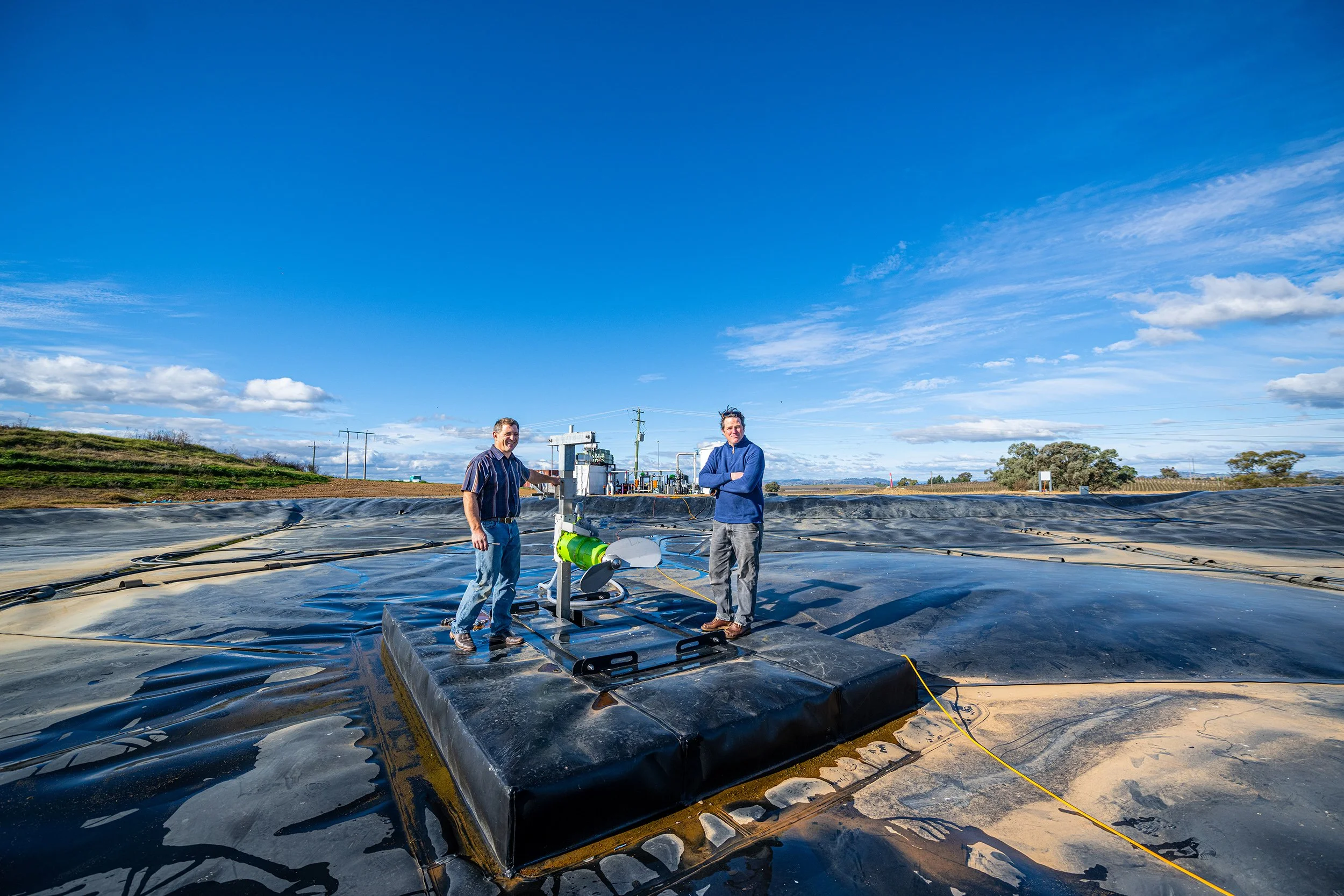
Architect Dylan Gower (right) with Dave Eberly of Martin Energy Group, on a processing lagoon in Cowra, turning agricultural wastewater into energy.
Dylan Gower’s piece (page 34) about Cowra’s biomass energy initiative reminds us that the regions are incubating local solutions to global problems, never more vital than in the current fuel crisis. Anna Maskiell talks us through the tiny community hub in Meeniyan, Victoria, that turned the brief for a public loo into a delightful, civic space that the locals are now immensely proud of, while Emily Knight’s conversation (page 60), around clients who love living in their new hempcrete home extension, is an uplifting moment that everyone can relate to. Even Mike Gillam’s rollicking tale from the Northern Territory (page 12) is a cracker of a read!
When next thinking about marketing options, consider this – a full-page ad in South Coast Style magazine costs $800, a two-page advertorial, $2,400. Not only does Field document RAA events and ideas, it’s also part of your marketing toolkit, an investment far beyond the modest cover price. It doesn’t matter whether you have a project/article in there or not, you’re part of the community of collective intelligence on those pages, and it (hopefully) speaks for you as well. So give it a try, and unleash the power of the page!
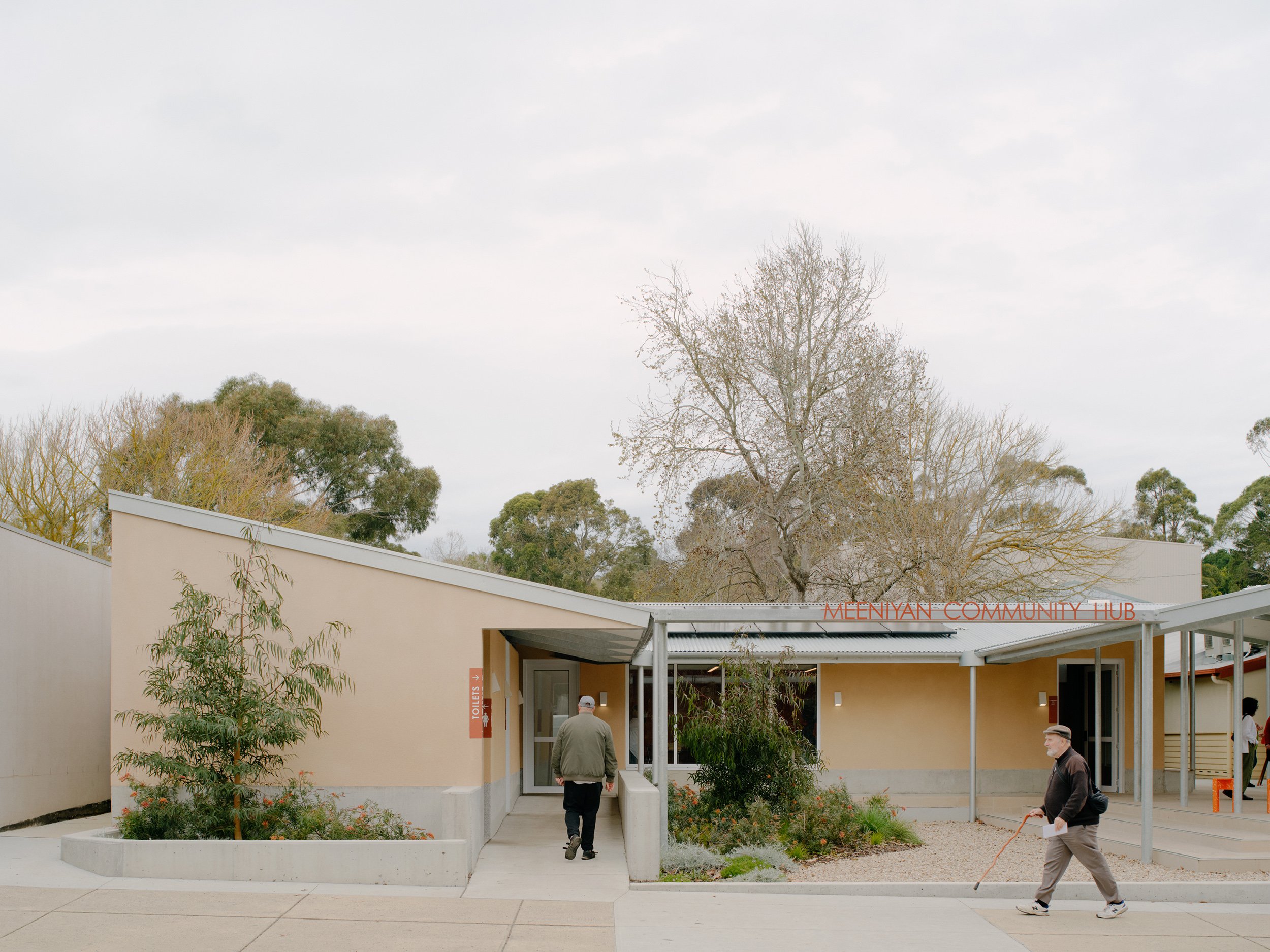
Small but sweet, Public Realm Lab’s new community hub in Meeniyan, Victoria. Photo: Tom Ross
Your comments (feedback from Issue #1 of Field):
“We received our copies of Field the other week and I was blown away by the quality of the publication…The breadth of content is impressive and the presentation is exceptional.” —Russell McFarland (Newcastle)
“The best architecture magazine I've read in ages; love it!!” —Mick Moloney (Ballarat)
“An absolutely beautiful magazine about regional architecture was just delivered to me—thank you! Very impressive — what a huge amount of work and a fabulous result.” —Georgia Lindsay, UTAS Senior Lecturer (Tasmania)
“A slick and delightful publication. A nice treat to get in the post. — Owen Kelly (Northern Territory)
“So good, I read it cover to cover!” —Dr Kirsten Orr, Registrar & CEO NSW Architects Registration Board (Sydney)
