THINK TANK | Reflection on the 2026 Living Cities Forum
By Russell McFarland, Austin McFarland Architects | Photos: Jacquie Manning
Living Cities Forum is Australia’s flagship event for urban designers, architects, planners, policymakers, researchers and placemakers. Presented by the Naomi Milgrom Foundation since 2017, the Forum has brought together leading local and international thinkers to explore the challenges and opportunities shaping contemporary cities, with a focus on design, housing, public life, sustainability, equity and civic leadership.
Having been held exclusively in Melbourne for its first eight years, the Forum has expanded to Sydney and has been concurrently held there for the past two years. Through keynotes, panel discussions and cross-disciplinary conversations, the Forum promotes innovative and practical ideas for creating more liveable, inclusive and resilient cities.
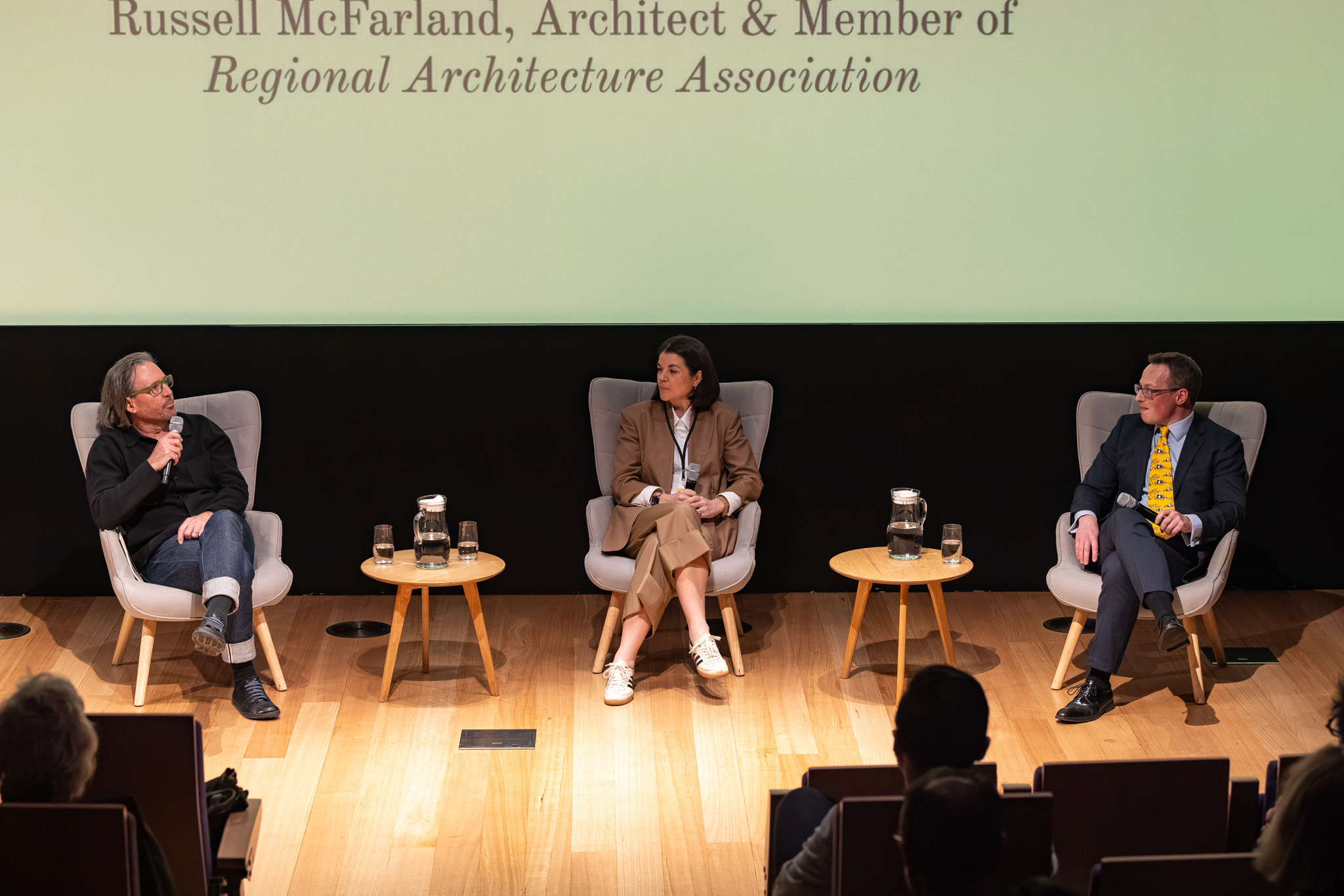
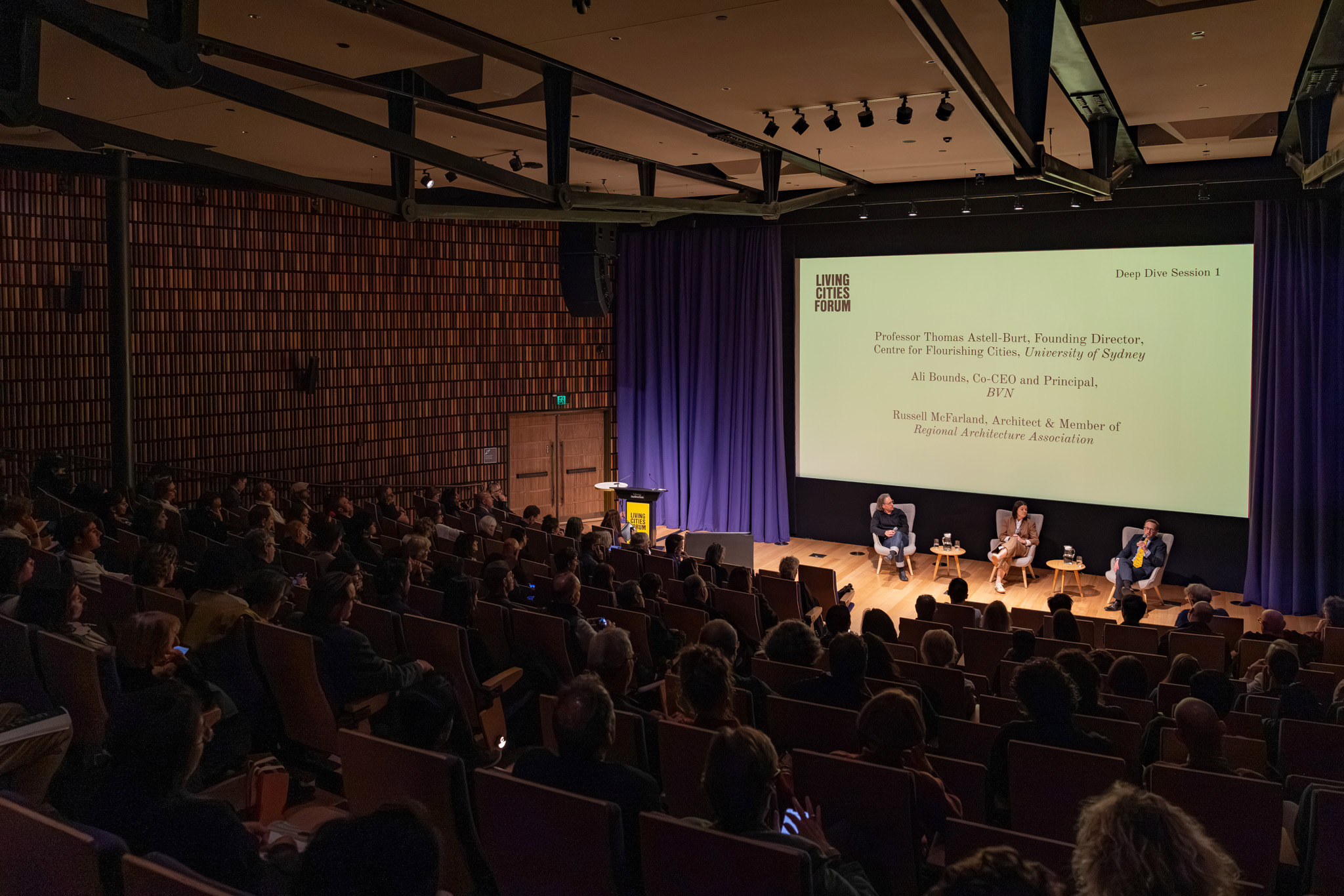
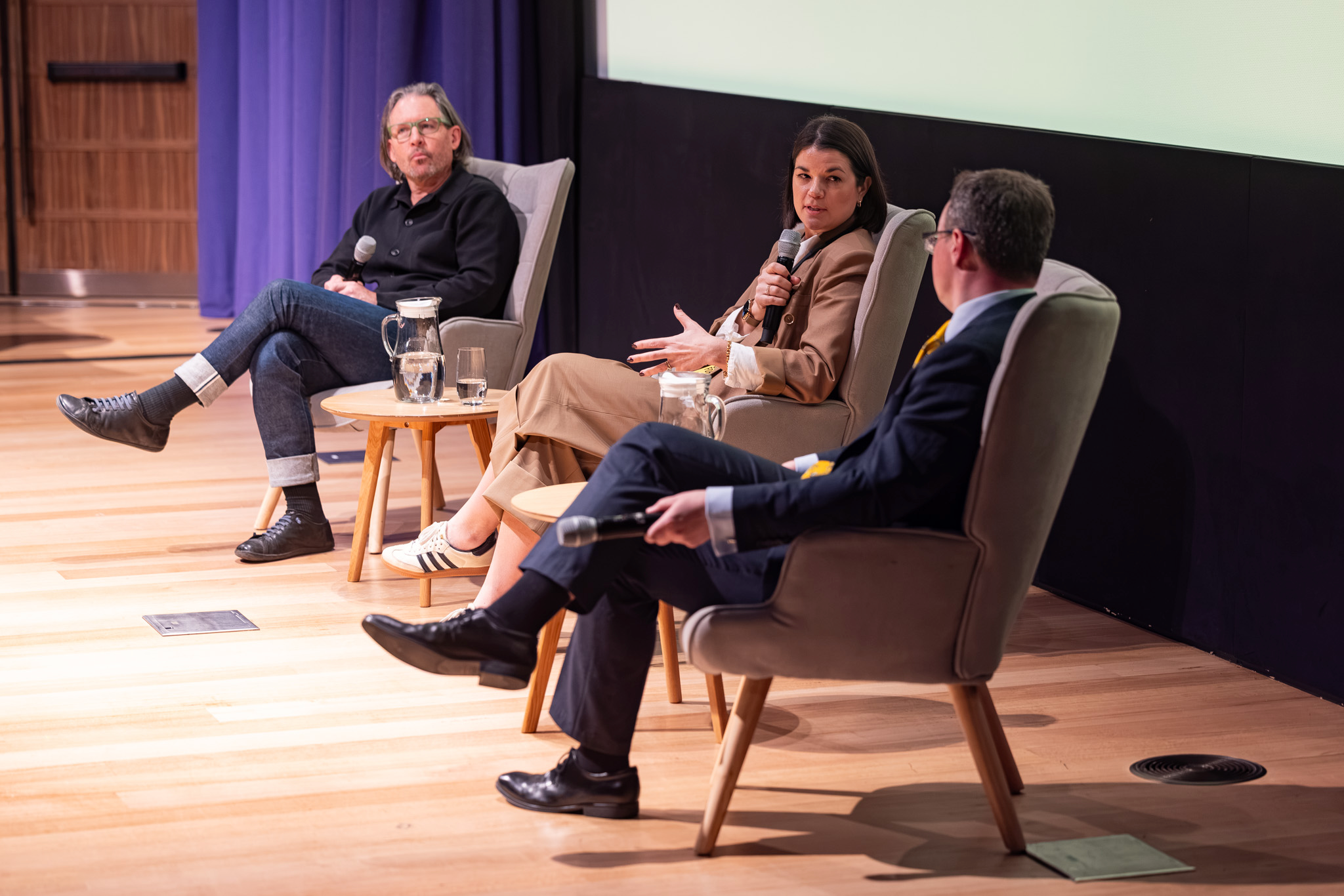
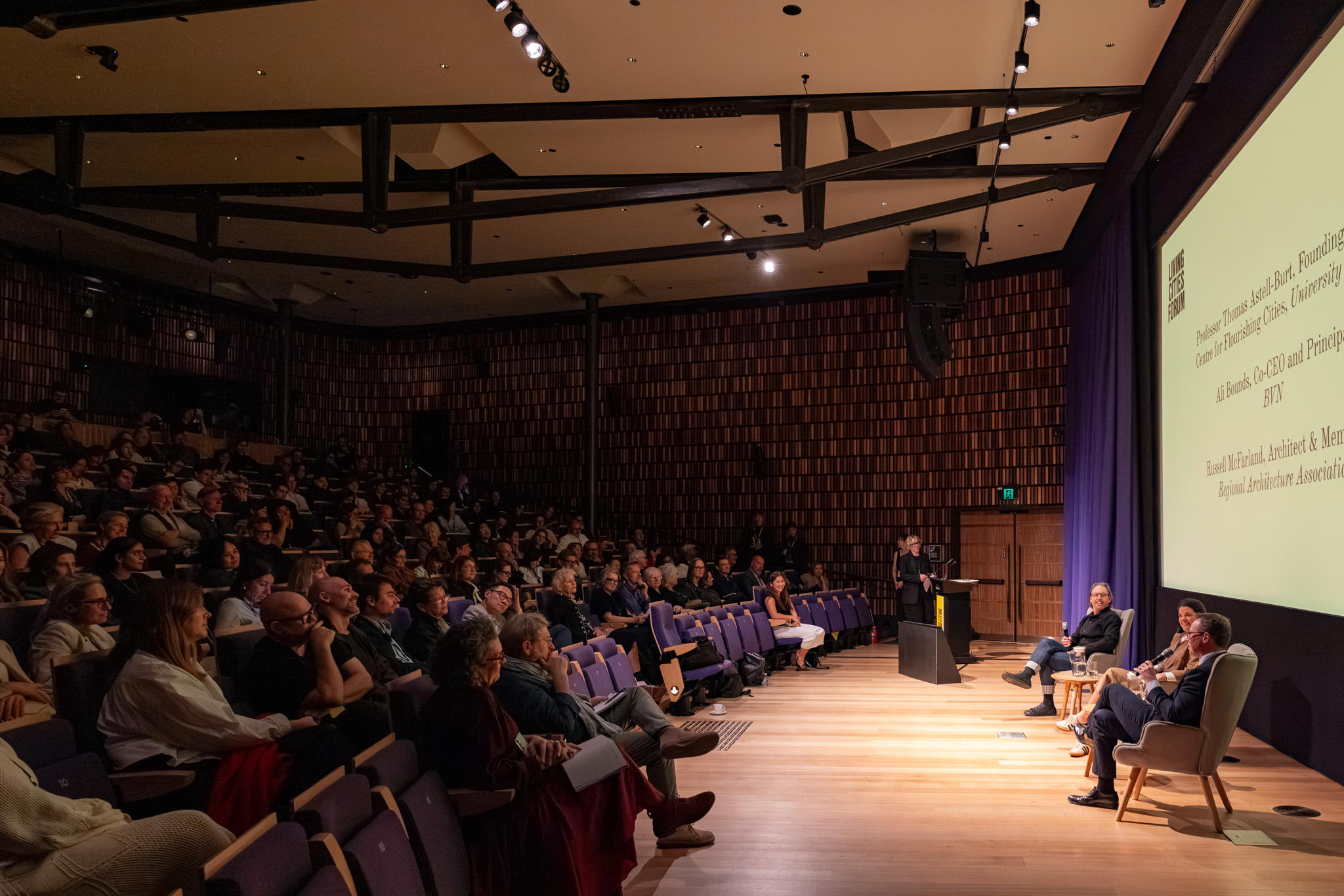
In the August 2026 Sydney edition, a RAA collaboration with the Forum, activated by Field journal, gave me the opportunity to participate in a lunchtime panel discussion with Ali Bounds, Co-CEO of BVN and Professor Thomas Astell-Burt, from the Centre for Flourishing Cities at the University of Sydney. Our 45-minute conversation posed the question: “What if the city of the future is already built?”
Part of our brief was to bring a local lens to the macro themes of the keynote sessions. In a fairly free-flowing conversation, we covered a lot ground, including:
The importance of renewal and adaptive re-use.
Increasing the perceived value of existing built resources, over demolition and rebuilding.
Improving existing centres through tailored facilities and infrastructure rather than radical change.
The connection between greener civic spaces and improved health metrics across communities.
The need for local communities of all scales, to be inclusive through greater diversity of housing choice and more walkable/accessible environments.
I was particularly interested in expanding the conversation beyond the traditional metropolitan city model which tends to define the focus of such forums. The reality is that our major cities experience far more development and renewal than many regional centres, due simply to economic forces and population growth. This presents a different set of opportunities and obligations around adaptation, stewardship and investment into existing regional centres, and solutions exported from major cities aren’t always appropriate. Often the most relevant and enduring responses are developed by architects locally, working in the communities they serve.
The 2026 program, themed ‘Cities Made With Care’, explored how design, policy, governance and community engagement can shape more equitable, resilient and liveable cities. The Forum examined housing not simply as a supply issue, but as a system that influences belonging, risk, equity, infrastructure and cultural identity. Key themes included:
Designing the city with care, examining how civic leadership, governance and urban design can create more inclusive and supportive urban environments.
Housing and urban equity, exploring alternative housing models, civic equality and new approaches to addressing housing challenges while strengthening communities.
Adaptive reuse and the value of existing buildings, challenging demolition culture and highlighting the environmental, social and cultural benefits of retaining and repurposing existing building stock.
Materiality and human-centred design, investigating how materials, craftsmanship and the experience of inhabiting places contribute to healthier and more meaningful urban environments.
Australian urban challenges and opportunities, bringing together local practitioners and organisations to discuss the tensions, trade-offs and systemic changes needed to create better cities.
International Keynotes at the 2026 Living Cities Forum
Finn Williams (UK/Sweden) — Omsorg: Designing the city with care
Explored how cities can be shaped through care-focused governance, urban design and civic leadership, drawing on his work in public-sector city-making and urban policy.
Ludwig Engel (Germany) — The future is already built. The story of HouseEurope!
Discussed adaptive reuse, the value embodied in existing buildings and alternatives to demolition-led development, advocating for a more circular and resource-conscious approach to housing and urban renewal.
Anupama Kundoo (India/Germany) — Rethinking materiality
Examined the role of natural materials, craftsmanship and human-centred construction in creating sustainable and meaningful places, challenging conventional approaches to building and development.
For the development community, the keynote program was particularly relevant as it connected contemporary issues of housing, adaptive reuse, sustainability and placemaking with practical examples of how design can influence broader social and environmental outcomes.
RAA Involvement
Through the introduction of Field, RAA President Tim Lee approached Naomi Milgrom Foundation with the proposal of broadening the Forum discourse to include regional cities, towns and even villages; all of the centres that make up our living environments. To its credit, the Foundation embraced the opportunity and offered RAA a partnership in the event, which included my participation in the daytime conversation session and the presence of Field journal at the special guest dinner.
Similar opportunities will no doubt arise arise in the future, and I would encourage RAA members to get involved where possible. It’s a great opportunity to not only share your thinking and experience, but also to represent RAA and architecture in the regions, as well as sharpen your public speaking game.